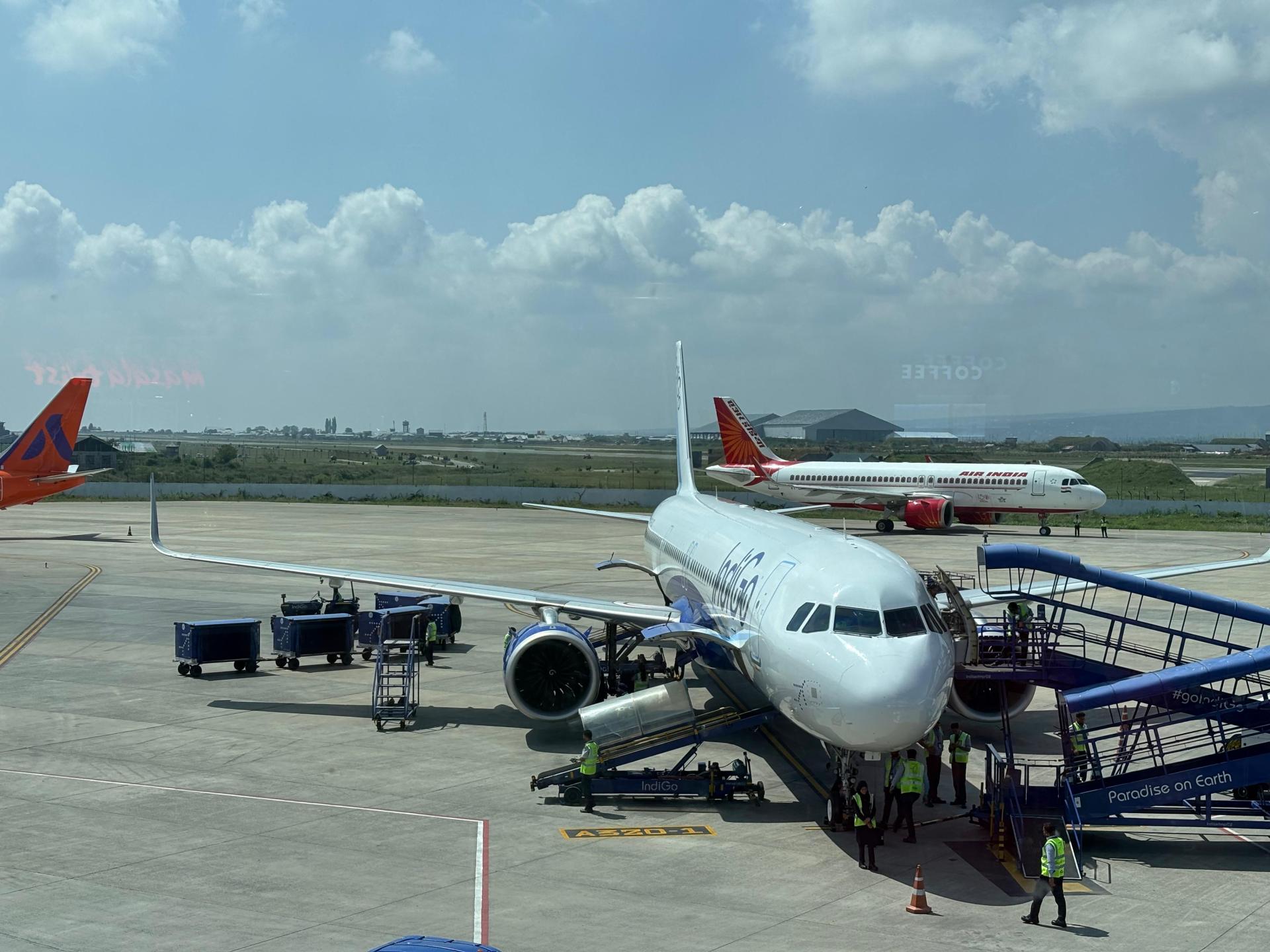
Salman Shahid travels frequently between Srinagar, the biggest city in Indian-administered Kashmir, and New Delhi. He runs Rise, a private coaching centre for students aspiring to join the Indian Institutes of Technology – the country’s premier engineering schools – in Srinagar, but his family is based in New Delhi.
Flying helps him save time. But increasingly, he just cannot afford it.
Before the COVID-19 pandemic, Shahid says, a one-way flight from Srinagar to New Delhi would cost him about 3,300 rupees ($37.20) on average. “Now, the same ticket is over 5,000 rupees ($56), and that, too, with very limited time options,” he points out.
This 50 percent surge in airfare has significantly affected his travel routine. “I don’t travel that frequently now,” he says. “Earlier, I would make at least four round-trips a month. Now, it’s come down to just two.”
He recalls once booking a ticket for just 1,700 rupees ($19) on Vistara, a domestic airliner, during a sale in 2019. “That kind of pricing now feels like a dream,” he says, adding that he struggles to understand how airfare has escalated so sharply in such a short period.
He is not alone.
According to a study published last November by Airports Council International (ACI), a global trade association representing more than 2,000 airports in more than 180 countries, India saw a 43 percent rise in domestic airfares in the first half of 2024, compared with 2019, the second-highest in the Asia Pacific and West Asia regions after Vietnam.
International fares also rose by 16 percent. India was third in this category. A study representing 617 airports in the Asia Pacific and West Asia regions, conducted by ACI in partnership with Flare Aviation Consulting, a management consulting boutique specialised in the aviation and airports sector, attributes this surge to high demand, limited competition on some routes, and a 38 percent spike in aviation turbine fuel (ATF) costs since 2019.
Prices rose from 68,050 rupees ($759) per kilolitre in cities like Delhi in January 2019 to 93,766 rupees ($1,046) per kilolitre in October 2025. Airlines are also recovering pandemic-era losses, further pushing fares up.
And even though there is no comprehensive study capturing fare trends in 2025, yet, experts say prices have continued to rise throughout the year.
“Despite the huge surge already, airfares aren’t coming down and are only going up,” said Vandana Singh, the chairperson of the Aviation Cargo Federation of Aviation Industry in India (FAII), a government-recognised body that promotes India’s aviation sector.
“The relentless increase in airfare does not reflect well on the accessibility of aviation in India,” Singh added, cautioning that the middle and economically weaker sections of society may soon find themselves excluded from the air travel landscape altogether.
‘Hollow catchphrase’
In October 2016, Indian Prime Minister Narendra Modi launched what his government has called the UDAN scheme – “Udan” means “flight” in Hindi, but the acronym stands for Ude Desh ka Aam Nagrik (Let the Common Citizen Fly). The stated aim of the scheme was to dramatically expand India’s aviation infrastructure, and open up dozens of new routes to make air travel accessible to lower-income Indians and people in smaller towns and cities.
While flagging off the first flight under the scheme in April 2017, Modi said, “I want to see people who wear hawai chappals [flip-flops] flying in a hawai jahaaz [aeroplane].”
His comments effectively became a slogan for the campaign, touted as the government’s bid to make flying affordable and accessible for millions of people from small-town India, many of whom cannot even afford shoes.
But that slogan now carries a tinge of irony, Singh said.
“With fares escalating consistently over the past few years, this inspiring slogan now risks becoming a hollow catchphrase rather than a lived reality.”
Under the Modi government, India has indeed witnessed a rapid expansion in the number of cities and towns connected by air, with airports more than doubling from 74 in 2014, when Modi came to power, to 157 in 2024.
But the numbers mask a deeper crisis that afflicts Indian aviation, experts say. Because the number of flights and routes has gone up, the total volume of travellers in India has remained high, even if soaring prices mean that many individual passengers are reducing air travel.
The country is the world’s third-largest domestic aviation market, and witnessed a 15 percent increase in air passengers, year-on-year, in the 2024 financial year, according to government figures.
Still, signs of turbulence are visible, even in the data. Domestic air traffic dipped to 12.6 million passengers in July 2025, compared with 13.1 million in June 2025. The numbers recovered in August to 13.2 million, but then dipped again in September (12.6 million), before rising in October to 14.3 million passengers.
Rohit Kumar, an aviation economist and a faculty member at Rajiv Gandhi National Aviation University, said that while passenger numbers have not fallen, “the rise in fares has quietly pushed the lower and lower-middle classes out of the skies”. New airports, more routes, and upper-middle-class travellers, who value time over cost, are continuing to keep total passenger numbers up.
Kumar added that the remote working culture that many technology and service-driven industries in India have continued to embrace since the pandemic has allowed employees to travel more frequently than before. This has boosted occasional air travel among higher-income professionals, he said.
However, despite year-on-year growth, the sector remains deeply unequal. India’s aviation sector, Kumar cautioned, is being carried by a small, affluent section, while the vast majority – emerging flyers that the UDAN scheme was meant to serve – are increasingly being left behind.
Singh of the FAII was even more blunt.
“The very people the [Modi] slogan referred to, those who wear chappals, are now being priced out of the skies,” she said.
‘Monopolistic trends’
More routes are not the only factor allowing airlines to keep raising fares, even if they are pricing out many passengers. They are also helped by shrinking competition.
In recent years, several major airlines have shut down, while others have merged after acquisitions.
Go First, which once held more than 10 percent of India’s domestic and international market, with 52 aircraft, ceased operations in May 2023 after filing for bankruptcy. Jet Airways, with a 21 percent market share and 124 aircraft at its 2016 peak, halted operations in 2019.
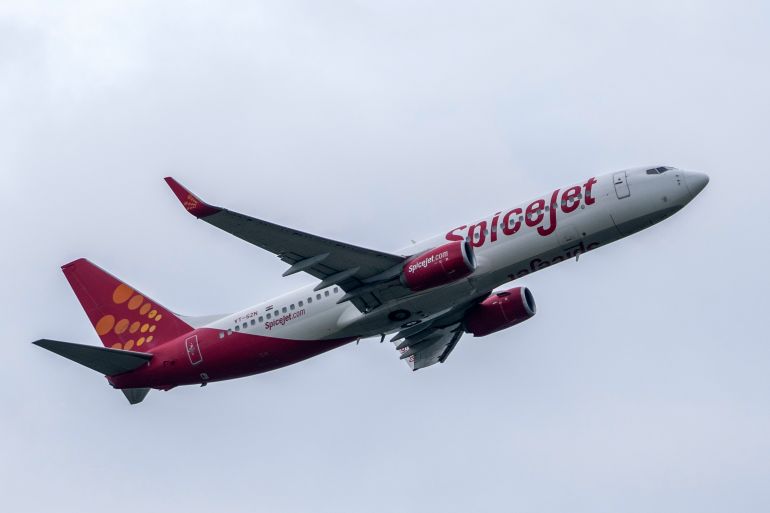
SpiceJet teetered on the edge of insolvency, especially between 2022 and 2024, due to mounting debt, legal issues, and grounded aircraft. In July 2022, the Directorate General of Civil Aviation (DGCA), India’s aviation regulator, cut SpiceJet operations by 50 percent. The DGCA cited “poor internal safety oversight and inadequate maintenance actions”. SpiceJet also faced significant delays, with a reported on-time performance (OTP) of 54.8 percent in January 2025, making it the least punctual airline among major carriers at the time.
Defaults on lease payments also led to aircraft repossessions, shrinking SpiceJet’s fleet from 118 in 2019 to just 28 operational planes by January 2025.
“The back-to-back shutdown of airlines in India severely impacted air travel, paving the way for monopolistic trends,” said Singh. With fewer players in the skies, dominant airlines can dictate prices and raise them at their discretion, she added.
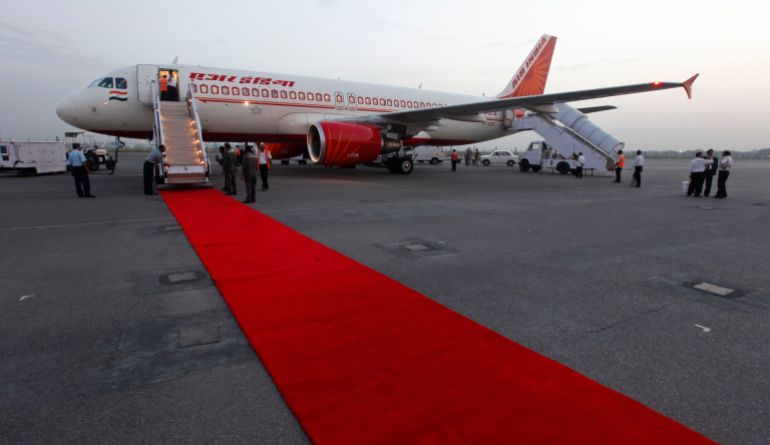
In another major shake-up, Air India, India’s only public sector airline, was officially privatised in January 2022, when the Tata Group took over full ownership.
Following this, Vistara, an airline already jointly owned by Tata and Singapore Airlines, was merged with Air India in November 2024. The merger raised concerns and faced strong opposition from critics, including trade unions and opposition parties, who feared that the consolidation of Air India, Vistara, and AirAsia India – another Tata Group subsidiary also merged with the other two – would lead to an aviation oligopoly, reducing competition and consumer choice in the Indian market.
Zuhaib Rashid, an economics and research associate at the Isaac Centre for Public Policy, New Delhi, said the merger handed over control of India’s skies to just two private players, posing a serious threat to competition.
The only other major aviation player in India today is Indigo, which has 61 percent market share. Together, IndiGo and Air India now control 91 percent of India’s airline market.
Rashid argued that, had the government retained a stake in Air India, it could have ensured fare regulation. “Fully privatising airlines has reduced government control over pricing, and has allowed private players to dominate in a country where air travel remains a luxury,” he added.
Their dominance of the market also allows Air India and Indigo to jack up prices dramatically during peak travel seasons or emergencies, tour operators and experts say, citing two recent examples.
Sajad Ismail Sofi, a Srinagar-based air travel agent, pointed to the aftermath of the deadly April attack on tourists in Pahalgam, a popular resort town in Indian-administered Kashmir, in which 26 civilians were killed. As tourists in other parts of Kashmir scrambled to leave the region, one-way ticket prices from Srinagar to other parts of India skyrocketed from 5,000 rupees ($56) to nearly 12,000 rupees ($135).
After airlines faced major criticism and accusations of profiteering from a national crisis, prices came down.
Earlier in the year, Singh from the FAII recalled, one-way airfares from India’s financial capital, Mumbai, to the temple town of Prayagraj soared to 50,000 rupees ($564) – more expensive than flights to Paris – during the Mahakumbh Mela, one of Hinduism’s most sacred events in which devotees take dips in the Ganga river. The government eventually stepped in to pressure airlines to curb prices. However, Singh said that most pilgrims had already bought their tickets by then.
Al Jazeera has sought responses from Indigo and Air India to the criticism and allegations of using their market dominance to charge exorbitant rates. Neither airline has responded.
Higher taxes adding to the burden
Experts point out that airlines alone are not responsible for the rising fares. India’s high aviation taxes are a key factor too.
The country imposes the highest taxes on aviation turbine fuel (ATF) in Asia, which account for 45 percent of air ticket prices. By mid-2024, jet fuel prices in cities like Delhi and Mumbai were nearly 60 percent higher than in global hubs like Dubai, Singapore, and Kuala Lumpur, largely due to value-added taxes (VAT), central excise duties and additional cesses.
Passengers are also charged, as part of their tickets, a user development fee, ranging from 150 rupees ($1.7) to 400 rupees ($4.5) depending on the airport; a passenger service fee of about 150 rupees ($1.7); an aviation security fee of 200 rupees ($2.3) per passenger; a terminal fee of 100 rupees ($1.2); and a regional connectivity charge between 50 rupees ($0.6) and 100 rupees ($1.2) per passenger. Each of these amounts is small, but together, they add up. And they do not go to the airline, but to the airport or the government.
In June, the International Air Transport Association (IATA), which represents more than 350 airlines globally, called for greater clarity in India’s taxation system, arguing that it was too complex.
Amjad Ali, a travel operator from New Delhi, said he had been in the air ticketing business since 2005, and had never witnessed a sharp rise in airfares until 2020. “Fares used to increase gradually, but since 2020, they have shot up rapidly,” he said.
Ali usually books tickets on routes like Delhi–Mumbai, Delhi–Patna, and Delhi–Purnea. Patna and Purnea are cities in the eastern Indian state of Bihar.
He said that new airports, such as Purnea, have brought in more passengers due to the introduction of new routes. Before the pandemic, a Mumbai–Delhi ticket, booked well in advance, used to cost about 3,800 rupees ($43), but now, it is hard to find one below 6,000 rupees ($68) for the same journey.
Meanwhile, airlines have also started cutting discounts they used to offer to some sections of flyers. Previously, Air India offered a 50 percent concession on the base fare for domestic student travel, but after privatisation, this was reduced to only 10 percent.
The result, Ali said, is a noticeable decline in student travellers. “We rarely see students flying these days,” he said.
Ultimately, Singh from the FAII said, the industry was shooting itself in the foot by making flying unaffordable for millions of Indians.
“If we want air travel to become truly accessible to a larger section of the population, particularly those with limited financial means, the government and aviation stakeholders must work towards reducing these taxes and surcharges,” she said.
Until then, a plane ride will remain a flight of fancy for most of India’s 1.4 billion people.