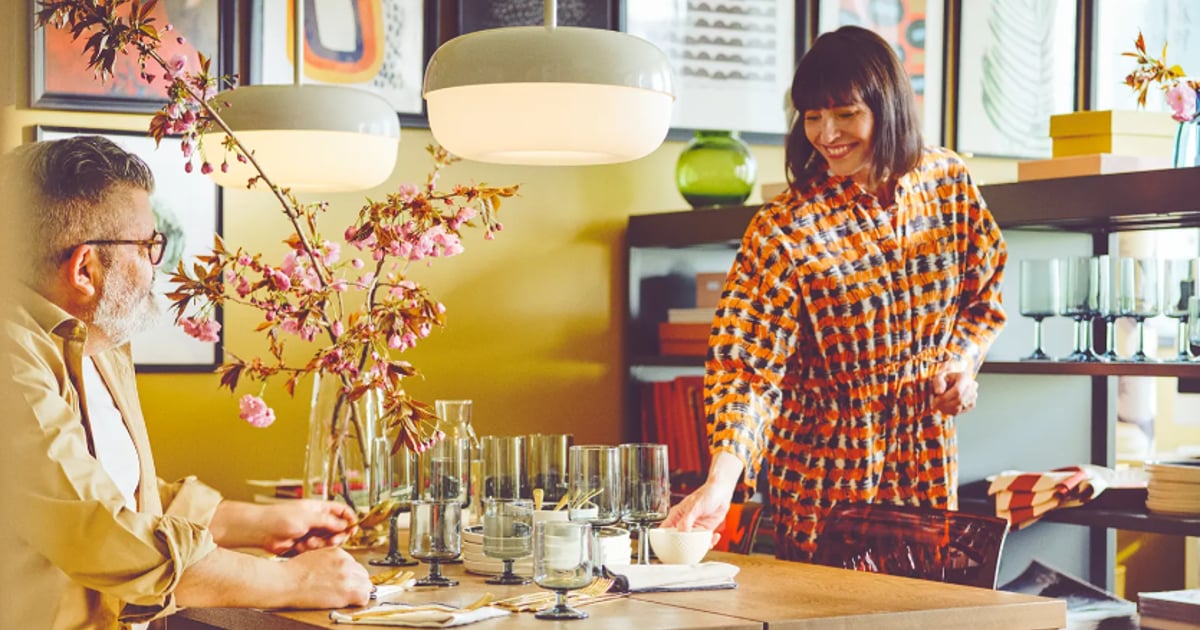
The project will involve fieldwork using biometric equipment and artificial intelligence to detect brain responses and emotional wellbeing associated with preparing food at home; eating ready meals; dining alone, with others, or while using mobile devices.
An innovative approach to studying everyday life
This newly launched research, expected to deliver results in the first quarter of 2026, will explore a previously unexamined area from a scientific perspective: the behaviours and emotions Spanish people experience around cooking, eating, and mealtime habits at home.
Two studies will be conducted: one led by SEN and URJC, analysing brain responses in different food preparation and consumption scenarios using biometric equipment and artificial intelligence; and another by CIBEROBN, exploring eating patterns and screen use during meals. For IKEA, understanding how people live in their homes is a priority, using both in-house research and collaborations with specialist partners to delve into less explored areas.
“This public-private collaboration project aims to provide scientific evidence on how the home environment and lifestyle habits influence our health. Understanding these dynamics can help us build awareness and improve our wellbeing,” says Dr Fernando Fernández-Aranda, researcher at CIBEROBN.
“For SEN, it is a pleasure to collaborate with CIBEROBN, URJC, and IKEA to explore the important implications of an act as human as cooking and enjoying food, allowing us to analyse the emotional and neuroscientific elements behind it,” adds Jesús Porta-Etessam, President of SEN.
Two complementary studies
The two new studies will run in parallel, aiming to provide a clear picture of people’s habits, behaviours, emotions, and feelings around cooking and dining.
SEN and URJC will conduct fieldwork using biometric equipment and artificial intelligence to detect brain responses and emotional wellbeing linked to cooking at home, eating ready meals, dining alone, with company, or while using mobile devices.
“From the Spanish Society of Neurology and the field of neuroscience, we know that cooking and sharing meals activate brain areas related to reward, empathy, and wellbeing. Analysing how these responses change in digital or solitary settings will help us better understand the impact of today’s lifestyle on brain health,” explains Dr Jesús Porta-Etessam.
“We are more connected than ever, yet increasingly isolated. This pioneering study combines artificial intelligence and biometric technology to explore how cooking and related habits can help us emotionally reconnect in a hyperconnected world,” says Ana Reyes, Professor of Marketing and Market Research at URJC.
In parallel, researchers from CIBEROBN will analyse eating patterns through interviews and surveys.
“We’ll not only examine what foods are consumed and how they are prepared, but also the conditions under which these activities take place—including time, environment, social or family rituals, and how screen use influences them,” says Dr Fernández-Aranda, who highlights “the importance of integrating environmental, social, and cultural factors into the study of eating habits.”
This approach could deepen our understanding of human behaviour and open new research avenues in brain and mental health and lifestyle patterns.
Public–private collaboration to open new scientific questions
The project highlights the importance of collaboration between public and private entities—businesses, scientific societies, universities, and research centres—to achieve outcomes that are meaningful for society.
From the Swedish company’s point of view: “This partnership allows us to apply scientific rigour to the study of everyday life in a field that has been largely unexplored—the intersection between food, social experience, and brain response.”
Results will be shared in the first quarter of 2026, offering what is expected to be an unprecedented snapshot of Spaniards’ habits and emotions around the table.
About Ingka Group
With IKEA retail operations in 31 markets, Ingka Group is the largest IKEA retailer and represents 87% of IKEA retail sales. It is a strategic partner to develop and innovate the IKEA business and help define common IKEA strategies. Ingka Group owns and operates IKEA sales channels under franchise agreements with Inter IKEA Systems B.V. It has three business areas: IKEA Retail, Ingka Investments and Ingka Centres. Read more on Ingka.com.