 Getty Images
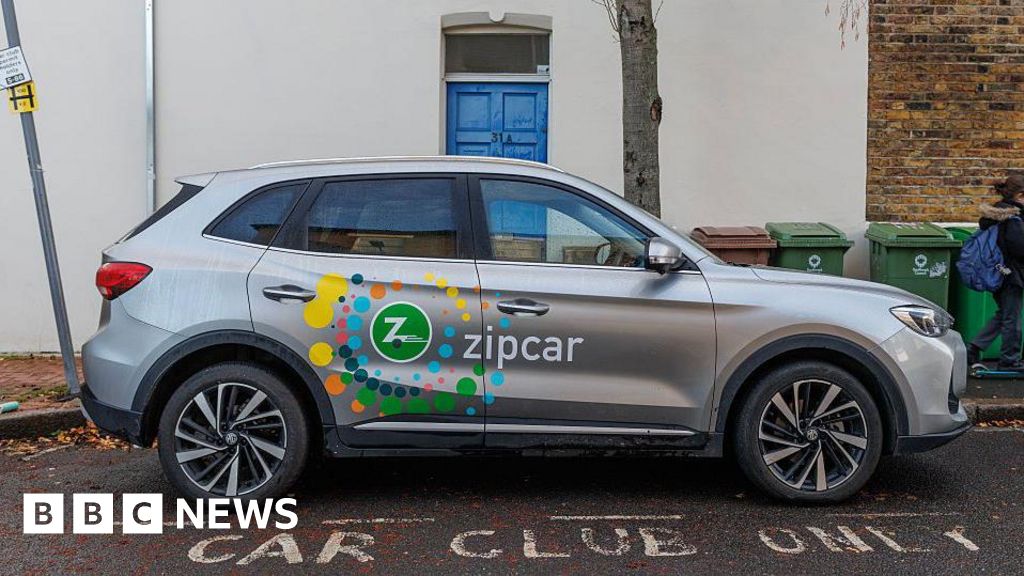
As a major car‑sharing scheme announces plans to close its London operations by the year’s end, some are concerned about the impact this will have on its users – and London’s emissions goals.
“If people like me didn’t have access to Zipcar, we would have to consider buying a car,” says John Sinha, who has been using the car-sharing service fortnightly for his business for about five years.
Mr Sinha, from Haringey, said he used the service to transport fragile objects, such as 3D printers, for his business.
“I normally use a bike to move around London, but sometimes, when carrying bulky or delicate objects, I need to have a car,” he said.
Mr Sinha points out: “If more people buy cars, it would mean more demand for parking spaces and more congestion, because people who have cars use them a lot more than people who are members of car clubs.”

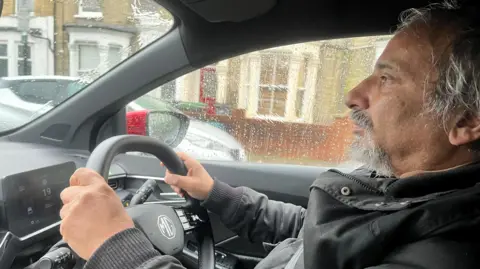
Mr Sinha said the closure of the car club would be “very bad” for sustainability and has launched a petition calling on London Mayor Sir Sadiq Khan to bring the car sharing service into public ownership.
“The thing about Zipcar, is it’s everywhere. You can find a car, you can book it on the app, there are even flex trips so you can take a car from one area and leave it in another area,” he said.
“It offers huge flexibility, and it’s almost as good as owning a car. Removing that is going to work against the stated policies of the mayor.”
Zipcar, a US-based company which is owned by car rental giant Avis Budget, said it had informed its UK members of the closure and had begun a formal consultation.
“As part of this proposal, new bookings in the UK will be suspended beyond 31 December 2025, subject to the outcome of the consultation,” Zipcar said.
“Zipcar UK will continue to operate as usual during this period,” a spokesperson said, adding it recognised the impact the proposal would have on its members, employees and partners.
‘Completely surprised’
Zipcar closed its operations in Oxford, Cambridge and Bristol last year to focus on its core London market, where it has more than 550,000 members.
Steve Gooding, director of the RAC Foundation, said he was aware the company had been struggling to make a profit in London.
Its decision was “perhaps sadly inevitable” and “not a complete shock”, he added.
“Car sharing is always going to be something of a difficult sell to a population that’s either very used to having all of the wonderful public transport that London benefits from, or they’ve got very used to having their own car,” he said.
However, Caroline Russell, leader of the City Hall Greens group, said she was “completely surprised by the suddenness of the announcement”.
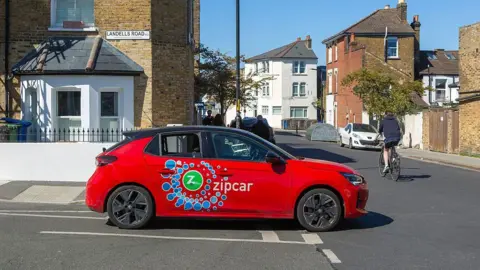
She said car clubs were “part of the landscape of London” and called on the mayor and Transport for London (TfL) to have a “proper strategic think” about their value in meeting the mayor’s targets on congestion and air pollution.
 Getty Images
A spokesperson for the mayor of London said car clubs played an important role in reducing the need for private car ownership in London.
“TfL and the mayor are engaging with stakeholders to understand these changes and will be working with boroughs who manage the provision of car clubs to help ensure that [they] can remain an option for Londoners,” they said.
TfL said its “powers over car clubs” were limited, but it provided funding to boroughs that could be used to support car club bays across the capital.
Additional reporting by Chris Slegg