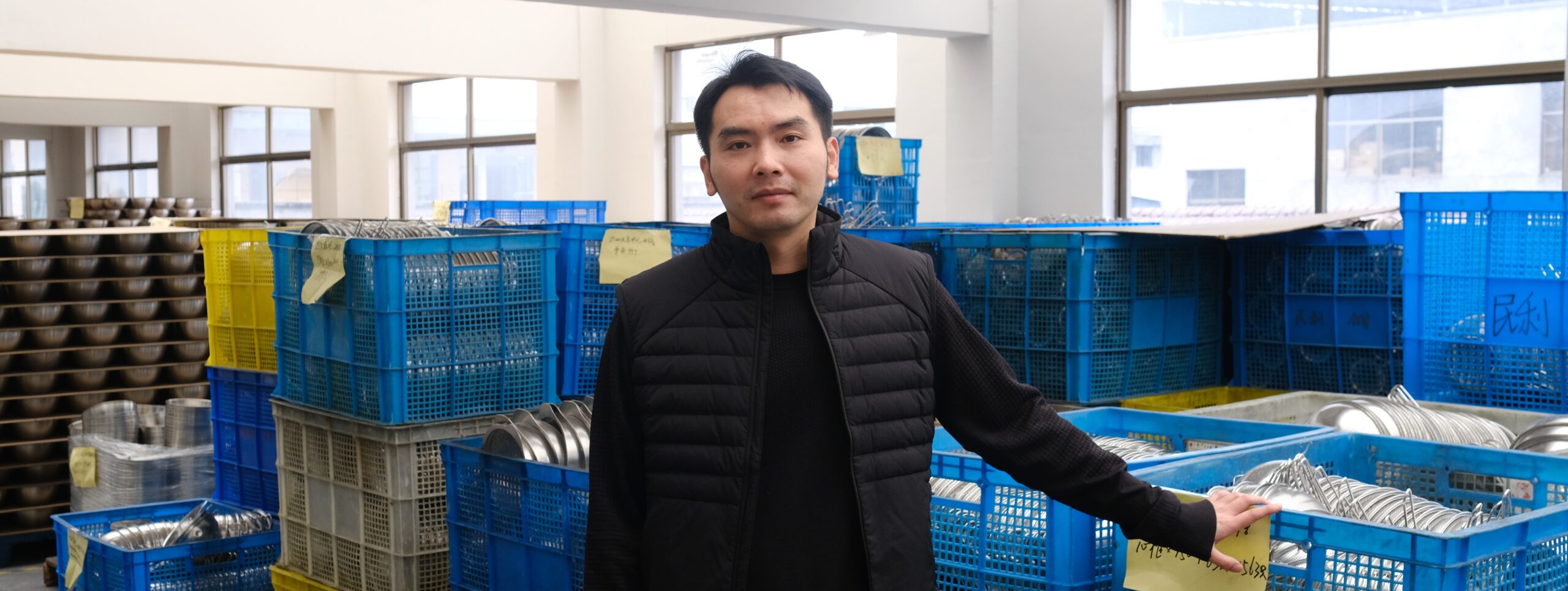
This company is my father’s legacy. He founded it with my mother in 1997 as a small family workshop. Over the years, it grew steadily to more than 100 employees. We produce stainless steel salad bowls, oil strainers, filter racks, and fruit baskets.
The COVID-19 pandemic and the war in Ukraine changed everything. Sales dropped by half, inventories piled up, and cash flow was scarce. My father was old, and the management team was not willing to make changes because they had stayed in their comfort zone for too long.
I knew that transformation was the only way forward, but I didn’t have a clear plan.
© Ying Huaye/ILO
In July 2024, the International Exchange and Cooperation Centre of the Ministry of Emergency Management and the Emergency Management Bureau of Yongkang City co-launched a SCORE pilot programme, and our factory was selected to participate.
At the time, our sales had dropped sharply and internal management was in disarray – production efficiency was low, product quality inconsistent, cost accounting difficult, and the factory environment messy. We were plagued by problems both inside and outside the company.
After SCORE Training, I was deeply inspired and convinced that this project could help us transform and upgrade. I decided to implement it in our factory, and it provided the professional knowledge we had long lacked.
© Ying Huaye/ILO
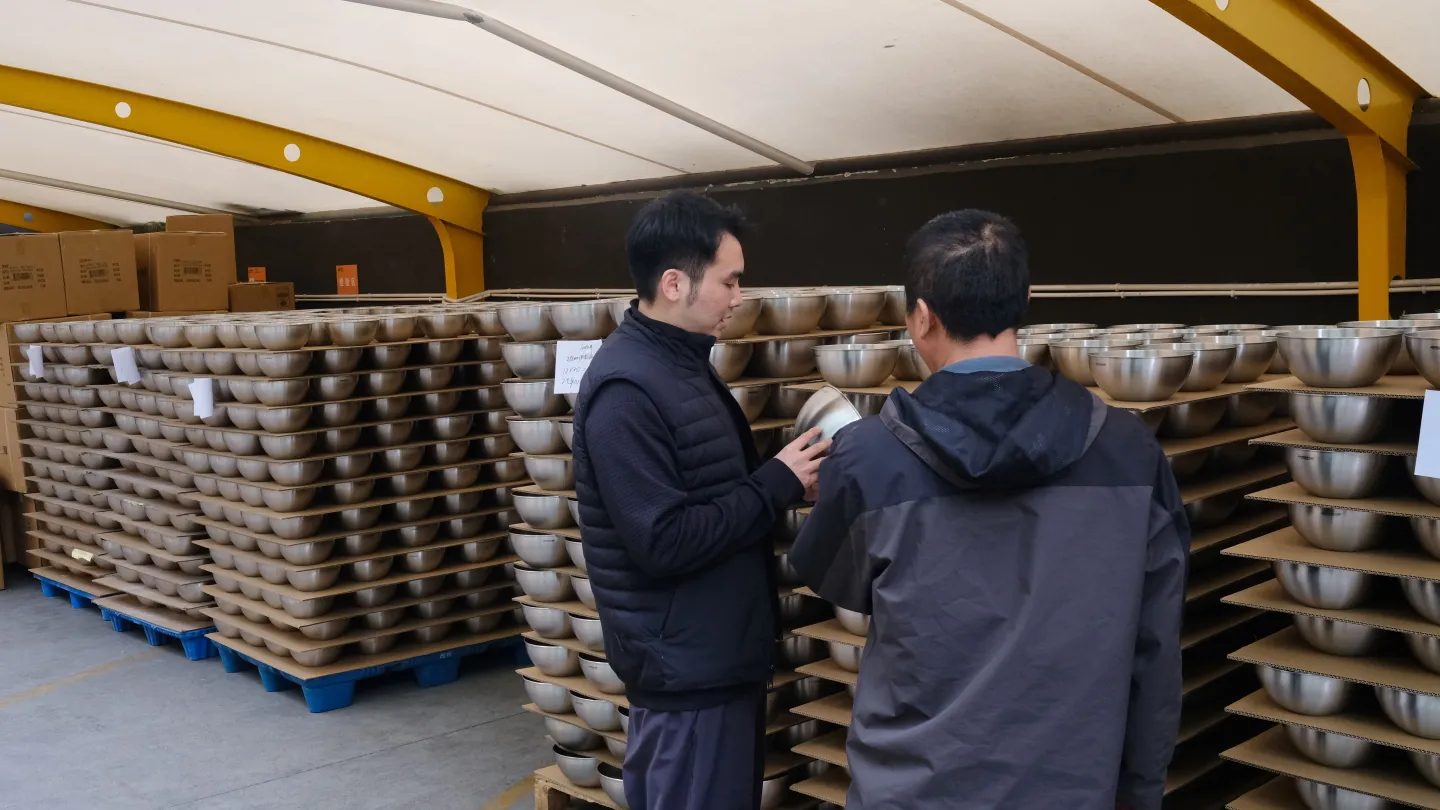
The biggest change was the transformation of our employees. Their motivation grew. Now, they think from the company’s perspective. They proactively identify and report problems and suggest practical solutions that save time and money.
Our sales have increased by 20 per cent. At the Canton Fair in April, for the first time in our 27-year history, we played a video of our factory workshop at our booth, and our high-quality products attracted many new customers and major retailers.
Employees have also reaped the benefits of the company’s growth. This year, our average salary increased by about 10 per cent, far above the industry average of 3–5 per cent. Next year, over 10 employees will see raises of 20 per cent, and three to five may see increases of up to 50 per cent.
Respect is the foundation. When workers see their ideas adopted, they gain a sense of achievement that motivates them even further.
Ying Changbin, Manager, LIVSHEW
Communication also strengthened. With guidance from SCORE trainers, we established an Enterprise Improvement Team that meets weekly. Employees contribute suggestions through QR codes or directly to managers, and every idea is discussed.
Respect is the foundation. When workers see their ideas adopted, they gain a sense of achievement that motivates them even further.
I grew up in the factory, and as a child I witnessed accidents and cried when I saw them. Our factory used to have three to four safety incidents annually. Since SCORE Training, we haven’t had a single safety incident. This is remarkable for a hardware factory.
Before the pandemic, our biggest markets were Russia, Ukraine, and the Middle East. After our transformation, our products moved from mid- to low-end to mid- to high-end. Our export markets expanded to Europe, North America, Japan, and South Korea. Recently, a Japanese client inspected our factory several times. Their standards were extremely high, but we became the first company in our industry to pass.
© Ying Huaye/ILO
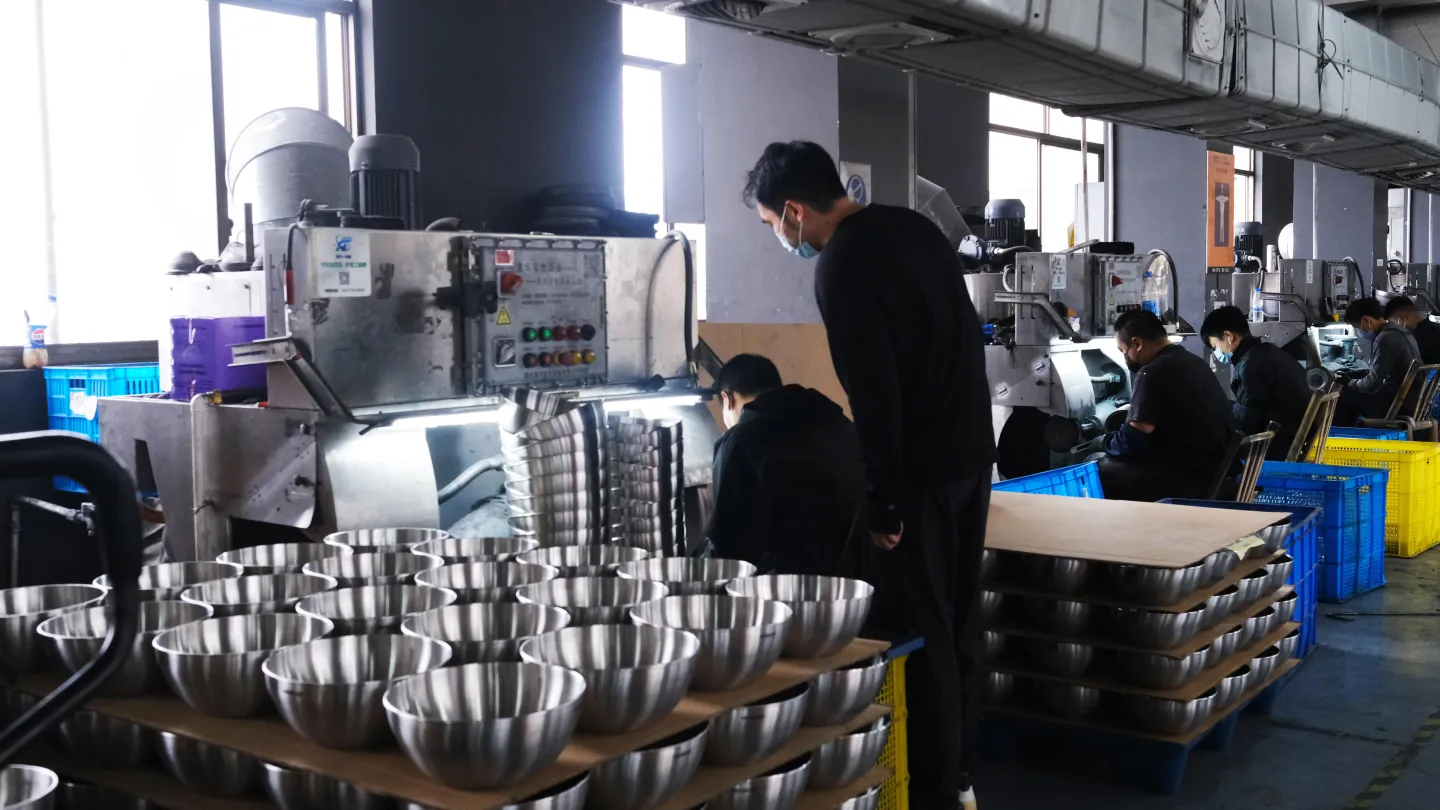
When employees’ suggestions are put into practice, their work becomes safer and more comfortable, the workplace environment improves, and they are rewarded – sometimes with a bonus, sometimes with a raise or promotion. Monthly recognitions such as “SCORE Star”, “Discovery Star” and “Cleanliness Star” also serve as great motivators.
Our female workers have seen additional benefits. Women can apply for special leave during difficult menstrual periods, and we provide thermos cups for comfort in winter. These initiatives, encouraged by SCORE, have improved workplace equality and wellbeing.
© Ying Huaye/ILO
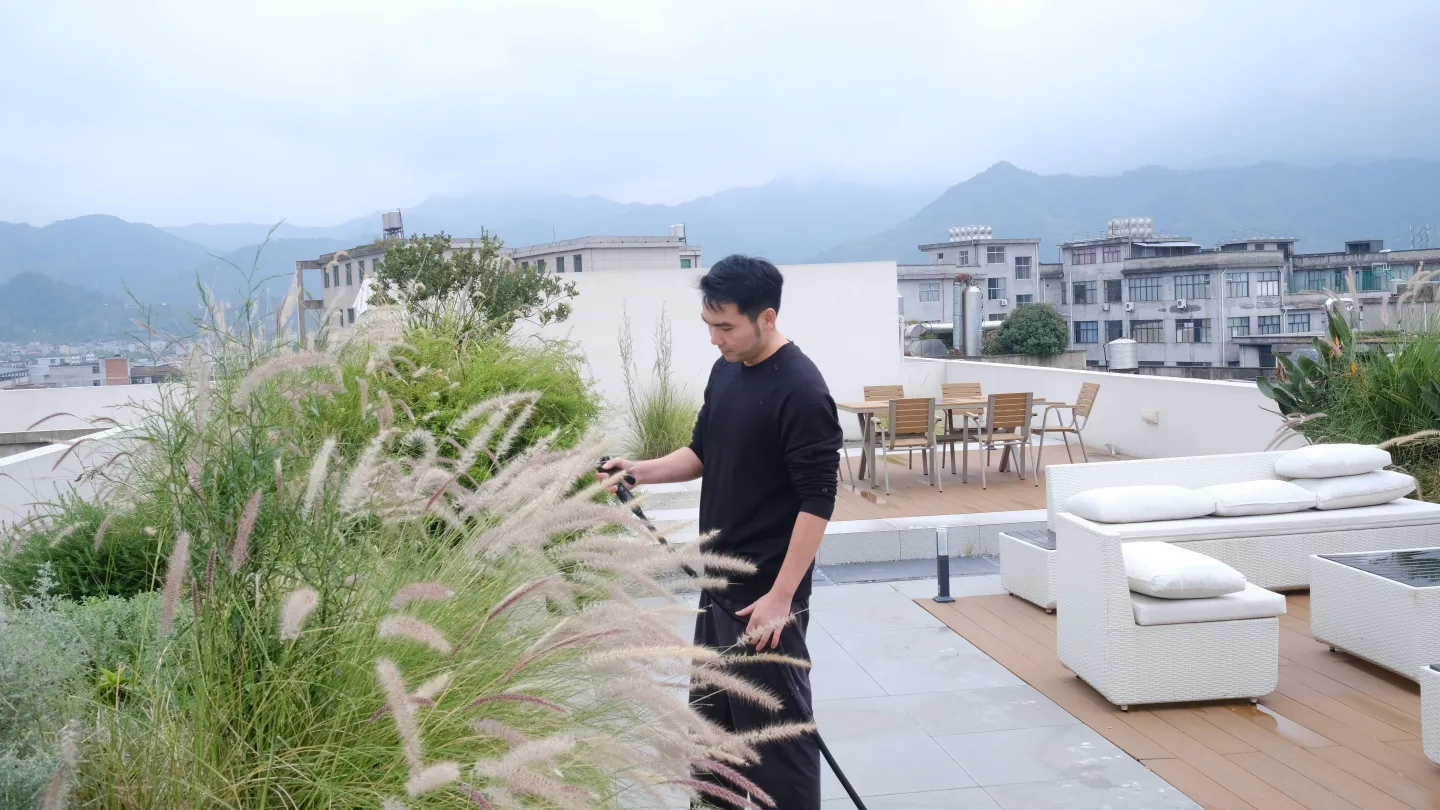
We also became more concerned about the physical and mental health of employees. We have even built a rooftop garden, open to everyone.
My long-term plan is stable growth. If we achieve this, we will buy a new factory building to provide an even more comfortable and better working environment. I will also create a safety fund to support employees.
Employees have reaped the benefits of the company’s growth. This year, our average salary increased by about 10 per cent, far above the industry average.
Ying Changbin, Manager, LIVSHEW
I have grown personally as well. I’ve learned that workers need recognition and respect – not just a salary. Through open dialogue, they have also come to understand that rules and systems are essential for ensuring quality.
The most important lessons I have learned are communication, trust, and respect. In the end, everything comes down to the human part.