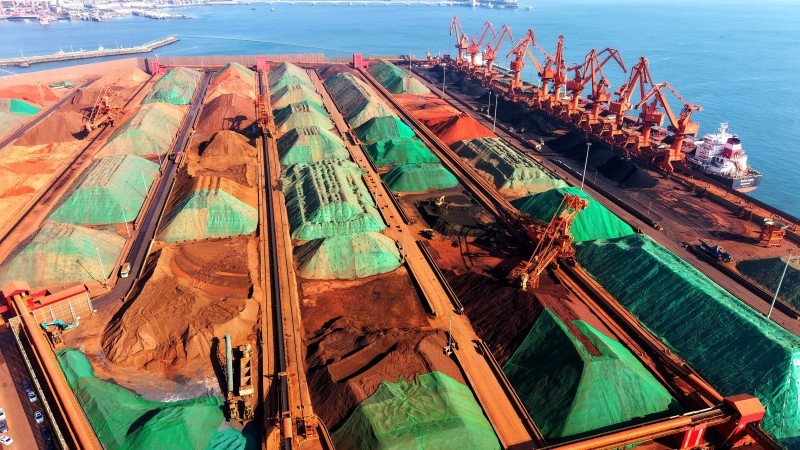
The ongoing pricing standoff, which began two months ago between BHP and China’s state-backed CMRG (China Minerals Resources Group), has added to uncertainty in the iron ore market. The standoff is part of China’s strategic push to exert greater influence over iron ore pricing and to increase the use of the yuan in contract settlements, reducing reliance on the US dollar.
CMRG was created by Beijing three years ago to shift leverage from major iron ore producers toward China, the world’s largest iron ore buyer.
Beijing has recently expanded its embargo on some BHP cargoes, ordering steel mills and traders to stop buying “jingbao fines”, a low-grade of iron ore that represents a small part of the miner’s exports to China. The ban follows an earlier halt on BHP’s “jimblebar fines”, a Pilbara iron ore grade and one of BHP’s most popular export types.
While the dispute is likely a negotiating tactic rather than a structural break, it heightens near-term volatility by disrupting trade flows and undermining confidence in China’s procurement approach. If unresolved, the impasse could drive a rerouting of some trade flows and force BHP to discount cargoes into alternative markets. For now, BHP has kept its full-year 2026 production guidance unchanged at 258-269 million tonnes.