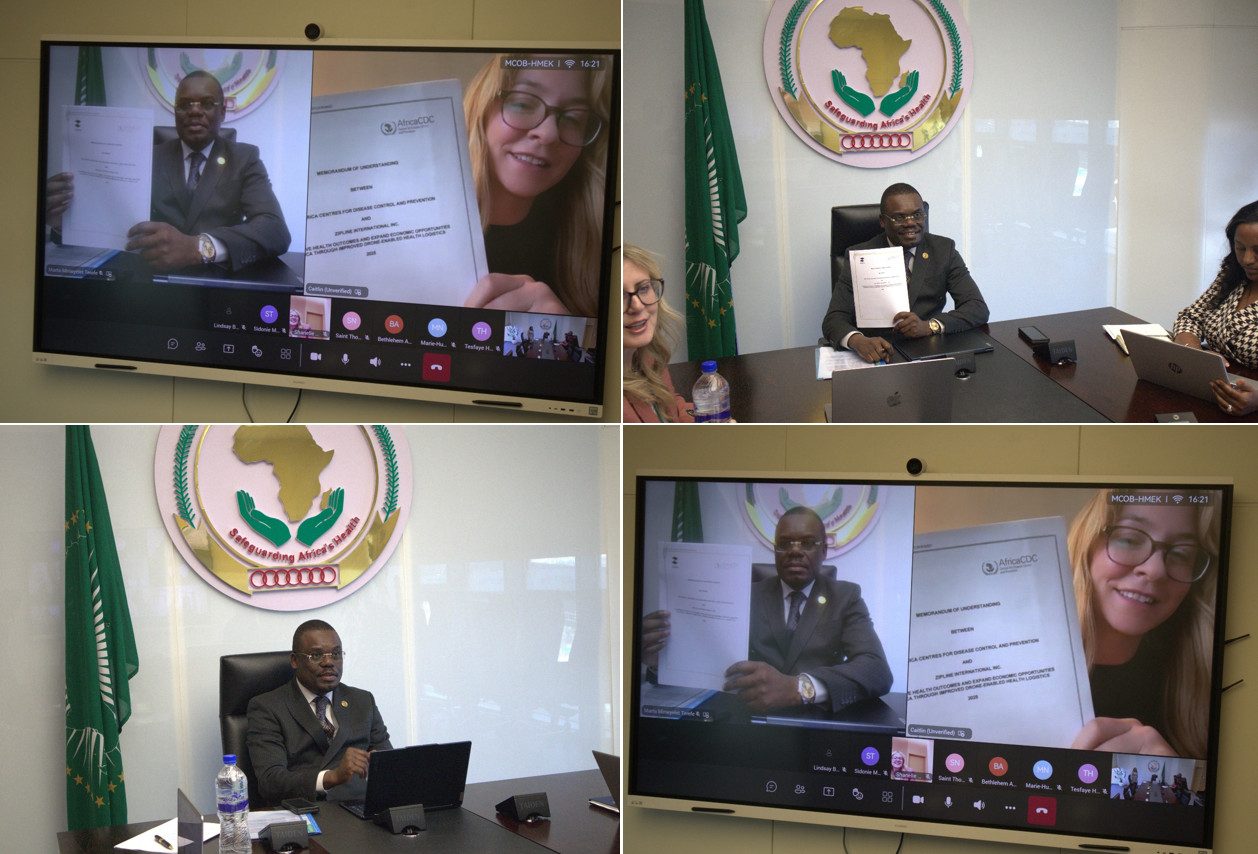
Together, they will expand access, improve emergency preparedness, strengthen data systems, and enhance epidemic early warning and response capabilities that work even at the last mile
Washington / Addis Ababa, 11 December 2025 — The Africa Centres for Disease Control and Prevention (Africa CDC) and Zipline International, Inc. have signed a Memorandum of Understanding (MoU) to improve health outcomes and expand economic opportunities across Africa through drone-enabled health logistics.
The partnership marks a significant step towards realising Africa’s vision of resilient, technology-driven, and equitable health systems — ensuring that life-saving medical products, from vaccines to diagnostics and essential medicines, reach every community, no matter how remote.
The collaboration aligns with the Africa CDC Strategic Plan (2023–2027) and Africa’s Health Security and Sovereignty (AHSS) agenda, which emphasise African-led solutions to strengthen institutions, expand local manufacturing, empower the health workforce, and leverage innovation for continental health security. It further supports Africa CDC’s One Health approach and Digital Transformation Strategy, aimed at connecting and modernising public health systems across the continent.
This partnership is guided by five core principles:
- Member State Ownership and Leadership: All activities are undertaken under the leadership of AU Member States and with the coordination and guidance of Africa CDC.
- Equity and Access: The collaboration prioritizes underserved, remote, and vulnerable populations.
- Sustainability and Sovereignty: The partnership strengthens domestic systems, integrates with existing public health infrastructure, and promotes Africa’s health sovereignty including via capacity building of local industry partners.
- Transparency and Accountability: Both parties maintain open communication, shared reporting, and compliance with ethical, legal, and data protection standards.
- Innovation for Impact: Joint efforts focus on scalable, evidence-based innovations with measurable impact on epidemic control and service delivery.
Through the MoU, Africa CDC and Zipline will collaborate to support countries on strategic initiatives including capacity building, workforce development, operational research, innovation, epidemic preparedness, emergency response, and technology transfer. The partnership will support the integration of drone-based logistics as decided by national governments, strengthen data-driven surveillance and early-warning systems, and promote coordinated action to ensure service continuity in hard-to-reach and disaster-prone areas.
“This partnership with Zipline is more than an innovation in logistics, it is a commitment to equity, access and resilience,” said Dr Jean Kaseya, Director-General of Africa CDC. “By leveraging advanced drone technology, we can connect communities that have long been beyond the reach of essential health services, empower our health workforce with real-time data and supplies, and build a continent that responds faster, works smarter, and saves more lives”.
Under this agreement, Africa CDC will work with Member States, partners, and donors to mobilise political commitment, investment, and collaboration in digital and drone-enabled logistics. Zipline will leverage its operational expertise, warehousing capabilities, autonomous aircraft network, and data-driven supply chain management systems to support the integration of aerial delivery into public health systems across Africa.
“Africa CDC and Zipline are working together to accelerate a continent-wide shift toward equitable, resilient, responsive health systems,” said Caitlin Burton, Chief Executive Officer of Zipline Africa. “By combining African leadership with Zipline’s technology and operational expertise, we’re strengthening supply chains, empowering health workers, improving early-warning systems, and ensuring every community has reliable access to care. This is innovation in service of health equity — and in service of Africa’s future.”
Since launching its first operations in Rwanda in 2016, Zipline has expanded to operate the world’s largest autonomous delivery network, partnering with governments and health institutions to transform how essential goods are distributed. Its technology now powers last-mile health delivery across several African countries, contributing to stronger supply chains, improved health outcomes, faster outbreak detection and response, and economic stimulation.
The MoU also commits both organisations to fostering knowledge exchange, advocacy, and technical dialogue, promoting innovation and collaboration through policy fora, joint research, and communication initiatives that highlight Africa’s leadership in health technology and systems resilience.
This partnership supports the African Union’s Agenda 2063 and advances the continent’s collective vision of a prosperous, healthy, and self-reliant Africa, driven by innovation, partnership, and the power of technology.
###
About the Africa CDC
The Africa Centres for Disease Control and Prevention (Africa CDC) is a public health agency of the African Union. It is autonomous and supports member states in strengthening health systems. It also helps improve disease surveillance, emergency response, and disease control. Learn more at: http://www.africacdc.org and connect with us on LinkedIn, Twitter, Facebook and YouTube
About Zipline
Zipline is the world’s largest and most experienced autonomous delivery service. Today Zipline operates on four continents, makes a delivery somewhere in the world every 30 seconds, and serves more than 5,000 hospitals and health facilities. Zipline’s customers include federal and state health systems, health care institutions, restaurants and retailers. With more than 120 million commercial autonomous miles safely flown to date, Zipline is transforming access to healthcare, consumer products, and food. Our customers rely on Zipline to save lives, reduce emissions, increase economic opportunity, and provide new logistics services at scale.
For years Zipline has worked with visionary governments and philanthropic organizations willing to take bold action to improve health outcomes for tens of millions of people. Partners include the Elton John AIDS Foundation, the Gates Foundation, Gavi, Pfizer, and The UPS Foundation, which have helped Zipline and its partner governments develop a wealth of empirical evidence that advances our understanding of how improved supply chain performance increases timely treatment and ultimately saves lives. For more information, visit Zipline.com/Africa.
Media Contacts
Margaret Edwin | Director of Communication and Public Information | EdwinM@africacdc.org
Zipline Media Contacts
Olugbeminiyi Idowu | Talking Drum Communications (on behalf of Zipline) zipline@talkingdrumcomms.com