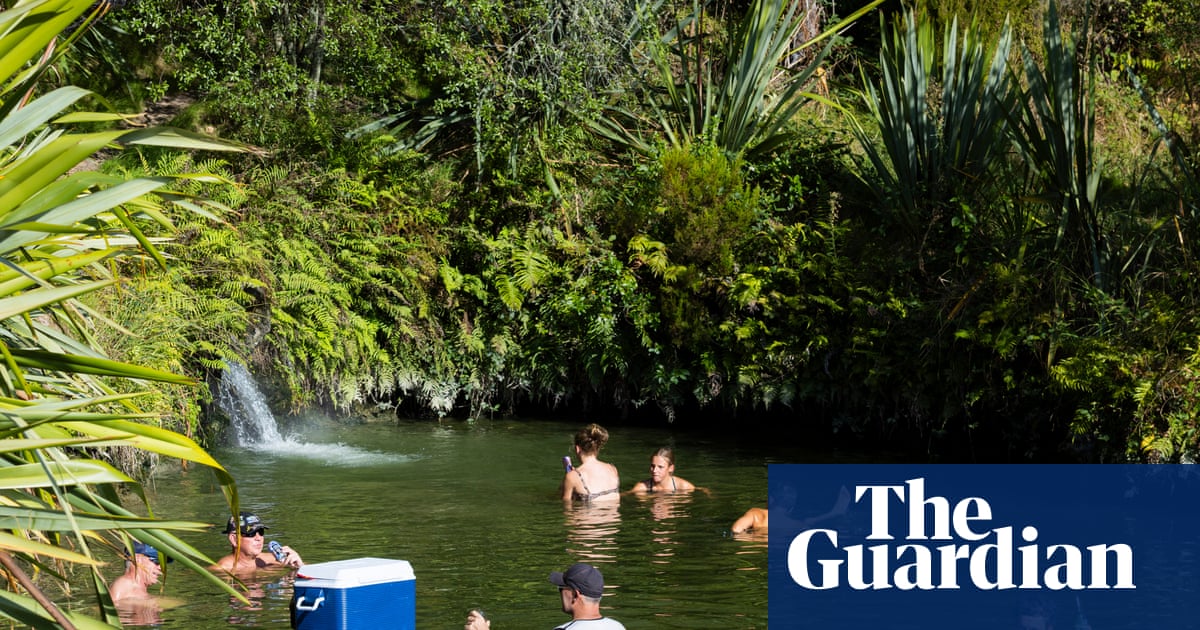
It sounds idyllic: weeks off work at the warmest time of the year, with relaxation mode kicking in before Christmas and little rush to return to the office until late February.
But in New Zealand, there are concerns that the traditional long summer break could be hurting the country’s productivity.
Simon Bridges, the head of the Auckland Business Chamber and former National party leader, has been contributing to a national debate over the length of New Zealand’s summer holidays, telling Guardian Australia there is a view that the country “shuts down not just for Christmas and New Year but in many cases all the way through to March”.
“Even when businesses are physically back at work many are ‘easing into it’, not properly working until rather later than their actual holidays,” he said.
“People will say in November, ‘I will come back to you Feb/March’ hence the phrase ‘mad March’ when things actually start to feel fully on again.”
The long New Zealand summer holiday has become a national conversation, with arguments emerging about whether the break is too long, affecting productivity, or simply allowing employees to rest.
The debate was ignited when business adviser and director Toss Grumley raised his concerns in a LinkedIn post, after getting responses in late November and early December of “let’s circle back [in] February”.
“Everyone needs a break, but there seems to be this unofficial shutdown period where not a lot is done,” Grumley said.
New Zealanders are entitled to a minimum four weeks paid annual leave each year, but often choose to take most or all of their leave over summer and the Christmas period, leaving little room for rest throughout the year, and causing lower productivity levels in weeks before and after the break.
Grumley said the “long window” of little productive work in February and March has negative impacts on the “already quite fragile” New Zealand economy.
He says the start of the year is not the time to take “a bit of oxygen out of the economy”.
“You want to keep the momentum going to get us back on track,” he said.
But some argue that a long break is necessary for people exhausted by working all year. This fatigue is felt first-hand by small businesses owners, including creative director Sam Ashby, who said he feels “shattered” by November.
Before moving to Wellington five years ago, Ashby lived in London, where he said there is “an even cadence of holidays”. He said combining Christmas, New Years’ Eve and summer in New Zealand means holidays become “bunched up” and don’t provide adequate rest throughout the year.
Ashby says the long holiday can be “very disruptive” for business, where he may not see a client for two or three months, or projects may be paused for long lengths of time.
The self-employed business owner says he also notices “massive” financial implications on his design business because he is not able to invoice “nearly as much” in December and January, due to the holiday period.
“It’s going to take me until February/March to really get the money rolling again, so you have to have either that money saved up or you have to really tighten your belt … for small businesses, I think it’s pretty tough in that respect,” he says.
The implications of a long holiday can also reach beyond New Zealand, with Bridges warning it can complicate international business relationships.
“Most of Asia, including China and India are always on, communicating quickly and expecting swift responses. If you want to do business with them, you need to be in that mode as well,” he said.
Are several shorter breaks the solution?
Massey University professor of innovation and economics, Christoph Schumacher, speaking on NewstalkZB on Tuesday, said holidays may not be structured as well as they could be.
“The question is just can we structure it better? Can we organise it better, so that not everything shuts down but we scale things. Some people stay here to keep business going as usual, some people take off, and we rotate this,” Schumacher said.
Spreading holidays throughout the year could be one way to prevent fatigue and improve productivity, according to Bridges. “This could be more productive for business as well as the wider economy as people are more refreshed and rested all year round,” he says.
However, Kristy Phillips, chief executive of Hospitality New Zealand, says a shorter holiday period could hit the hospitality industry.
“While a shorter holiday period over our summer may help with economic productivity at a macro-level, many Kiwis like to take their mid-winter break overseas rather than having a domestic holiday, so the benefit to hospitality would likely be minimal,” she said.
Bridges admits the long holiday would be “really hard to change” in New Zealand culture. “We all feel entitled to our long Kiwi summer, me included.”
Chris Hipkins, the former prime minister who will be taking three weeks off over summer, agrees. When asked by New Zealand media for his take on the long break, he replied “It’s good”.
“In some respects it is better for business that everybody takes their holidays all at once, rather than as we see in some other countries where they are staggered and they have to manage all of the ups and downs that go with that.”