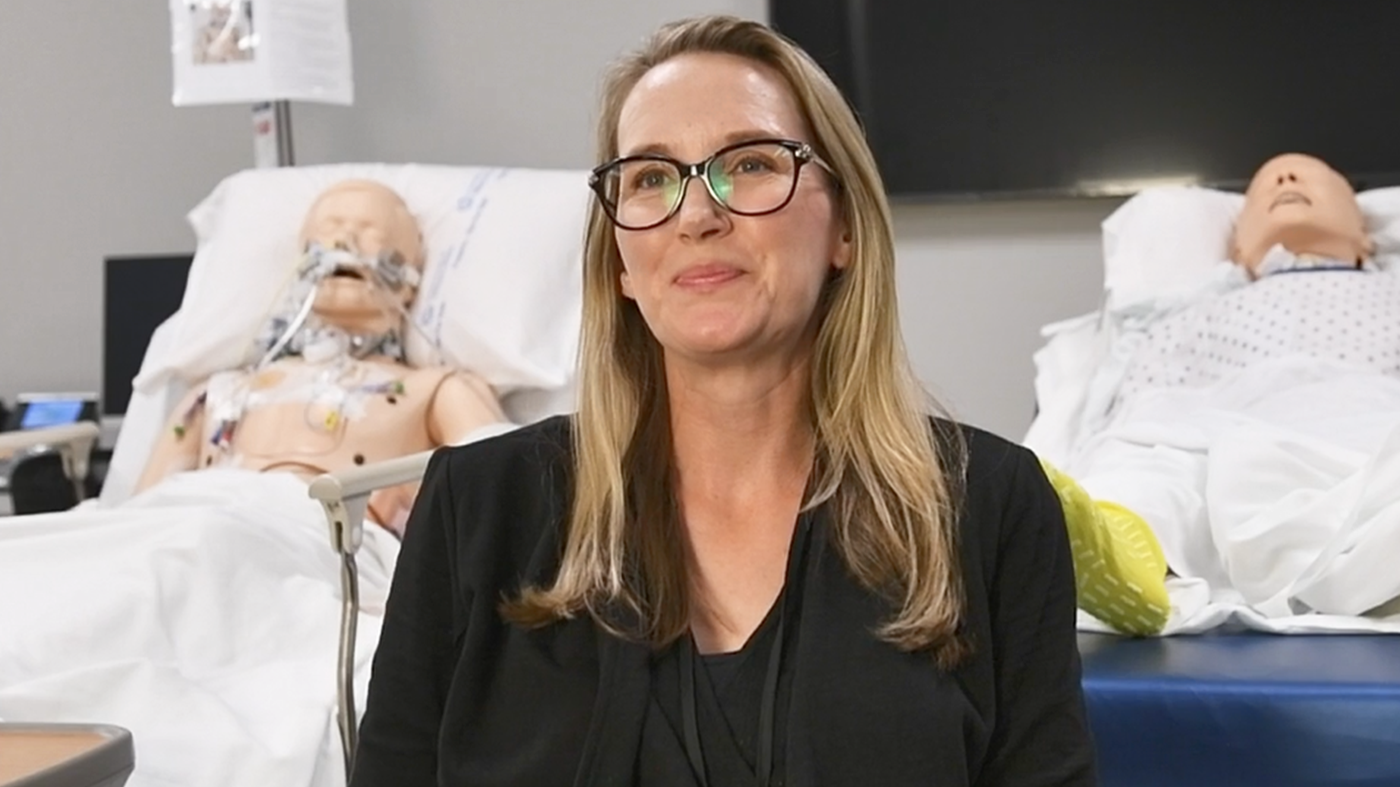
Veterans and trainees’ approach ‘growth journey as a family’
At Minneapolis VA, health professions trainees are learning skills to advance their careers, and they’re also providing more access to care for Veterans in need.
Iida Jacobsen, a trainee in the Occupational Therapy Fellowship Program, is in her second year of training at VA. After getting her license, she chose to do her fellowship with VA since she had such great experience in her field work last summer.
The primary reason for choosing VA was her love of working with Veterans. “My grandpa was a Veteran, but I feel it goes more beyond that,” said Jacobsen. “I feel like I have a calling to work with Veterans. It’s a natural affinity that has driven me my whole life.”
Unique learning opportunities
Another reason Jacobsen was drawn to VA is it offered her an opportunity to train across multiple disciplines within the medical center—an experience she described as one of the unique advantages of VA training.
“The fact that I was able to shadow the pain clinic, inpatient mental health and spinal cord, was a really valuable experience and really speaks to the learning opportunities that VA provides for its students and trainees,” said Jacobsen.
More than 122,000 trainees in over 60 disciplines trained this year in VA medical centers across the nation, receiving these unique training opportunities.
For Michelle Berg, a nurse practitioner resident at Minneapolis VA, the various features of the training programs are reassuring and help build confidence.
“In clinical, you might order tests, or you might order imaging, but you rarely saw the end result of those,” said Berg. “And so, entering into a residency gives kind of a safety net underneath, after starting to practice and have that additional support.”
Veterans enjoy working with trainees
VA trainees often say Veterans enjoy being a part of the learning experience. Jacobsen recalled multiple Veterans saying they hope they are helping her learn something.
“I really think it speaks to the Veteran population because they still have this definite, deep fulfillment of service to students, to civilians. I really felt a deep sense of gratitude that they still wanted to be a part of the next generation of trainees,” said Jacobsen.
Laurie Humiston, the Occupational Therapy Fellowship Coordinator for Jacobsen’s program, echoes those experiences in her daily work and believes it is the best part of her job.
“I get to connect trainees and Veterans through their growth journeys, gaining skills that help each other,” said Humiston. “The trainees become more advanced practice providers, and Veterans get to benefit from that teaching. They also get to see how that teaching happens, and so we all approach that growth journey as a family.”
Veterans benefit overall
Berg is thankful for the profound experience gained from working with VA as she transitions into practice as a nurse practitioner. She is glad that the skills she learned will help her to take better care of Veterans.
“Working with the Veterans and understanding their special needs has been something that no matter where my career takes me, I will now provide better care of Veterans overall,” said Berg.
For Jacobsen, her love of working with VA stretches beyond the high-quality training. She believes in VA’s mission of caring for those who have served in the nation’s military and encourages others to do so as well.
“I’m always a deep advocate for VA and for the Veteran population,” said Jacobsen. “So, I would say if this ever reaches any others who are wanting to give VA a shot—let this be a message to make that a reality. It’s an experience that you won’t regret, and VA really has a lot of opportunities and experiences that would aid in any student’s learning.”
VA partners with more than 1,450 academic institutions throughout the nation, making VA’s health professions education program the largest in the United States. These programs, overseen by the Office of Academic Affiliations, are shaping the next generation of health care professionals for VA and the nation.