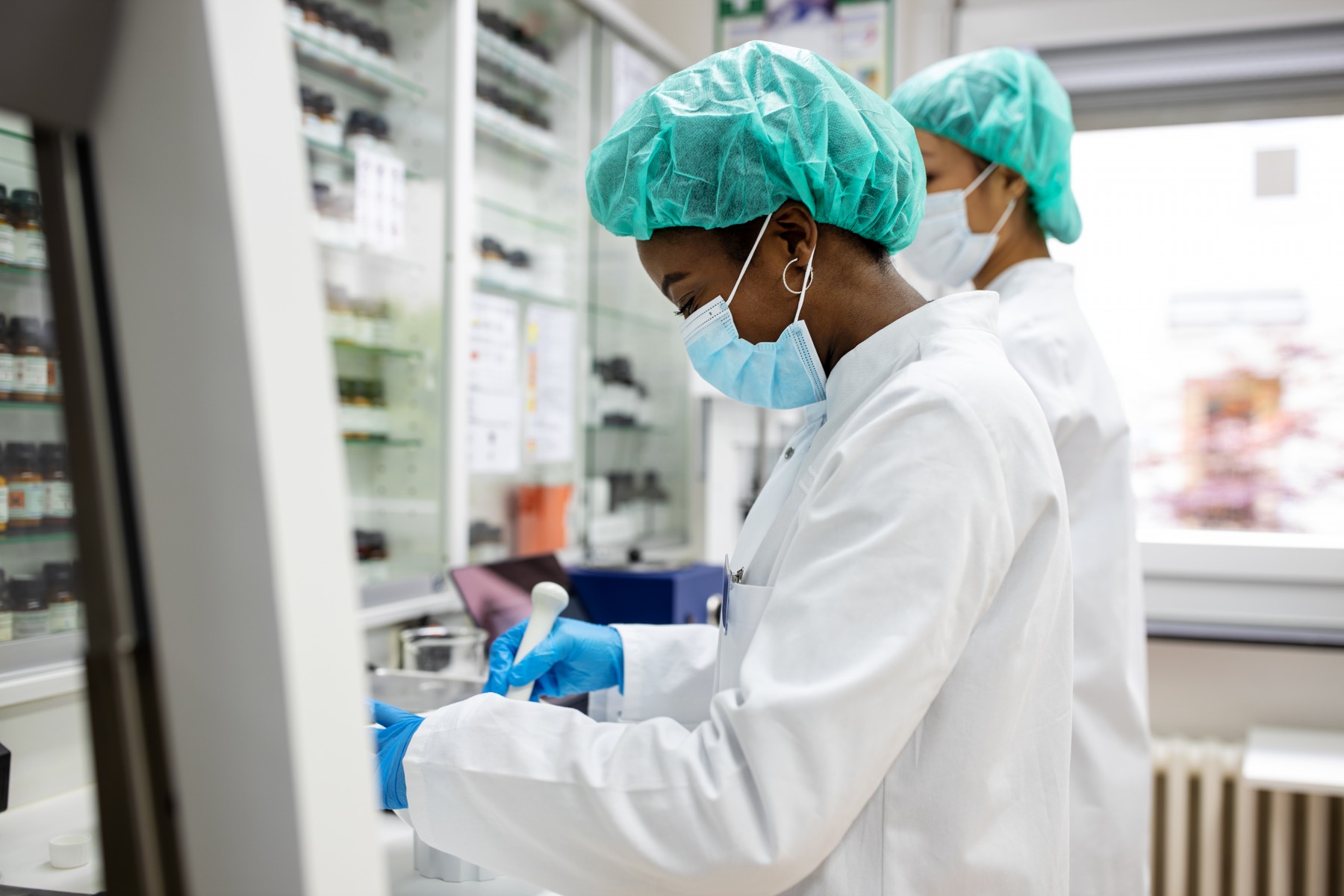
Each programme brings together academic and industrial expertise to deliver high-quality doctoral training, with a strong emphasis on collaboration, innovation, and real-world impact.
The three awards are:
BioProcess: Biocatalysis and Protein Engineering Centre for Sustainable Synthesis
Led by Professor Anthony Green at The University of Manchester and co-developed with AstraZeneca, BioProcess will offer training in biocatalysis, protein engineering and biomanufacturing with a specific industry focus. The programme will be delivered by a consortium of academic and industrial partners including the Universities of York and Bristol, and a network of multinational companies from across the pharmaceutical, chemical and biotechnology sectors.
Students will be based in one of the three universities and will spend a minimum of three months working on industry placements to gain experience in a commercial setting. Training will span four scientific pillars: design and discovery of new enzyme chemistry, laboratory automation and AI for accelerated protein engineering, assembly of enzyme cascades and cell factories, and realising biotransformations at scale. The programme builds on the success of the Centre of Excellence for Biocatalysis (CoEBio3), which has already graduated 36 students and commercialised over 1,000 biocatalysts to date.
BioProcess aims to equip this new generation of researchers with the technical and transferable skills needed to contribute to the UK’s bioeconomy, while fostering a collaborative and inclusive training environment.
BioAID: AI-Driven Enzyme Design for Industry Biocatalysis
BioAID, led by Queen’s University Belfast, with co-leads including Professor Sam Hay from the Manchester Institute of Biotechnology, and the Universities of Edinburgh and Bristol, will equip students with specialist knowledge in artificial intelligence and enzyme science to accelerate sustainable biomanufacturing.
The programme responds to the growing demand for scalable, AI-enhanced enzyme solutions in sectors such as pharmaceuticals, agri-tech and clean energy. Students will receive training in machine learning, protein design and synthetic biology, supported by national computing infrastructure and hands-on laboratory experience.
BioAID is designed to be interdisciplinary from the outset, with projects co-supervised across biosciences, AI, and engineering. Students will follow a structured training programme centred on three integrated scientific themes:
- AI-Powered Enzyme Discovery (e.g. metagenomic mining and structure prediction)
- AI-Guided Enzyme Design (e.g. active site tuning using ML tools)
- AI-Enhanced Enzyme Applications (e.g. scalable biocatalysis in clean manufacturing)
The programme will deliver significant societal and economic benefits by embedding AI-driven enzyme innovation within the UK’s bioscience talent pipeline.
CODE-M: Control and Design of Bioengineered Microbial Cells and Systems
CODE-M will train PhD researchers in microbial bioengineering, with a focus on applications in biomedicine, clean growth, food systems, and environmental solutions. Led by Professors Michael Brockhurst and Neil Dixon at The University of Manchester, in partnership with the University of Liverpool, the programme will produce a cohort of highly-trained, highly employable bioengineers that will reinforce the UK’s position as a leader in green and biobased solutions.
Students will develop microbial biotechnologies that tackle global challenges, including improving health, driving clean growth, creating resilient food systems, and delivering environmental solutions. Training will be supported by advanced facilities including biofoundries, genomics platforms, and high-performance computing, and will be built around three themes:
- Bottom-up design for bioengineering microbial cells and systems
- Top-down control for bioengineering microbiomes
- Disruptive technologies for microbial bioengineering
The programme includes hands-on rotation projects, enabling skills training, and placements with industry and national institutes. CODE-M also places a strong emphasis on responsible research and innovation, equality and inclusion, and student-led activities such as stakeholder symposia and outreach.
Building capability in the north-west
Together, these three programmes represent a significant investment in the north-west and UK’s biotechnology training landscape. They will help to build a pipeline of skilled researchers equipped to tackle complex challenges in sustainable manufacturing, health, and environmental resilience.
Each programme has been designed to align with UKRI’s doctoral investment priorities and national strategies including the UK Bioeconomy Strategy, Net Zero Strategy, and AI Strategy. By embedding industry collaboration, interdisciplinary training, and inclusive practices, these awards will support the development of a diverse and capable research workforce.
Applications for the first cohort of studentships are expected to open in 2026, with further details to be announced in due course.
';