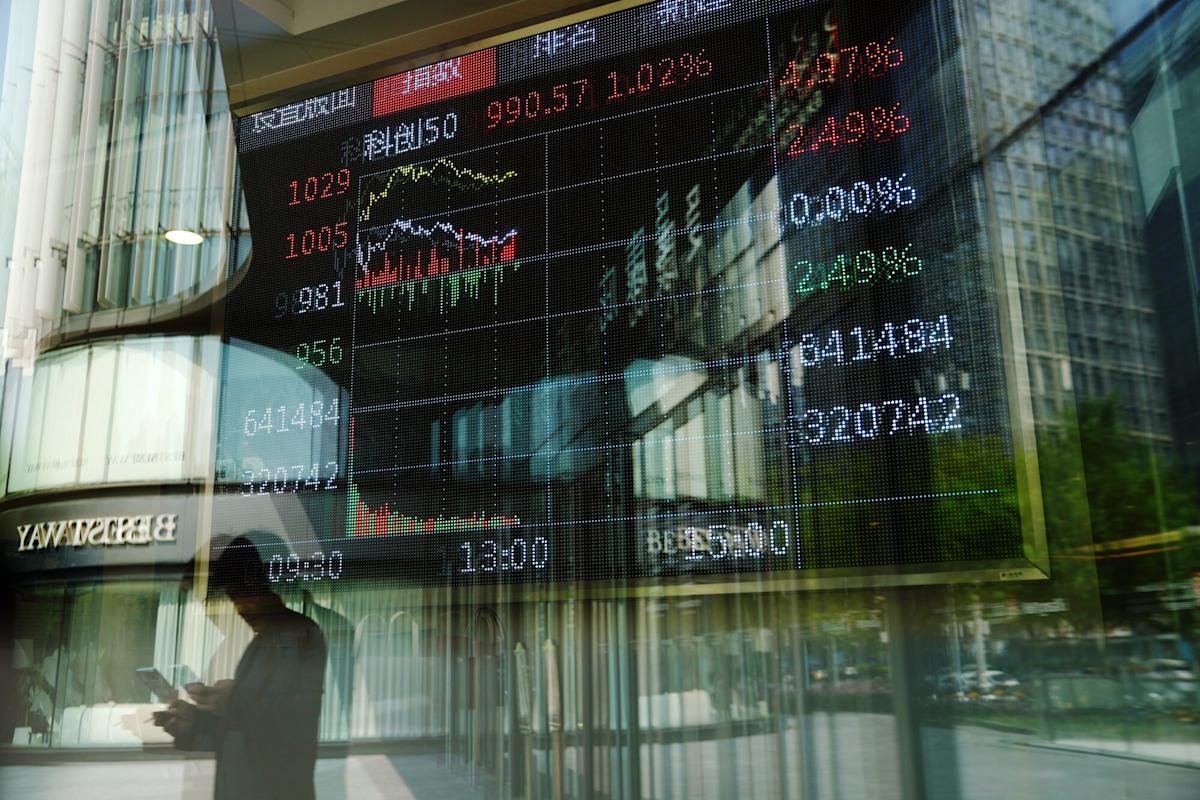
(Bloomberg) — Chinese stocks in Hong Kong neared key bearish technical levels on Tuesday as fading tech gains and renewed economic growth concerns fueled a sharp selloff.
The Hang Seng China Enterprises Index (^HSCE) slid 1.8% and the MSCI China Index fell 1.6% Tuesday, with both briefly entering technical correction. Alibaba Group Holding Ltd. (BABA, 9988.HK) and Tencent Holdings Ltd. (0700.HK, TCEHY) were among the worst drags, while a gauge of tech stocks traded in Hong Kong was just shy of a bear market.
Most Read from Bloomberg
The recent pullback has threatened to undermine fragile investor confidence in the world’s second-largest market, weighed by persistent economic weakness and Beijing’s reluctance to unveil sweeping stimulus. Fresh data showing further deterioration in economic confidence this week has amplified concerns and raised the risk of a spillover into other assets.
“Deflation, soft consumption, real estate weakness, involution — none of these issues seem to have been definitively resolved,” said Vey-Sern Ling, managing director at Union Bancaire Privee, adding that profit-taking makes sense given uncertainty.
Investors are now reassessing their positioning in China’s equity market after a DeepSeek-fueled surge earlier this year turned local gauges into global standouts. Concerns over stretched valuations in tech and broader benchmarks coupled with fading hopes for sweeping stimulus by Beijing, are quickly eroding confidence.
That fragility was on display Monday after data showed Chinese investment slumping further and retail sales growing at their weakest pace since Covid, sending markets reeling. Home prices have resumed declines, renewing worries over China’s prolonged real estate crisis amid China Vanke Co.’s deepening debt woes. Persistent trade tensions are compounding the economy’s vulnerability.
Meanwhile, President Xi Jinping has vowed to crack down on the pursuit of “reckless” projects that have no purpose except showing superficial results, highlighting the Chinese leader’s concern over the quality of growth in gross domestic product and the use of financial resources.
Worries over an artificial intelligence bubble are affecting the tech sector, along with “generally weak macro and lack of meaningful catalysts from the Central Economic Work Conference,” said Xin-Yao Ng, a fund manager at Aberdeen Investments, referring to the economic policy meeting earlier this month.
