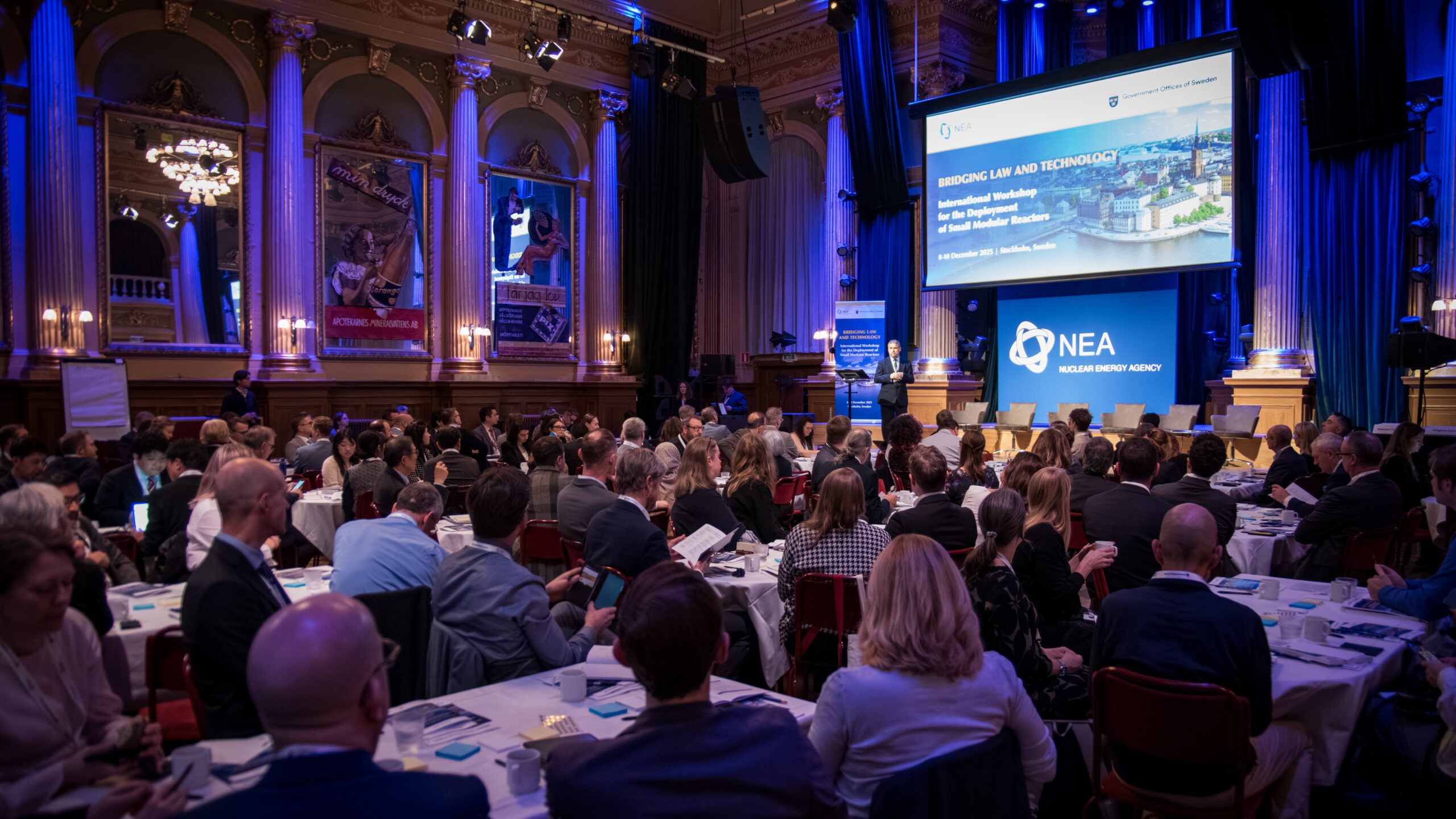
The NEA held the Bridging Law and Technology: International Workshop for the Deployment of Small Modular Reactors (SMRs) from 8-10 December 2025 in Stockholm, Sweden. Co-organised with the Government of Sweden, the event brought together more than 200 legal, technical and policy experts to discuss the unique legal challenges posed by advancements in small modular, transportable, maritime, and generation IV reactors and identify potential paths forward.
The workshop was structured into five thematic sessions, combining keynote addresses, panel discussions and interactive Q&A segments. Focusing on authorising SMR designs, SMR pre-licensing and licensing challenges, factory manufacturing, mobile reactors and transportation, maritime applications, and fuel cycle, waste management and decommissioning, high-level speakers set the tone by emphasising the importance of bridging legal frameworks with technological innovation. Panels featured experts from governments, regulatory bodies, industry and academia, who discussed practical approaches to licensing SMRs, managing liability, and fostering international co-operation. Using a highly interactive format, every participant was encouraged to contribute their diverse expertise to directly shape the discussions and outcomes. The exchanges underscored the urgency of collaborative solutions and highlighted best practices from member countries.
In her opening remarks, Maja Lundbäck, State Secretary to Minister for Energy, Business and Industry Ebba Busch, Government of Sweden, highlighted the role of nuclear energy in ensuring energy security and supply in Sweden. “Access to energy at reasonable prices when and where it is needed is a democratic issue and necessary for building a sustainable society,” she noted. “Sweden is back when it comes to nuclear power.”
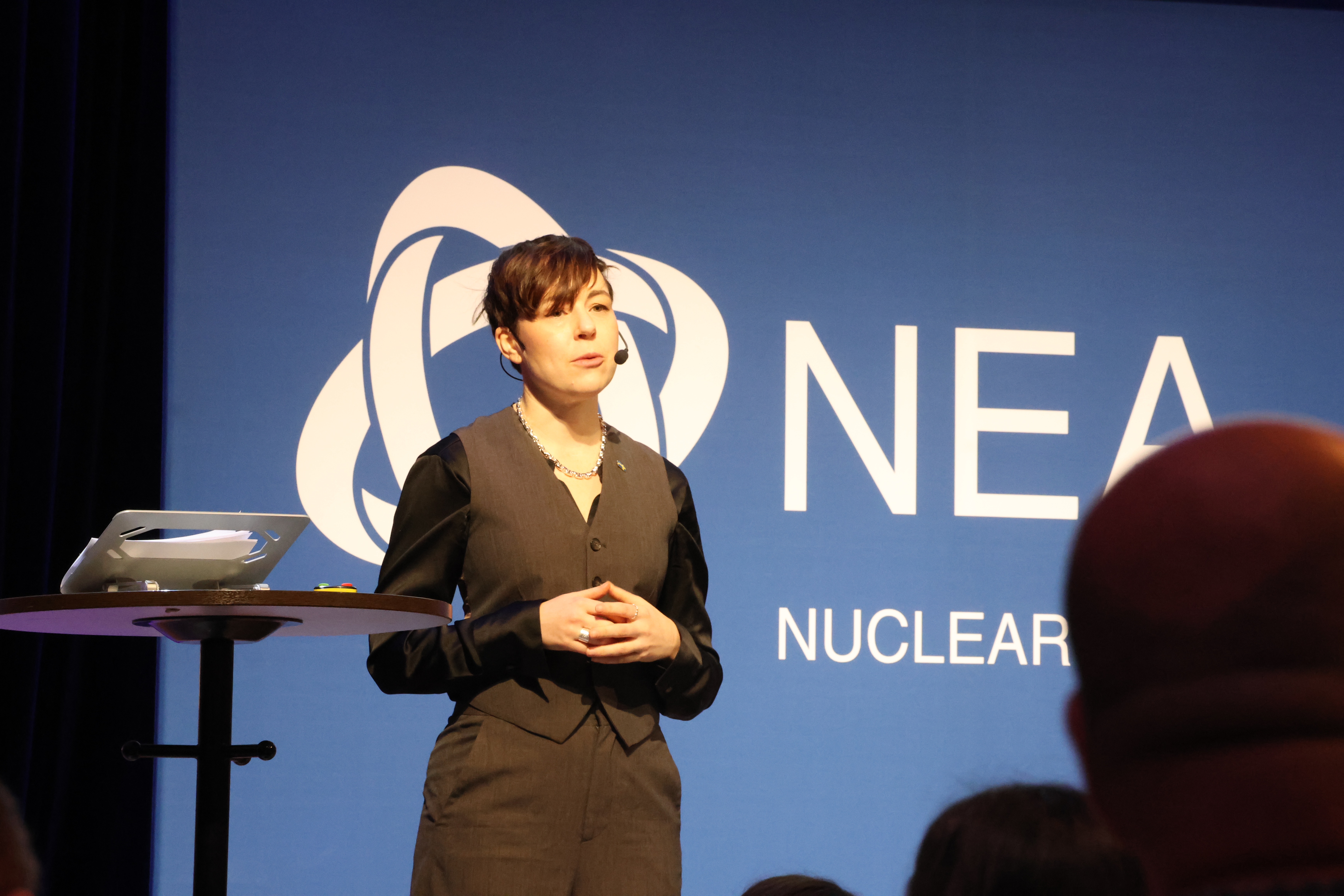
Maja Lundbäck, State Secretary to Minister for Energy, Business and Industry Ebba Busch, Government of Sweden
Daniel Westlén, State Secretary to Minister for Climate and the Environment Romina Pourmokhtari, shed light on the latest regulatory developments in Sweden, noting that “The government is reviewing all legislation related to nuclear power to enable the deployment of new reactors.”
Kimberly Sexton Nick, Head of the NEA Division of Nuclear Law, noted in her welcome remarks that “Legal and regulatory issues cannot be addressed in a vacuum, only by lawyers or only by technical experts or only by policymakers. The walls separating law, policy and technical expertise must be removed and only through sustained and committed communication and collaboration can those in the nuclear field chart a path forward.”
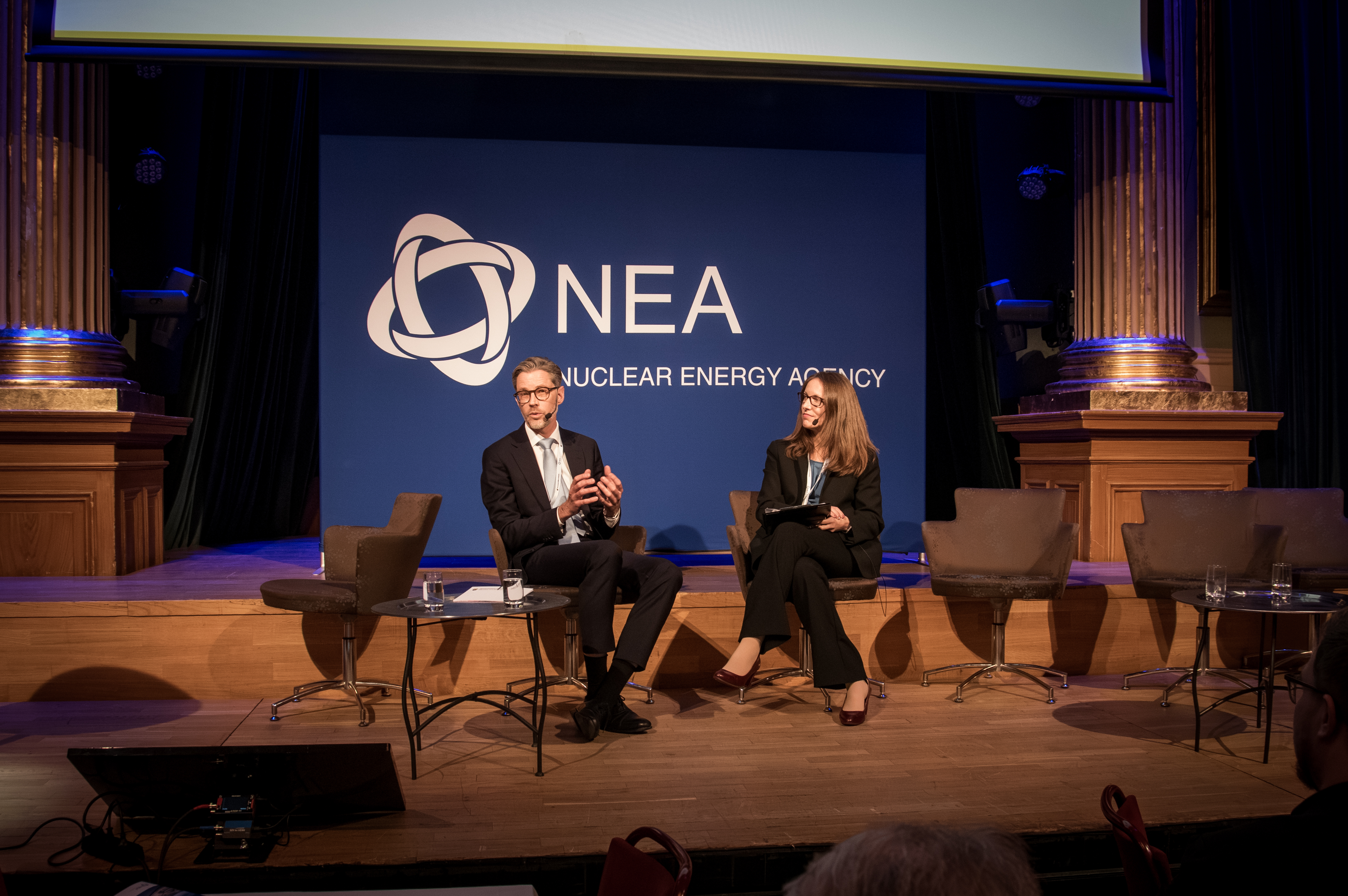
Daniel Westlén, State Secretary to Minister for Climate and the Environment Romina Pourmokhtari, and Kimberly Sexton Nick, Head of the NEA Division of Nuclear Law
Paul Bowden, the workshop moderator, set the tone stating that “The challenges associated with SMR deployment cannot be solved only with national solutions. The final goal of this workshop is to move beyond our own borders to see transnational opportunities and potential international approaches to problem solving.”
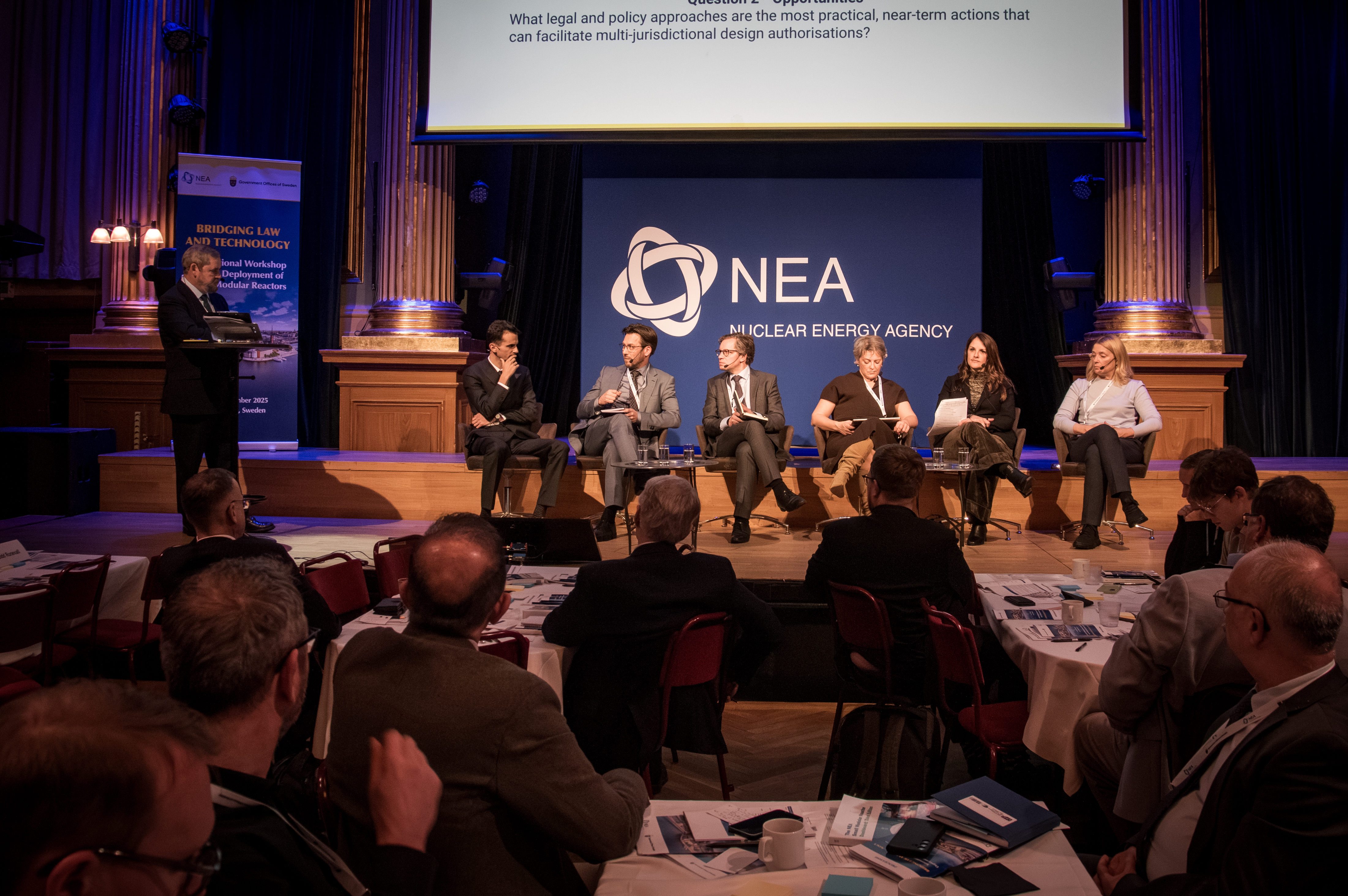
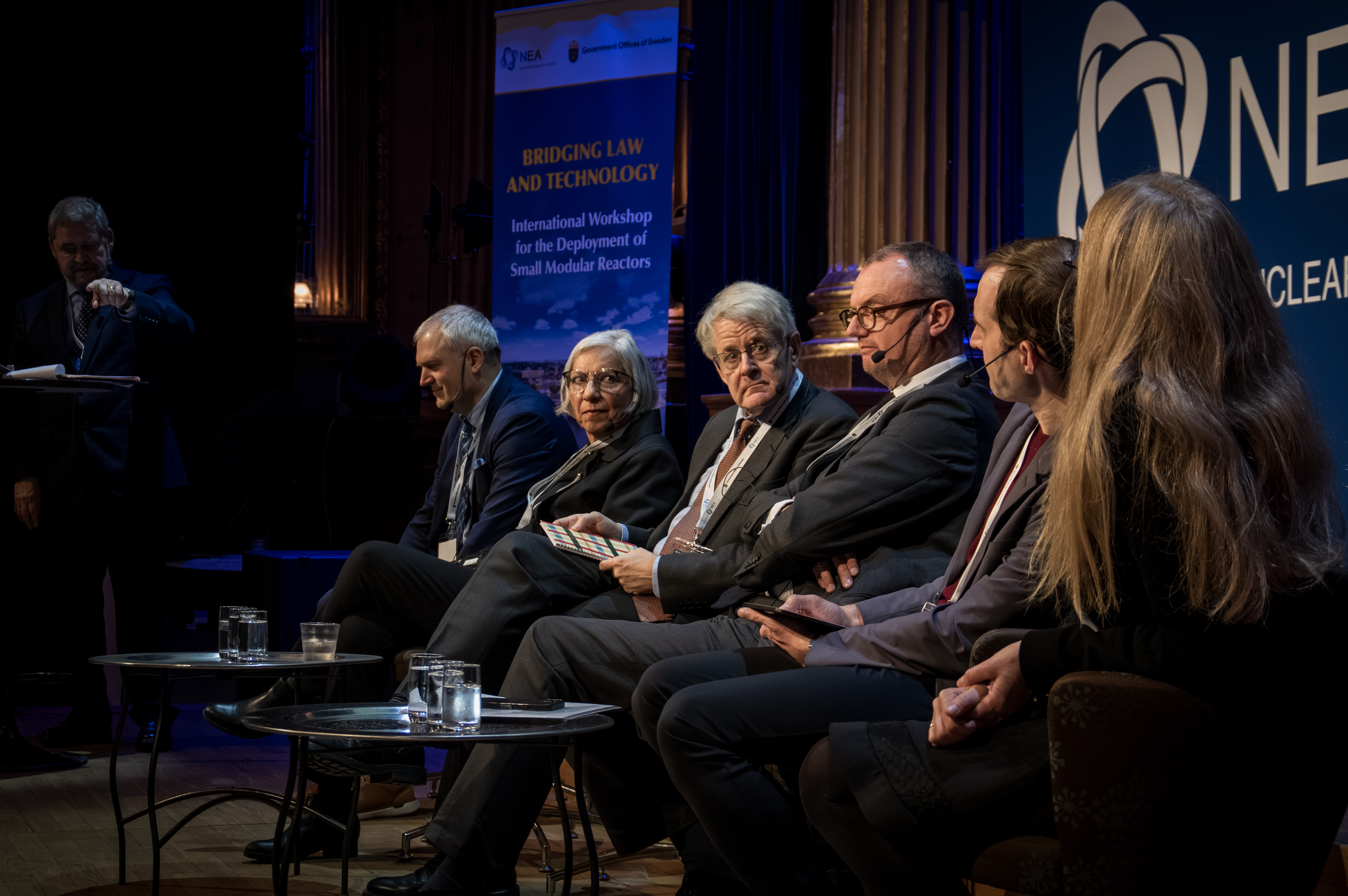
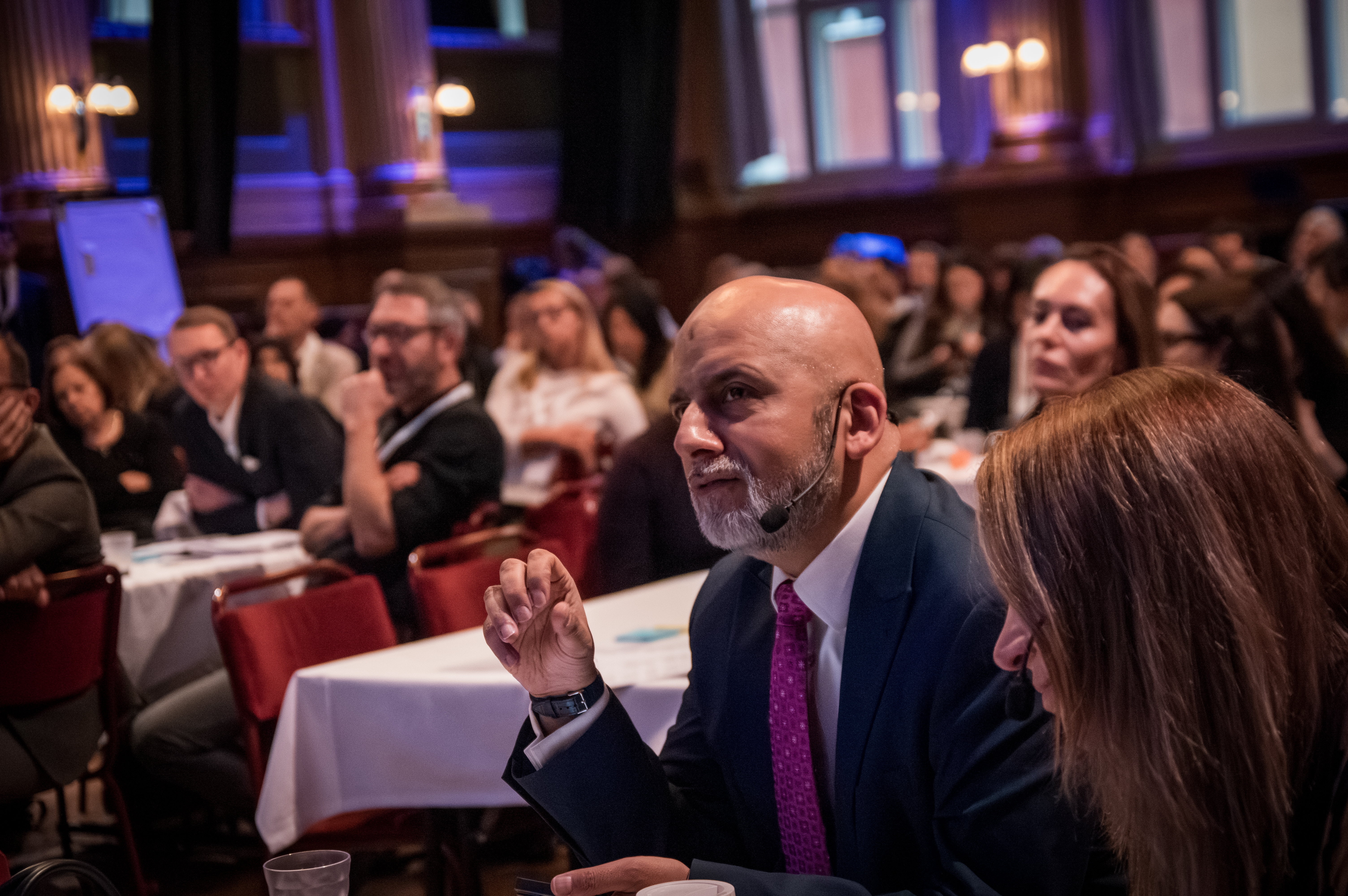
The workshop featured multiple panel discussions with experts from industry, government, academia and law fields
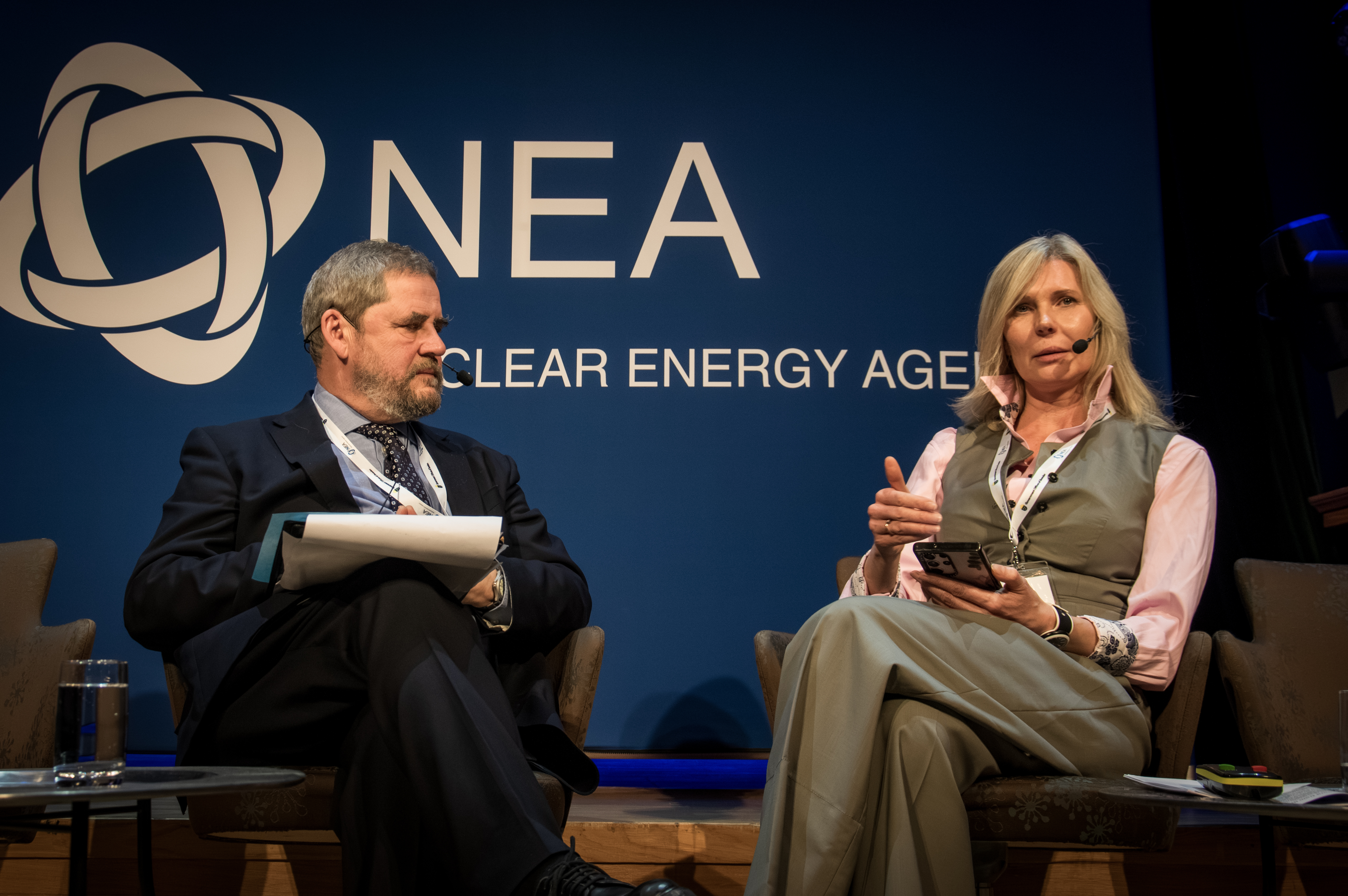
Fireside chat with Elena Santer, Secretary for the Espoo Convention and the SEA Protocol, UNECE, moderated by Paul Bowden
Preparatory work
In the months leading up to the workshop, extensive preparatory efforts were undertaken to ensure meaningful dialogue and actionable outcomes. Central to this process were the thematic working groups, which convened virtually in September, October, and November. These groups were led by co-chairs representing the NEA’s standing technical committees and they provided participants with early engagement opportunities, fostering collaboration across jurisdictions and disciplines. Their mandate included identifying key challenges, drafting targeted questions, and developing discussion papers summarising legal and technical frameworks relevant to SMR deployment.
Ultimately, the working groups produced comprehensive background papers that served as the foundation for workshop discussions. These documents synthesised survey results, national presentations, and group deliberations, highlighting critical issues such as the need to adapt existing frameworks (often built for large light water reactors) to advanced designs, while keeping predictability and safety outcomes front and centre. They also explored opportunities for international collaboration, including on issues related to manufacturing, transport and maritime regimes. These papers were instrumental in aligning participants on shared objectives and ensuring informed, constructive exchanges during the workshop.
Looking ahead: From dialogue to action
The insights generated during the workshop will inform future NEA initiatives aimed at supporting member countries in navigating legal and technical challenges associated with SMRs. While working group products remain restricted to participants until the official publication of the workshop proceedings in 2026, the collaborative spirit and knowledge exchange fostered through this process mark a significant step toward cross-border opportunities for innovative solutions. The NEA remains committed to facilitating these conversations and driving progress in nuclear law and technology.