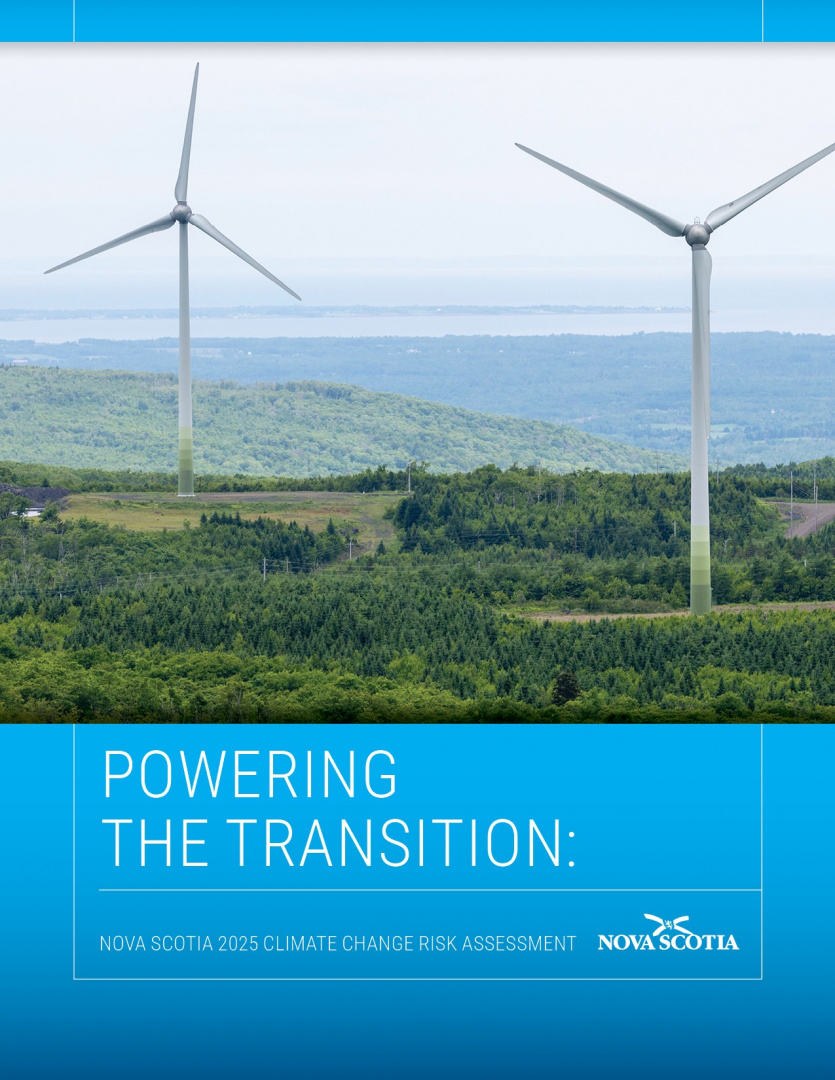
Updated information on the ways climate change will continue to impact Nova Scotia was released today, December 19.
Powering the Transition: Nova Scotia 2025 Climate Change Risk Assessment shows that Nova Scotia will continue to experience warming temperatures, stronger storms, rising sea level, changes in rain and snow patterns, and other effects.
The information can help homeowners, businesses, municipalities, first responders, supply-chain operators, infrastructure developers and essential service providers, including utilities and hospitals, prepare and make informed decisions to adapt, plan and prepare.
The update will also provide more detailed information at the local level to help guide action.
“Our best defence in the face of climate change is informed action and innovation,” said Timothy Halman, Minister of Environment and Climate Change. “The risk assessment helps inform where Nova Scotians need to be proactive to safeguard homes, businesses, infrastructure and communities. This will help keep people, our way of life and our economy resilient. We also know that climate change, while concerning, also drives economic and technological innovation. That is why our government is focused on developing wind, tidal and solar energy along with other green solutions that will reduce emissions and grow our economy.”
To help Nova Scotia achieve its greenhouse gas reduction targets and become energy independent, Nova Scotia is pursuing opportunities in clean energy such as onshore and offshore wind, green hydrogen, tidal energy and small modular reactors.
The Government of Canada has identified Nova Scotia’s Wind West as a nation-building strategy and has committed to working with the Province to develop the project further and help make it a reality.
Some sectors where the response to climate change can drive innovation and create economic opportunities are:
- responsible critical minerals resource development
- decarbonization technology
- clean energy, smart grids and energy storage
- sustainable fuel development such as biofuels and green hydrogen
- making homes and buildings energy efficient through innovative design, materials, upgrades and technologies.
The updated risk assessment, which shows how climate change could impact Nova Scotia between now and 2100, is available at: https://climatechange.novascotia.ca/sites/default/files/uploads/climate-change-risk–assessment-2025.pdf
Quotes:
“We are pleased to see the updated risk assessment completed. Farmers are on the front lines of climate change and are already experiencing its impacts first-hand. Having this information helps our industry plan, adapt and be better prepared for what lies ahead – so we can continue producing safe, reliable food for our communities. We look forward to working with government to support practical, industry-led adaptation efforts.”
— Alicia King, President, Nova Scotia Federation of Agriculture
“Having an updated climate change risk assessment gives us the tools we need to make informed decisions, protect our communities and invest wisely in infrastructure and services. By understanding today’s risks, we are better prepared to reduce future impacts and build a safer, more resilient municipality for residents now and for generations to come.”
— Cecil Clarke, Mayor, Cape Breton Regional Municipality
“Severe weather events in 2024 caused over $9 billion in insured damage in communities across Canada, shattering the previous record of $6 billion from 2016. Natural catastrophes are not an abstract future threat, they’re today’s reality. Insurance Bureau of Canada supports this initiative to help residents, businesses and communities better understand their risks so they can protect what matters most.”
— Amanda Dean, Vice-President, Ontario and Atlantic Regions, Insurance Bureau of Canada
“Just as plants need soil to grow, growers need informed information to navigate the uncertainties of climate change. The more information I have, the better I can position my company for the uncertainties of climate change.”
— Luke den Haan, CEO, den Haan Greenhouses, Lawrencetown, Annapolis County
Quick Facts:
- climate change risk assessments are globally recognized, evidence-based resources that help guide adaptation action
- the province’s first climate change risk assessment was released in 2022; an update is required every five years
- according to the Canadian Climate Institute, for every $1 invested in climate change adaptation, up to $15 in benefits and/or savings can be realized when there is a climate event like a storm or a wildfire; for example, reduced damage to infrastructure and crops, fewer supply chain disruptions, and less lost work time and income
- climate change is caused by greenhouse gas emissions; in 2021, through the Environmental Goals and Climate Change Reduction Act, Nova Scotia legislated a greenhouse gas emission reduction target of 53 per cent from 2005 levels by 2030
- through the act, the government committed to have 80 per cent of the province’s energy provided by renewable energy by 2030, and to get off coal-fired electricity
Additional Resources:
Environmental Goals and Climate Change Reduction Act: https://nslegislature.ca/sites/default/files/legc/statutes/environmental%20goals%20and%20climate%20change%20reduction.pdf
Our Climate, Our Future – Nova Scotia’s Climate Change Plan for Clean Growth: https://climatechange.novascotia.ca/sites/default/files/uploads/ns-climate-change-plan.pdf
Government of Nova Scotia tools and supports to help Nova Scotians adapt to climate change:
The Future of Nova Scotia’s Coastline: The plan to protect people, homes and nature from climate change along our coast: https://novascotia.ca/coastal-climate-change/
Nova Scotia’s offshore wind energy plan, Wind West: https://novascotia.ca/wind-west/
Nova Scotia’s plan to phase out coal use and transition to clean energy, Clean Power Plan: https://novascotia.ca/clean-power-plan/
Stories about Nova Scotians adapting to climate change: https://transitionsstories.ca/
Canadian Climate Institute: https://climateinstitute.ca/
Environment and Climate Change on X: https://x.com/ns_environment