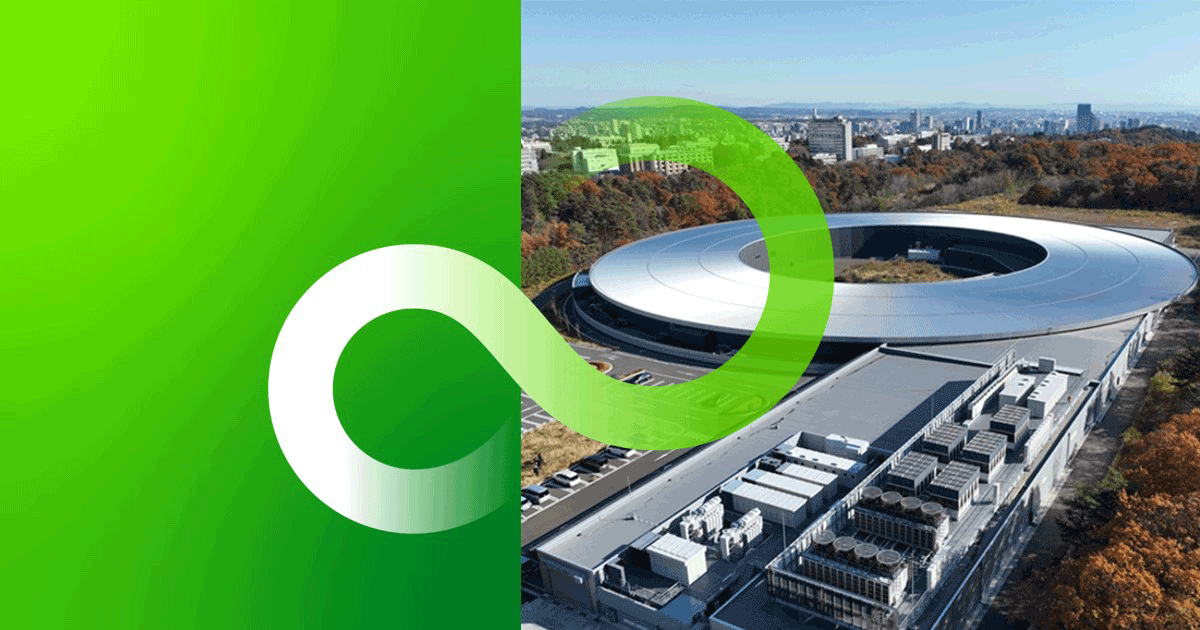
Tohoku University and Fujitsu Limited today announced their successful application of AI to derive new insights into the superconductivity mechanism of a new superconducting material. Their findings demonstrate an important use case for AI technology in new materials development and suggests that the technology has the potential to accelerate research and development and drive innovation in various industries such as environment and energy, drug discovery and healthcare, and electronic devices. The AI technology was utilized to automatically clarify causal relationships from measurement data obtained at NanoTerasu Synchrotron Light Source. This achievement was published in the Nature Portfolio scientific journal Scientific Reports on December 22, 2025.
To achieve this result, the two parties used Fujitsu’s AI platform Fujitsu Kozuchi to develop a new discovery intelligence technique to accurately estimate causal relationships. Fujitsu will begin offering a trial environment for this technology in March 2026. Furthermore, in collaboration with the Advanced Institute for Materials Research (WPI-AIMR), Tohoku University, the two parties applied this technology to data measured by angle-resolved photoemission spectroscopy (ARPES) [1], an experimental method used in materials research to observe the state of electrons in a material, using a specific superconducting material as a sample.
Fujitsu will begin offering a trial environment for this technology in March 2026. Moving forward, both organizations will further leverage this technology along with NanoTerasu’s world-class capabilities in spatial resolution to automatically clarify the causal relationships between phenomena at the microscopic level. This will contribute to the development of new functional materials that address global environmental issues, one of Fujitsu’s materiality priorities, including in the areas of high-temperature superconductivity and next-generation low-power consumption devices.