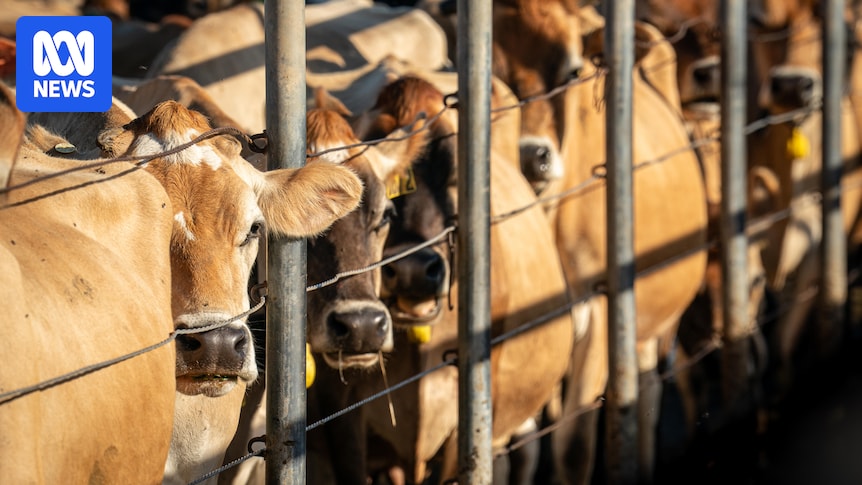
South Australian farmers will soon be able to use virtual fencing to move livestock out of the path of bushfires after the technology was formally legalised in the state last week.
The system, which allows livestock to be moved remotely via electronic collars, can guide animals out of danger and prevent them becoming trapped as a fire approaches.
The state’s approval makes it the last jurisdiction in Australia to sign off on the technology, paving the way for rollout next year.
The announcement has been welcomed by Livestock SA, with the organisation expecting strong demand from primary producers to transition to virtual fencing.
Virtual fencing will help reduce the demand for physical fencing on farms to divide livestock. (ABC South East SA: Elsie Adamo)
“The benefits are multi-dimensional,” Livestock SA chief executive officer Travis Tobin said.
“The obvious ones are capital and labour costs that you can reduce … it enables you to improve the way you manage stock and manage the land.
“Heaven forbid if they do come, but in natural disasters it gives you that flexibility where you’re not losing kilometres of fence lines, and the animals can get away so they’re not trapped.”
New technology could help in emergencies
Specific details on how the new technology will be licensed and governed are yet to be released, but businesses are working with the state government to be rollout ready.
Halter is one of the businesses that will apply for a permit to sell and install virtual fencing in the state.
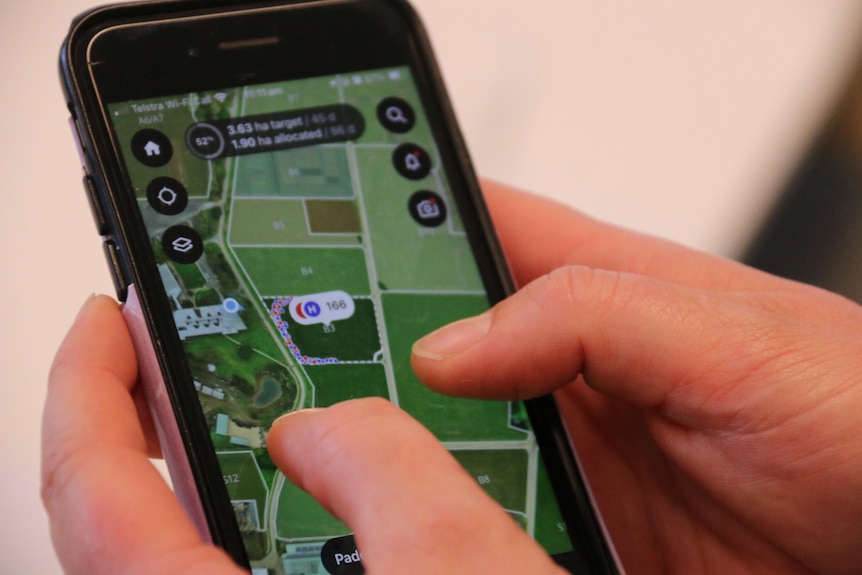
Virtual fencing allows farmers to control where their animals go, using a phone. (Supplied: Halter)
Director of strategic relations Brent Thomas said the benefits of the technology surpass day-to-day operations.
He said if a flood or bushfire was to strike, virtual fencing can help protect human as well as animal lives.
“In traditional farming systems, you’ve got to staff out … and it can be quite risky,”
Mr Thomas said.
“With this technology, farmers are able with the palm of their hand, to move their cattle to safer ground.
“You can use a collar to move an animal from an unsafe area to a safe area, but you can also remotely disable the collars so they can freely move.“
Mr Thomas said many South Australian farmers were keen for the announcement, having added their names to the company’s waitlist months ago.
“They had been really hopeful this news would come out for a long time,” he said.
“I think they’re very, very excited … it’s going to be a game-changing technology for their farms.”
SA farmers enthusiastic about transition
One of the farmers who has been signed up on the wait list for virtual fencing equipment is Adam Mann, co-manager of Donovan’s Dairy in the South East.
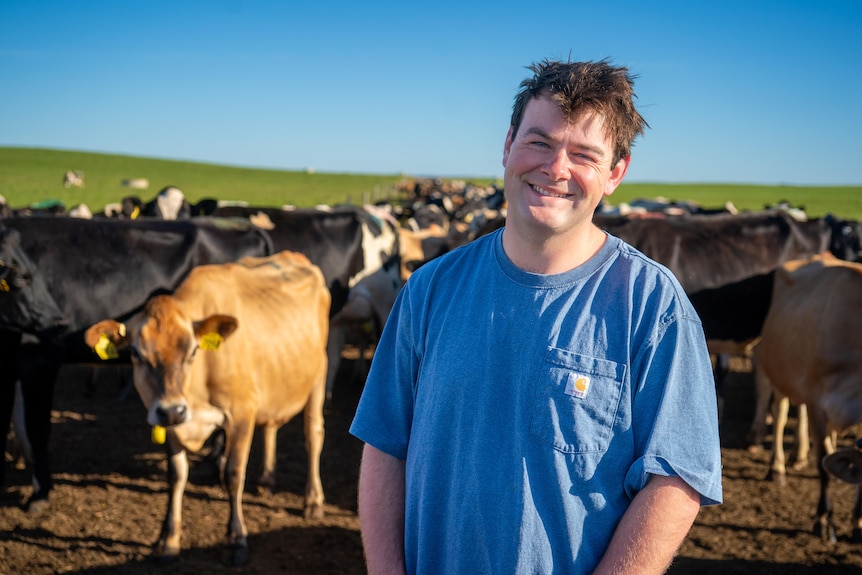
Adam Mann had been waiting for virtual fencing to be approved in South Australia. (ABC South East SA: Elsie Adamo)
Mr Mann had been advocating for virtual fencing throughout the year, expecting the new technology to save time and money on his farm.
“It’s nice to be on an even playing field with the rest of the states,” he said.
“We’ll be trying to get it on as soon as possible, early 2026 will be a pretty good goal for us.”