28 December 2025
Driven largely by tight supplies, export demand and higher prices, Irish beef farmers are finishing 2025 in a stronger position than ever before. But what does the outlook for 2026 look like?
This topic was broached by Jason Loughrey, Research Economist at Teagasc, who reviewed the performance of the Irish beef sector in 2025 and provided a forecast for 2026 at the recent Teagasc Outlook 2026 Conference.
Estimates for the 2025 season, as shared by Jason Loughrey and based on analysis with Kevin Hanrahan, Head of Rural Economy and Development Programme, show that gross margins on single suckling and cattle finishing farms are estimated to rise by 126% and 23%, respectively in 2025. The extent of the rise witnessed on cattle finishing farms was somewhat dampened by the higher prices paid for stock once finishers returned to the marketplace to restock; weanling prices increased by 70%, whereas store cattle prices climbed by 60% this year. Overall, across the cattle rearing and cattle finishing farms, net margins for 2025 are estimated to be €837/ha and €457/ha, respectively, in 2025.
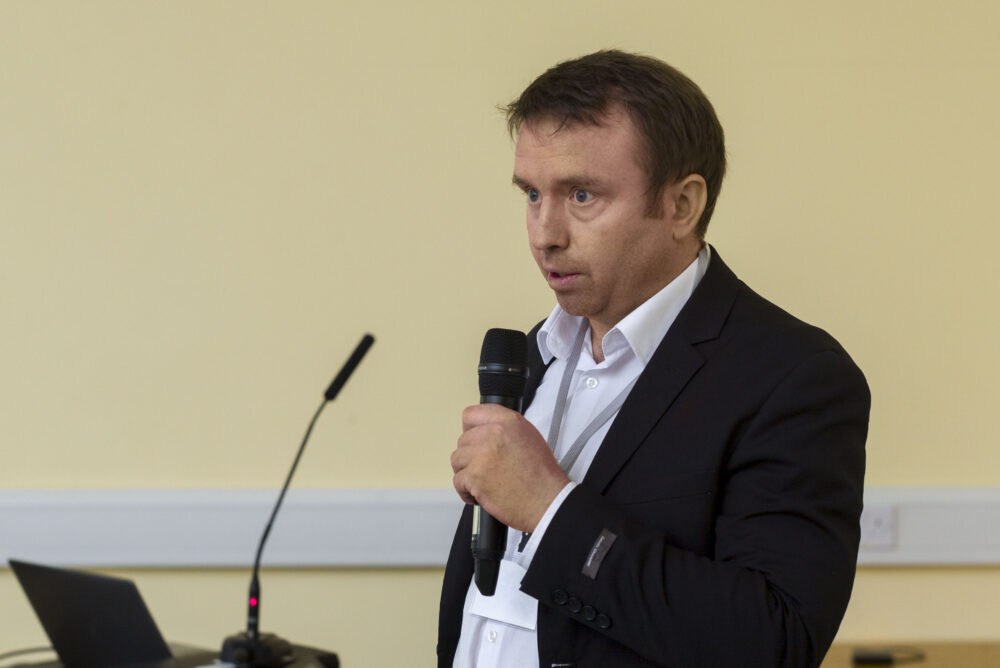
Jason Loughrey
Looking ahead to next year, Jason Loughrey explained: “2025 has been a very good year, but there is always difficulty in forecasting forward.”
As a major buyer of Irish beef, he explained that assessing performance of the UK market is essential when providing a forecast for the year ahead. In 2025, this market accounted for 43% of Irish beef export volumes, followed by France at 12% and the Netherlands at 8%. Of note was that beef production had declined 4.3% in the UK in the first 10 months of 2025, while overall beef production across the EU was 3.9% lower in the EU in the January to August period 2025 versus 2024.
“UK beef production is forecast to decline by 1-2% next year. Irish finished prime cattle are expected to decline by 4%, so a continued tightness in both markets is forecast for next year,” he explained.
“Given the signals from the marketplace, we are forecasting a 5% increase in finished cattle prices over the average price received in 2025, along with a 3% increase in store cattle prices, while total costs are expected to increase by 1%. Overall, this is forecast to result in gross margins increasing on finishing cattle farms by 16%.
“Considering the risks faced by finishers, we would probably expect some reversal in weanling prices relative to what we have observed this year. Taking that into account, along with a 1% increase in the total cost of production, we’re forecasting a decrease in average gross margin of about 5% on cattle rearing farms,” Jason Loughrey explained.
Provided the output prices and costs align with the forecast, he added: “We are looking at margins well above historical averages and probably some convergence between the margins witnessed between single suckling and cattle finishing enterprises.
“While single suckling was well ahead of cattle finishing this year on the average margin, you’re probably looking at some narrowing of the gap in 2026.”
For the year ahead, Teagasc economists are forecasting an average net margin of €767/ha on single suckling farms and €616/ha on cattle finishing farms.
For further insights and information, view the full Situation and Outlook for Irish Agriculture 2026 here.