A systematic review of studies evaluating cannabis as a pain treatment concluded that some cannabis products do likely work to reduce chronic pain a little bit.
The overall reduction in pain was small — lowering pain by about 1 point on a scale from 1 to 10. Yet most conventional painkillers, including ibuprofen and opioids, perform similarly in randomized controlled trials.
But the review is likely to disappoint proponents of medical cannabis on one finding: It found that the pain reduction effect only occurred with products containing a significant amount of tetrahydrocannabinol, or THC.
THC, one of the two main compounds in cannabis, is responsible for the psychoactive effects of the plant. The other main component is cannabidiol, or CBD.
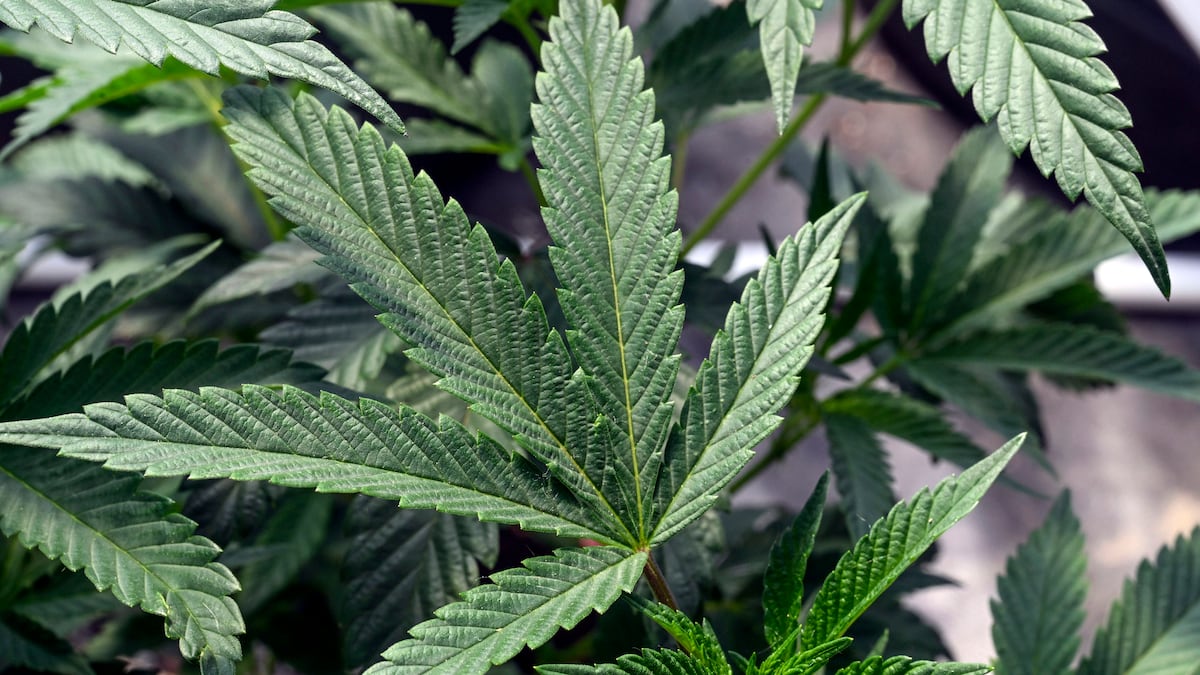
FILE – Marijuana plants are seen at a growing facility in Washington County, N.Y., May 12, 2023. (AP Photo/Hans Pennink, File)
Hans Pennink / AP
Oregon was the first state in the nation to decriminalize cannabis, and one of the first to legalize it for medical use and then for recreational use.
The review, which was led by OHSU researchers and published in the Annals of Internal Medicine, analyzed the results of 25 randomized controlled trials of cannabis as a pain treatment in Europe, the United States and Canada. It was funded by the U.S. Department of Health and Human Services, as a follow-up to an earlier synthesis of the evidence on cannabis and pain.
In recent years, pain patients and some researchers have pinned their hopes on CBD as a potential treatment that could reduce pain without inducing an unwanted “high” or other psychoactive effects. It’s also been appealing because there’s no concern that cannabidiol is addictive.
CBD products like gummies, tinctures and salves have proliferated, and some have been marketed for pain relief.
Roger Chou, a professor and pain management specialist at OHSU and the leading author of the review, said products containing CBD only had a trivial effect on pain in randomized controlled trials.
“The idea or hope has been that the CBD component might be the one that provides the therapeutic effects,” Chou said. “Unfortunately, what we found was that the CBD products essentially had no impact on pain.”
The review found that products with equal amounts of THC and CBD, or higher THC, while somewhat effective at reducing pain, were more likely to have side effects like nausea, sedation, and dizziness.
Chou said drugs for chronic pain have a history of falling short.
Controlled studies, he said, have found that most work about as well as non-pharmaceutical interventions like exercise, massage, and spinal manipulation.
“We keep kind of finding that these treatments don’t work as good as we thought they would. But that’s part of what’s driven this search for other things that may work better,” he said.
Chou said the review’s results shouldn’t necessarily dissuade anyone currently using CBD who is experiencing some benefit from it for their pain, noting that the studies measure an average response and individual experiences might be different.
“I don’t think our study says anything that would say you have to stop your CBD,” he said.
Additionally, the review only considered pain reduction and didn’t evaluate the evidence behind some of CBD’s other uses, like for some types of epilepsy and anxiety.drugsChou, an internal medicine doctor, said pain specialists are eager to identify safer alternatives to opioids. Patients, too, are very interested in cannabis for medical and recreational use, and have legal access to it in many states, making it important for doctors to carefully evaluate the costs and benefits.
But, Chou said, it’s a challenging research question. Most of the products that have gone through randomized trials are medical-grade or lab-made, unlike most of the plant-based products for sale in states like Oregon that have legalized cannabis.
Earlier this month, President Donald Trump ordered cannabis be moved to a lower schedule of drugs, paving the way for easier access and research into the plant.
One product that the study concluded has some evidence of working, an oral spray combination THC-CBD product called nabiximols, is approved for medical use in the United Kingdom and Canada but not the United States.
And while the review focused on cannabis’s two main components, THC and CBD, the plant contains a number of other compounds, Chou said.
At present, the American College of Physicians recommends against cannabis as a chronic pain treatment for young adults and adolescents, patients with a history of substance use disorder, patients with serious mental illness, frail patients and those at risk of falling. Other adults should discuss the potential costs and benefits with their doctor.