Listen to this article
Estimated 4 minutes
The audio version of this article is generated by AI-based technology. Mispronunciations can occur. We are working with our partners to continually review and improve the results.
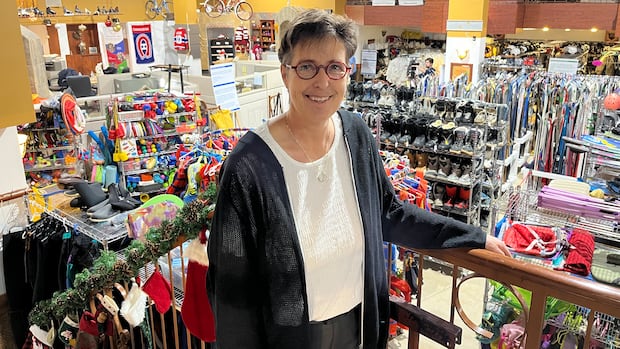
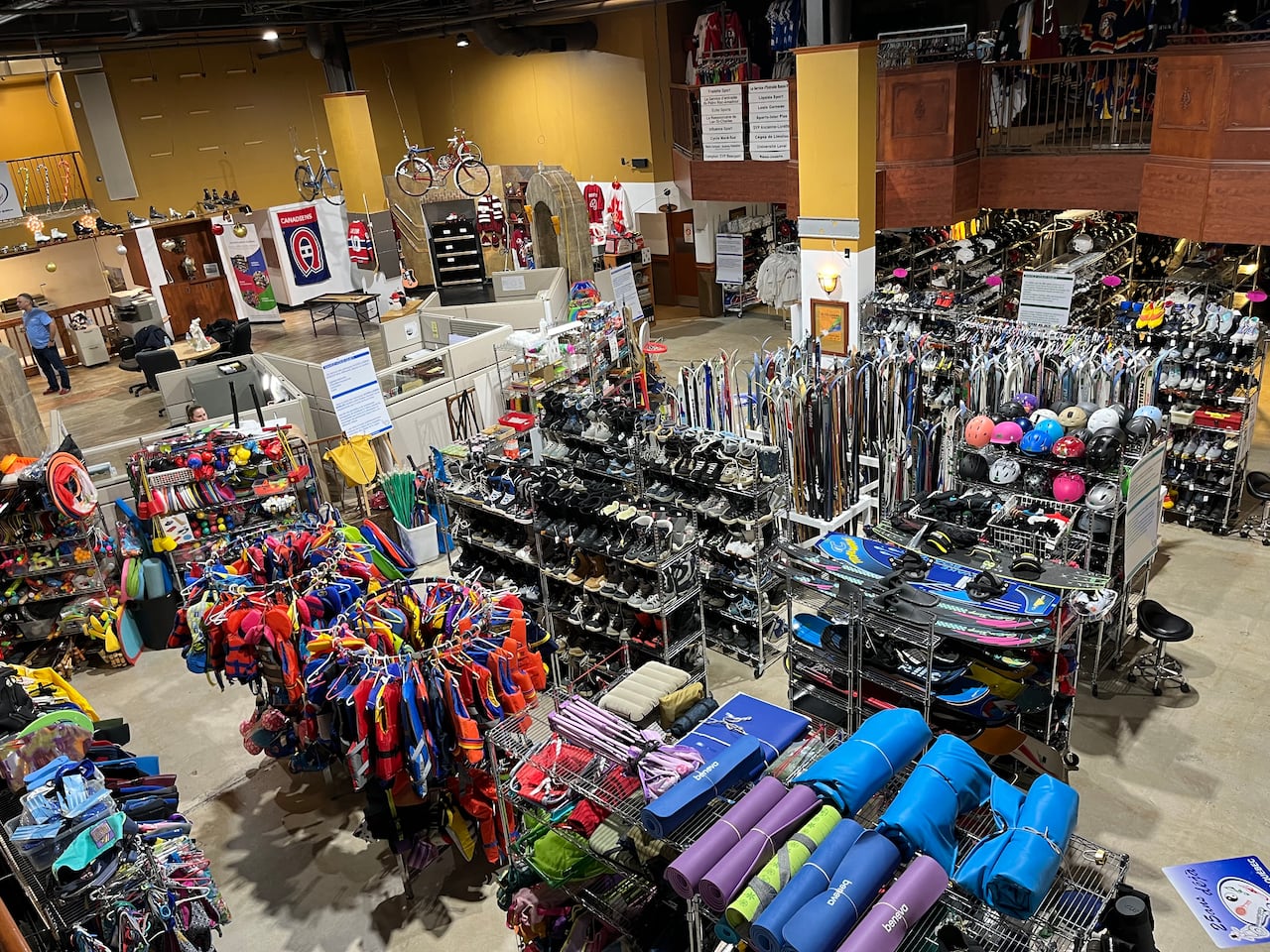
The walls and racks of the Accès-Loisirs Québec warehouse are overflowing with everything from hockey jerseys and skis to tennis rackets, sleeping bags, soccer cleats and even a few guitars.
Residents head to the building, nestled between a bingo hall and a clothing store in a mall in Quebec City’s Charlesbourg neighbourhood, to find what they need to pick up a new hobby.
“I have the most beautiful job in the world,” says Pauline Tanguay, general manager of the non-profit.
Tanguay has been working with Accès-Loisirs since the organization first started in Quebec City 25 years ago.
“We found a lot of people were getting help with food from organizations, with housing as well,” Tanguay said. “But people were staying isolated at home.”
To fight that isolation, those behind Accès-Loisirs decided to try to make sports and culture more accessible.
Every three months, Quebecers from low-income households can go to the centre with proof of income in hand to pick up a piece of equipment for free.
Musical instruments and board games are also available to the households, with items that are harder to find available on loan.
Low-income households can also access cultural events as tickets for local concerts, plays and comedy shows are often raffled off at the centre, Tanguay explains.
“We don’t sell anything here,” Tanguay said. “The people come with their children and there is one for example who plays guitar, the other wants to try soccer, the other hockey…. We hand a full set of equipment to each of them.”
Chloé Garneau-Dupuis has been going to the Accès-Loisirs warehouse for more than five years. The service recently helped her enjoy a weekend skating with her young daughters in Quebec City.
“They grow so fast so to keep up every season isn’t easy,” said Garneau-Dupuis. “When we can put our money elsewhere, it really helps us out as a young family.”
When Garneau-Dupuis’s daughters outgrow the equipment they’ve taken, she brings it back.
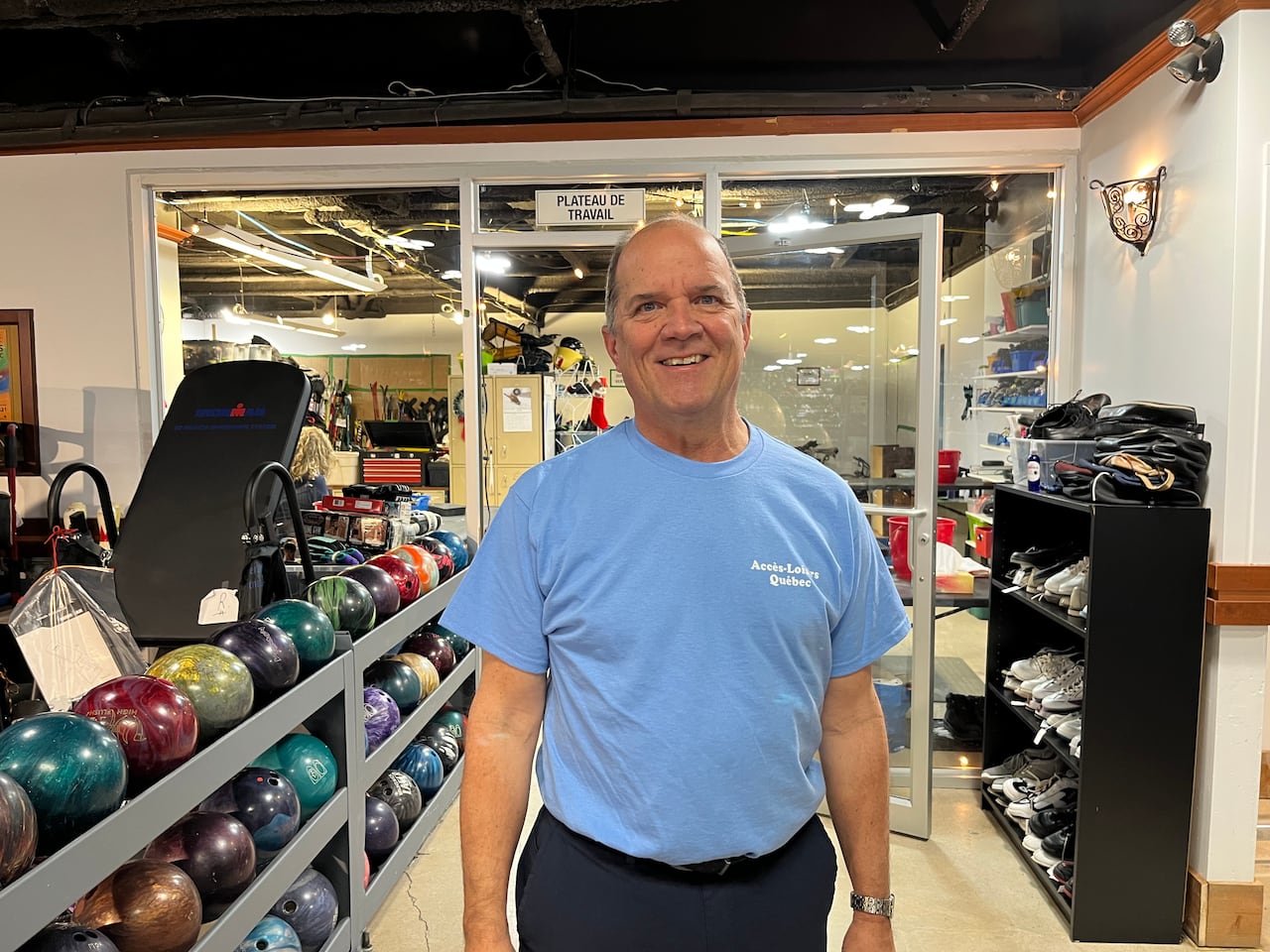
Retired doctor Yves Johnson volunteers at the warehouse to clean and restore the used equipment that’s donated by businesses and the public.
“Our goal with the equipment we receive is always to ask ourselves, ‘Would I be happy to get this?’” Johnson said. “My whole life I longed to heal peoples’ pain in the medical field. Now, I look to heal pain in a different way.”
With the price of housing and the cost of living on the rise, Tanguay says she sees more people than ever needing their services — and more and more people with jobs who have issues accessing sports and activities.
“We aren’t proud of the number of people that we receive, because that means somewhere leisure has become inaccessible to a lot of families,” Tanguay said. “We really hope at a certain point the cost of living will go down, because people are [drowning].”
On a more positive note, Tanguay says, the organization has also never seen so many people willing to donate their equipment to those in need.
She is still holding out hope that, someday, initiatives like Accès-Loisirs will no longer be needed.
“But I don’t think that’ll happen tomorrow,” Tanguay admits.
She estimates the non-profit hands out up to 120,000 pieces of equipment every year.
Since Accès-Loisirs first started, Tanguay says her group has also helped other regions adopt similar programs to ensure their residents have access to sports and cultural activities.
“We have to keep in mind that no one is safe from living a low-income situation,” said Tanguay.