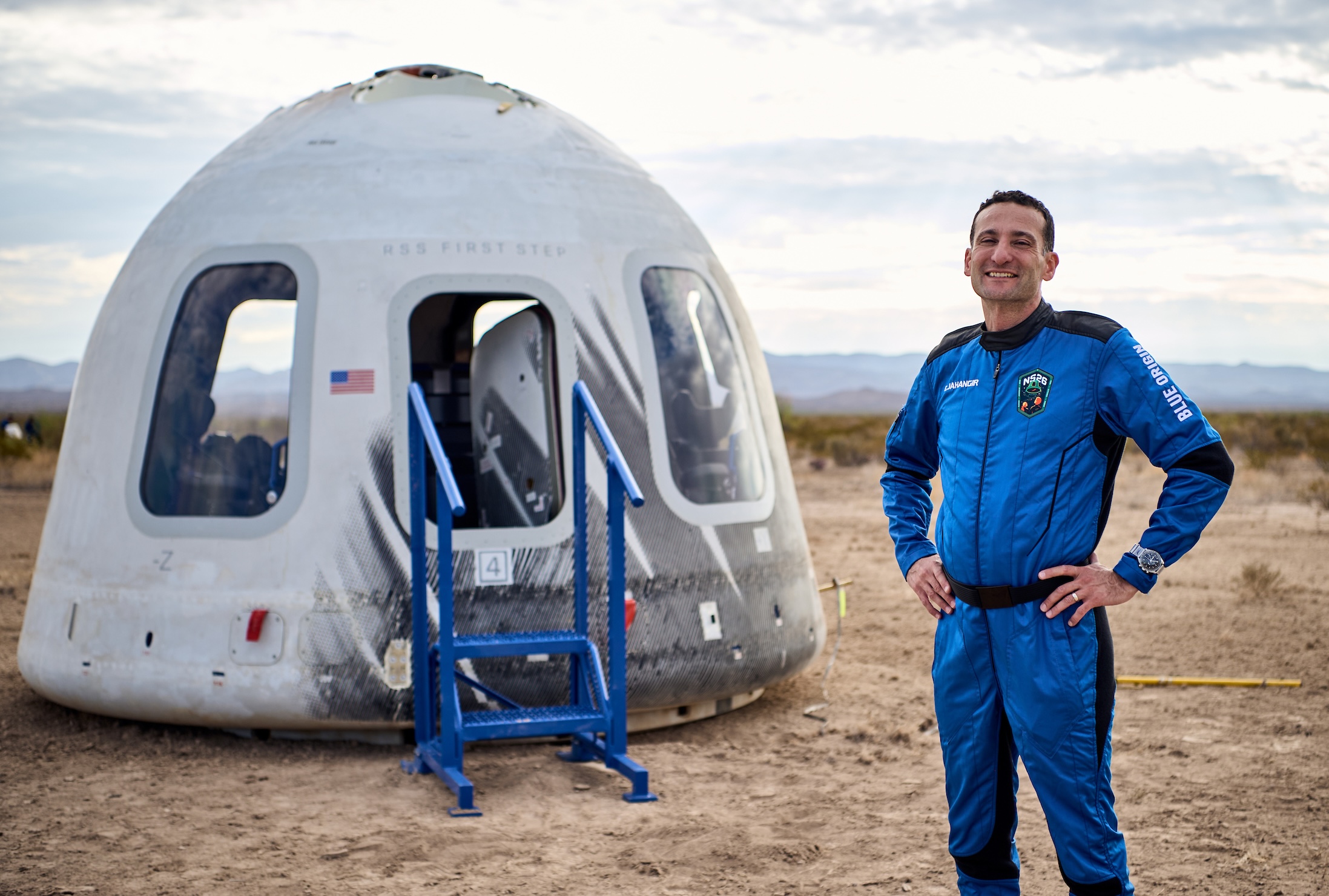
A spring break trip to the Kennedy Space Center 20 years ago set University of Tennessee Health Science Center College of Medicine alumnus Eiman Jahangir, MD, on a trajectory that eventually launched him into space.
“I always had two passions,” says Dr. Jahangir, 45, now a professor of medicine and radiology and the director of the sections of general cardiology and cardio-oncology at Vanderbilt University Medical Center. “It was medicine and it was space, and I was able to pursue the second passion once I became a doctor.”
A 2005 graduate, he says the College of Medicine was the launchpad for both.
On August 29, 2024, Dr. Jahangir was a member of a six-person team of commercial astronauts onboard Blue Origin’s New Shephard rocket for a 12-minute, sub-orbital flight that climbed approximately 70 miles into space before returning to earth. He was selected by MoonDAO, an organization that supports space exploration, from more than 2,200 applicants for the life-changing excursion.
“I was the 704th person to ever go into space, and still less than 800 people, I think, have ever done it,” he says. “I was actually the first physician on a commercial spaceflight.”
It was a wild ride, for sure. Here’s how Dr. Jahangir describes it.
“It was surprisingly smooth going up; the rockets light up, and the whole inside of the capsule reflects the orange flame of the rocket,” he says. “It takes about seven seconds before the thing has enough power and thrust to lift off. So, you’re sitting on top of that rocket, you hear the countdown, it gets down to one and then zero, and then you hear the engine roar, and after seven seconds you just start lifting off into space.”
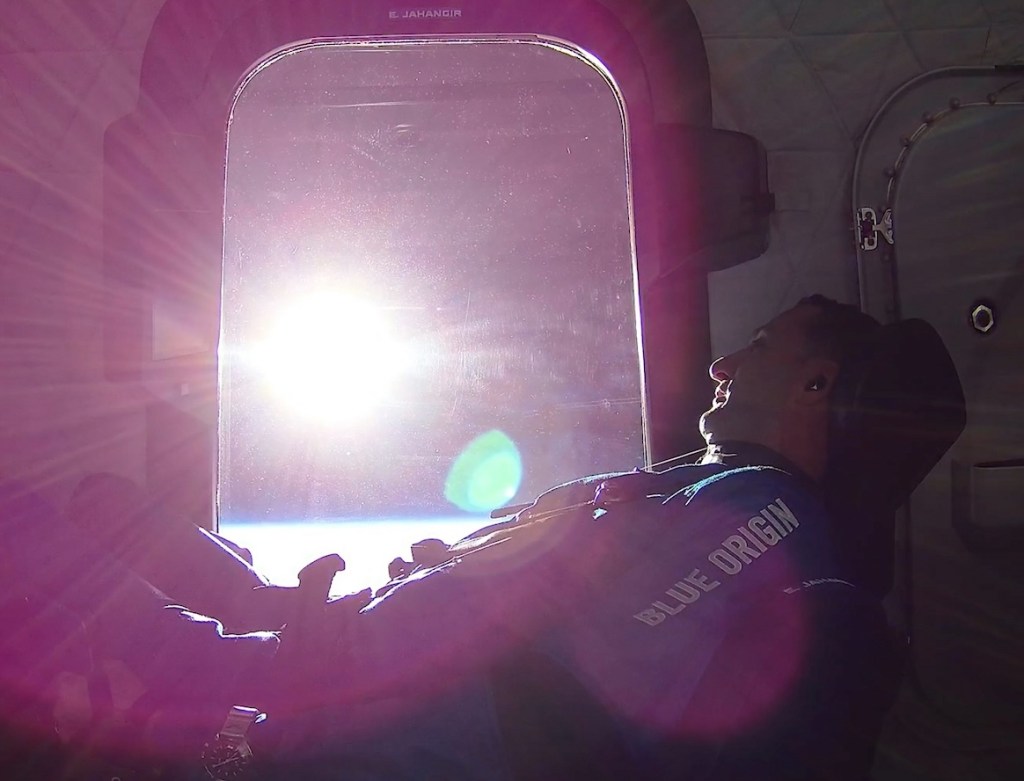
“I think maybe it’s a little shaky, but you’re probably so excited that you don’t know it,” he continues. “It didn’t feel particularly shaky coming back down. It definitely sounded loud. You could hear kind of like the whooshing as you’re coming back into the atmosphere. And it felt like an elephant sitting right on my chest. And you’re just saying, ‘OK, let’s hope these parachutes open up.’”
Dr. Jahangir is equally descriptive when he speaks of UT Health Science Center’s pivotal role in setting the course that led him to space.
“In 2005, right before I was graduating medical school, my family and I went down to the Kennedy Space Center, and I was looking at the rockets, and it just kind of rekindled that interest and desire,” he says. “I ran back to the hotel room, looked online to see what the requirements were to become an astronaut, and realized I met the requirements because of my training at the University of Tennessee. By getting the medical degree, that was enough to be able to apply.” He waited until 2008, when the first application cycle became available, and applied, making it as far as the finals.
In total, Dr. Jahangir has applied to NASA five times to become a U.S. astronaut and made it to the finals twice.
Dr. Jahangir says his training in the College of Medicine equipped him to think independently and keep a level head and steady heart when faced with complex situations — all assets on his Blue Origin trip.
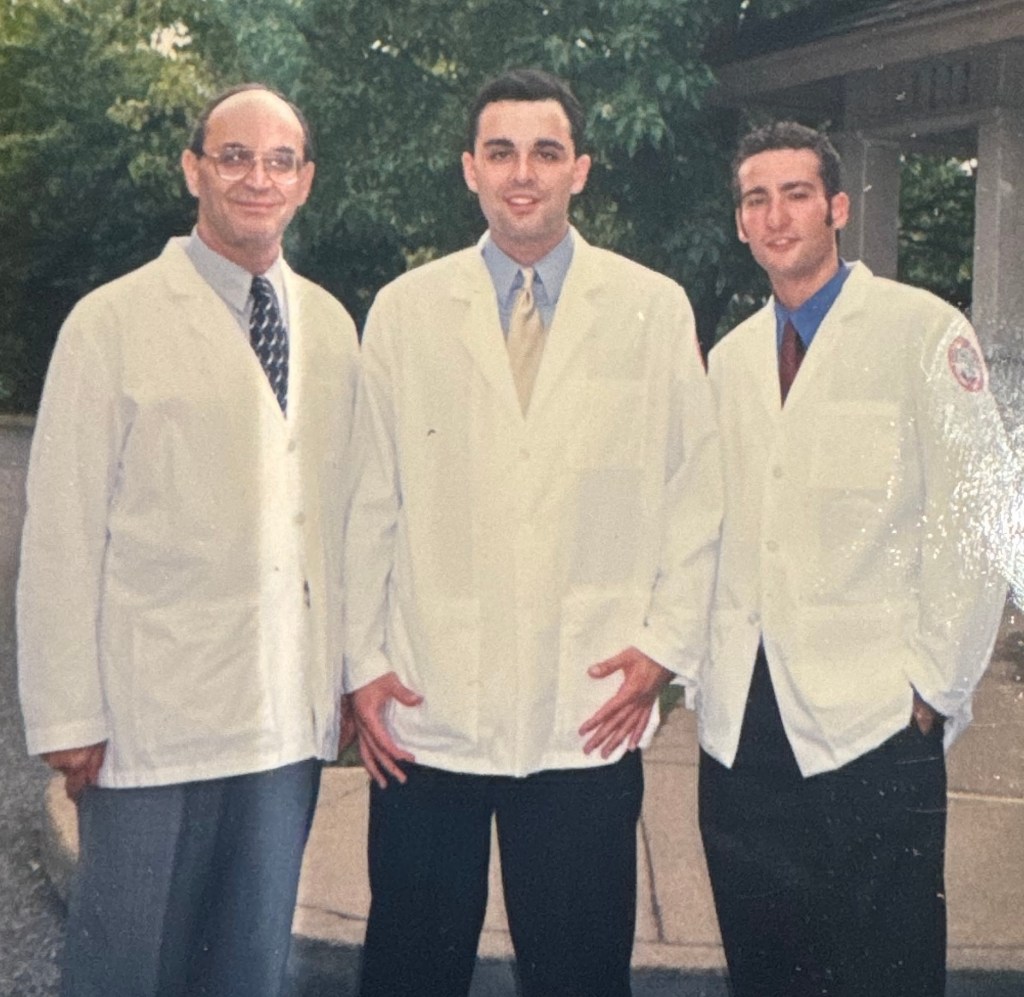
“When I was in medical school, we did a lot of work at The Med (now Regional One Health). So, you had a lot of experience managing patients and figuring out complex situations, because people would come in who had not had medical care for a long time and they’d come in with just very progressed or complex diseases,” he explains.
The proximity to St. Jude Children’s Research Hospital and opportunity to participate in research as a medical student helped guide him toward his specialty in cardio-oncology.
“One of the biggest things that the University of Tennessee did, that I don’t think happens at all health science centers or medical schools, is it gave a very strong sense of independence in both learning and practicing as a student,” Dr. Jahangir says. “That independence leads to increased confidence. And that leads to, hopefully, becoming a better physician.”
He says the College of Medicine also provided him with a group of friends who have stayed in touch, even 20 years since graduation. “I think it is very important that you have those people that can support you through good times and bad, tell you that maybe your idea is crazy, but still be there to lift you up,” Dr. Jahangir says. “And I think the University of Tennessee Health Science Center provided that, because it was very collegial environment, and it was a place that we could all learn together, work hard together, and build those connections and community together.”
One friend from medical school, Joe Mobley, MD, MPH, a urologist and chief of staff at West Tennessee Healthcare – Henry County Medical Center in Paris, Tennessee, says he and Dr. Jahangir bonded early in medical school over outside activities that helped them de-stress.
“Medical school can be challenging in and of itself, and for the most part, each of us was laser focused on the next step ahead: the next exam, the next lab, the next clinical task,” Dr. Mobley explains. “Despite this, Eiman had a variety of alternative interests and did communicate early on his love for space and a desire to be a future astronaut.
“Beyond his initial space flight, he is using his intelligence, kindness, and charisma to share his passion and path with children and others who have high aspirations,” Dr. Mobley says. “He is the perfect role model for balancing a career, while still chasing your dreams and creating the life that you’ve dreamed of.”
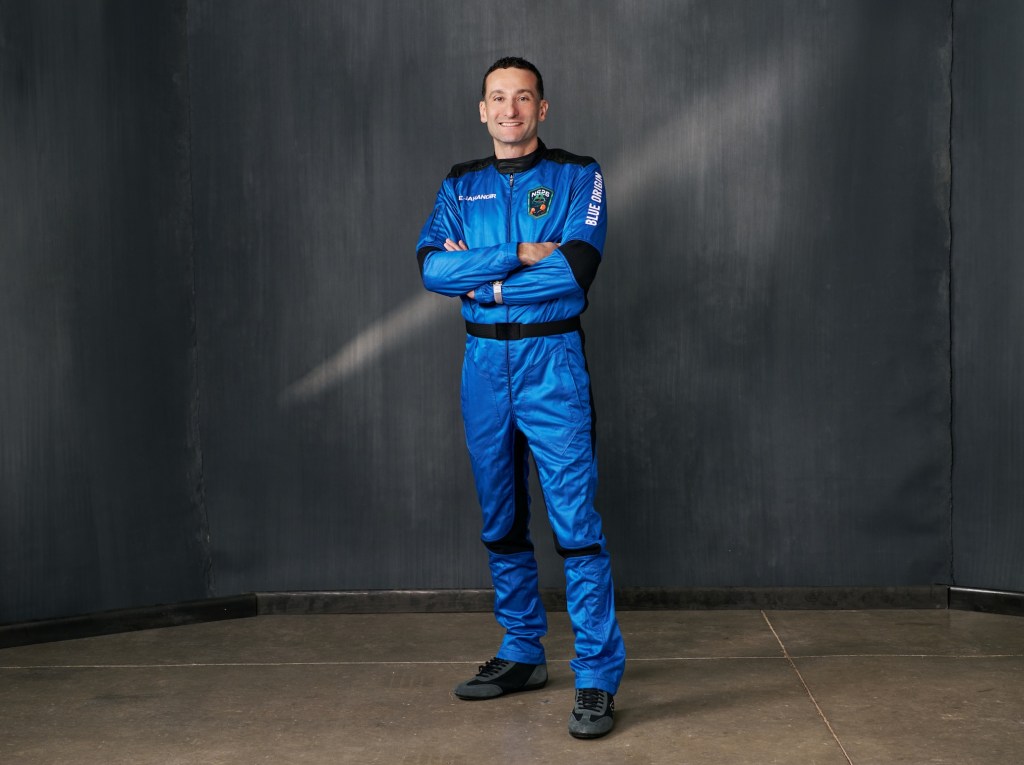
Back on terra firma in Nashville, Dr. Jahangir’s spaceflight has served as a vehicle for outreach to promote STEM education and careers in medicine. “I just got back from Brazil. We spent a week down there with a not-for-profit and went to hospitals with kids with cancer, and we did art with them. All that art is going to be sent up to space on a Soyuz rocket in November.”
Dr. Jahangir worked for Blue Origin for six months after the spaceflight as an astronaut trainer and in Mission Control doing capsule communication. In addition to his clinical duties at Vanderbilt, he speaks to students, works with companies on aerospace technologies, and lectures on aerospace medicine.
“It’s great, because it’s always been one of my goals to excite kids and motivate the next generation.”