
Listen to this article
Estimated 5 minutes
The audio version of this article is generated by AI-based technology. Mispronunciations can occur. We are working with our partners to continually review and improve the results.
After a year of trade tensions and high food prices, many British Columbians are heading into 2026 closely watching their household budgets.
U.S. tariffs dominated headlines throughout 2025, hitting key B.C. industries like lumber, as well as aluminum, steel and vehicles.
To help boost economic activity, the Bank of Canada cut interest rates several times in 2025 and held its benchmark lending rate steady at 2.25 per cent in its last monetary policy update, but the central bank has stressed it cannot restore the economy “to its pre-tariff path.”
Inflation has cooled since the pandemic and is hovering just above two per cent, but everyday costs for many families remain high, especially for food.
Here’s what British Columbians can expect to pay more or less for in the year ahead.
Grocery prices
Food prices were given a brief reprieve earlier this year due to a temporary tax break.
From mid-December 2024 to mid-February 2025, the federal government removed GST and HST on most food and beverages, which, according to a latest food price report, brought food inflation down to -0.6 per cent in January, the first negative reading in more than eight years.
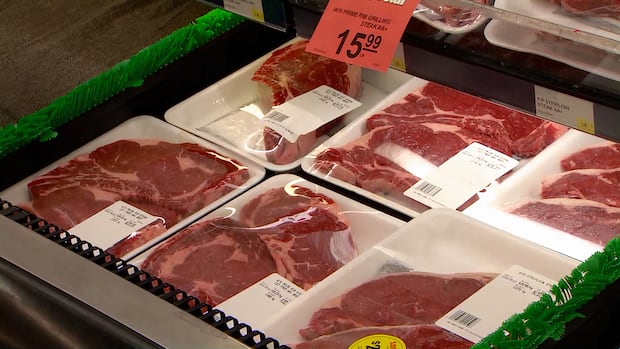
A trip to the grocery store could cost you more next year, according to a report from Dalhousie University.
That relief was short-lived, though, according to Canada’s Food Price Report 2026. Once the tax break ended, prices reset, driving up food inflation higher.
According to the report, food prices in Canada could increase by four to six per cent next year, largely driven by pricier meat products.
Beef in particular is expected to get more expensive, potentially rising seven per cent, as cattle sizes shrink (those markets are susceptible to tariffs) and more ranchers leave the industry, the report found.
It estimates the average family of four will spend $17,571 on food this year, up to $994 more than in 2025. Food prices are now 27 per cent higher than they were five years ago.
In B.C., those pressures are already showing up at food banks. Food Banks B.C. says visits for food have increased nine per cent in a year, with more than 1.3 million British Columbians experiencing food insecurity as charities struggle to meet demand.
Utilities
Several utility rate increases are set to take effect in 2026.
FortisBC electricity customers will see a 3.63 per cent rate increase starting Jan. 1, amounting to about $5.35 more per month for the average household. The utility says higher electricity-purchase costs are a key driver.
Natural gas customers will see a steeper jump with an about 11 per cent increase to their bills — roughly $10.95 more per month. FortisBC says the increase will fund system upgrades and expanded energy-efficiency programs.
B.C. Hydro customers can expect an increase as well, adding about $3.75 per month to the average household bill.
Housing and rent
The B.C. Ministry of Housing says it’s capping the annual rent increase at 2.3 per cent in 2026, down from three per cent in 2025.
The province said the maximum allowable increase is tied to inflation, in particular the Consumer Price Index, which represents changes in goods and services, such as food, shelter and transportation by comparing them over time.
For decades, Metro Vancouver’s vacancy rate has been extremely low, giving landlords plenty of leverage to raise rental rates whenever a unit becomes available. But new data shows that era may be coming to an end. Justin McElroy reports.
Home prices, meanwhile, are expected to further soften. According to a market survey forecast by Royal LePage, the aggregate home price in Greater Vancouver will fall 3.5 per cent year over year by the fourth quarter of 2026 to $1.15 million.
Detached homes in the area are projected to decline five per cent to $1.6 million, while condo prices are expected to drop three per cent to about $713,000.
Real estate experts say the drop is because of high inventory levels, economic uncertainty and hesitant buyers.
“With plenty of inventory available and prices edging downward, there is little urgency for buyers to move quickly. In this environment, many feel comfortable waiting, watching and weighing their options before making a decision,” Randy Ryalls, managing broker with Royal LePage, said in a statement.
Transportation
In 2026, transit fares in Metro Vancouver will jump another five per cent, after which there will be a two per cent yearly increase. It’s part of a 10-year investment plan, which, according to TransLink, will keep them fiscally sustainable until the end of 2027.
The transportation authority says the funding will allow service expansions across dozens of routes.
B.C. Ferries will implement an average fare increase of 3.2 per cent on April 1, though more discounted “saver fares” will be available during off-peak sailing hours. A standard vehicle fare between Metro Vancouver and Vancouver Island will increase by $5, to $110.
ICBC says it will not increase the rates for basic auto insurance this year. This marks the seventh consecutive year that the Crown corporation has not increased the rates.