Listen to this article
Estimated 3 minutes
The audio version of this article is generated by AI-based technology. Mispronunciations can occur. We are working with our partners to continually review and improve the results.
Fort Providence, N.W.T., is now home to a portable shelter and mobile hotspot that could provide coverage to traditional land use areas around the community — but it’s not in use just yet.
The unit was built through a partnership between Deh Gáh Got’îê First Nation and N.W.T.-based telecommunications company SSi Canada, and received a $480,000 grant from the federal government’s Universal Broadband Fund.
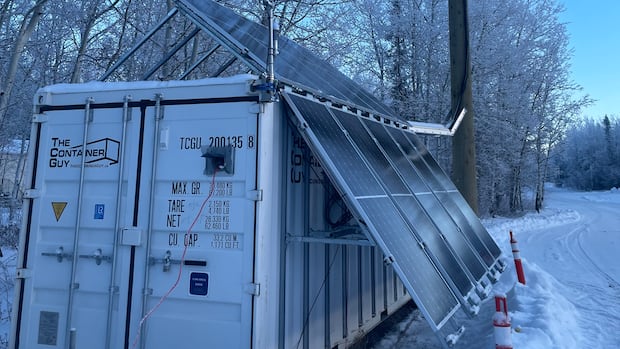
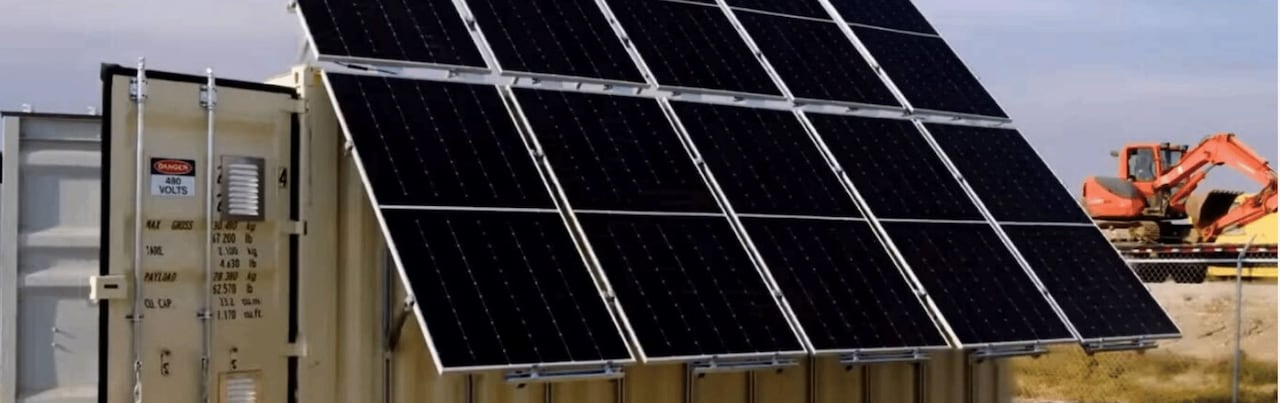
The unit is a 10-by-20-foot shipping container, and is powered by a small solar array and backup generator. Half of it contains equipment for mobile coverage and wifi provided by Starlink. The other half is a heated safety shelter that people can sit in.
SSi Canada calls the structure the Land-Life-Link, or L3.
“If you’re trying to get away from the elements, if you’re trying to get away from an emergency, you can stay there for quite a while,” said Dean Proctor, SSi Canada’s chief development officer.
Proctor told CBC News the unit has been in Fort Providence and fully functional since June. He added it should provide cell service and mobile data over an approximately five-kilometre radius, with some variation depending on the terrain.
“Primarily it’s for people stranded out on the land, so they have communication access if they need to call for help or things like that,” said Greg Nyuli, the executive director at Deh Gáh Got’îê First Nation.
Nyuli said Deh Gáh Got’îê First Nation plans to bring the shelter to a healing lodge downstream of Fort Providence on the Mackenzie River, to provide some connectivity in an area that’s popular for hunting, fishing and harvesting.
But because of low water levels on the river, they likely won’t be able to bring it there on the ice road this winter as planned.
“The access route we usually use in the winter is like totally rocky, because there’s no water,” he explained.
Nyuli said they are now planning to bring the unit downstream on a small barge this summer — though if water levels are low again in the main channel of the Mackenize River, this might not be possible either.
“The only option other than that would be a big helicopter, and we certainly can’t afford that,” he said.
Deh Gáh Got’îê First Nation Chief Michael Vandell said the unit is currently up and running behind the Fort Providence’s Snowshoe Inn.
He said the First Nation is planning to move the unit to outside the local school in the centre of town so students and others can access the wifi it provides more easily. Vandell said the goal is to do this early in the new year.