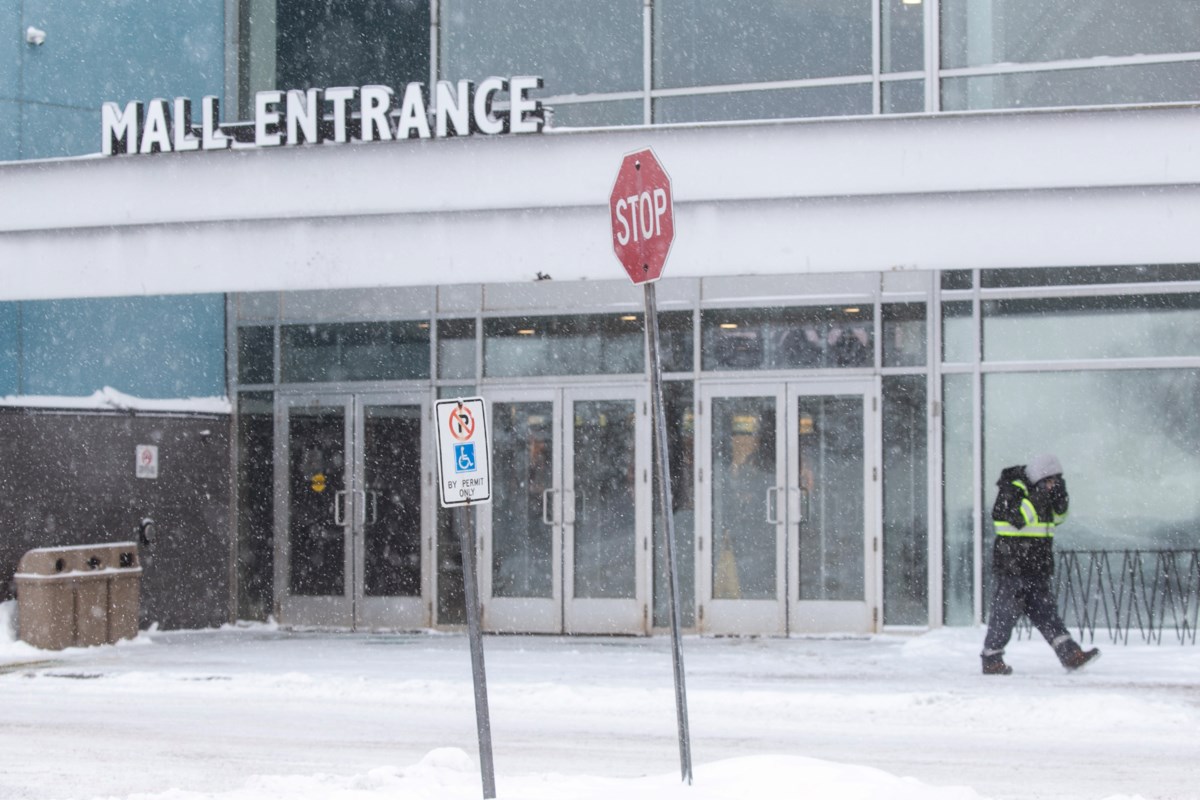
‘It’s a big budgetary impact’: The Sault’s largest shopping centre — in receivership and still up for sale — will be paying a much smaller tax bill this year
The Sault’s largest shopping centre has won a lengthy behind-the-scenes battle over its property tax bill — not just for this year and beyond, but for the previous six years.
SooToday has learned that the company behind Station Mall recently reached a settlement in a property assessment appeal that dates all the way back to 2020.
The outcome cost the city more than $2-million in immediate lost revenue, as portions of previous tax payments had to be credited. Going forward, the mall’s annual tax bill will also drop by nearly $450,000 — to approximately $2.72 million from $3.17 million.
Bottom line: Station Mall’s waterfront property is now assessed at $62.7-million, more than $10-million less than the previous assessment of $73-million.
News of the property tax reduction comes as the Sault’s signature mall remains in court-ordered receivership — and still up for sale.
In fact, it was the mall’s recent financial troubles that revealed the assessment appeal, a process that typically unfolds behind closed doors unless a formal hearing is held.
As SooToday first reported, the southern Ontario company that purchased Station Mall in 2022 for $30-million later defaulted on its mortgage, triggering legal proceedings by the lender, Algoma Central Properties Inc. (Algoma Central built the mall in the early-1970s, then provided a vendor take-back mortgage of $18-million when it sold the plaza to Markham-based SM International Holdings Ltd.)
Algoma asked a judge in 2024 to place the mall under the control of a third-party receiver who could change the locks, manage the books and market it for sale. But SM International fought back, insisting it was on the brink of repaying the debt.
In one sworn affidavit, company president Yeung Mou said he’d “made arrangements to have family money” from China wired to Canada after a previous attempt at new financing fell through.
Mou’s affidavit also disclosed a “yet unresolved property tax appeal, which, if successful, would result in a material tax credit and a substantial reduction in the property taxes payable in respect of the mall.”
That family money from China never arrived, and the mall was officially placed in receivership last January. But the property assessment appeal — which actually began years earlier — continued to play out in private.
It was a drawn-out process, to say the least.
All property values in Ontario are set by the Municipal Property Assessment Corporation (MPAC), an independent body. Cities then use those assessments to calculate individual property taxes.
A homeowner who disagrees with their assessment has the right to file a “request for reconsideration” with MPAC. But for commercial and industrial properties, the appeal process is different. Those cases are handled by a tribunal known as the Assessment Review Board (ARB), with MPAC on one side of the table and the owner on the other.
Although the city is not a party to such appeals, staff closely follow the process and provide input.
“In that case, it was more monitoring the exchange between MPAC and the mall owners,” said Tom Vair, the city’s Chief Administrative Officer. “The city has the ability to comment if they think anything was out of whack. In that case, we were supportive of the conclusions that MPAC was reaching along the way in the process.”
The city confirmed to SooToday that Algoma Central launched the appeal on March 15, 2021 (when it still owned the property) for tax years dating back to 2020. SM International took carriage of the appeal after it bought the mall in 2022, and then Algoma stepped back in after the property went into receivership.
Unlike houses, which are assessed largely on the basis of fair market value, commercial property assessments are much more complex. Beyond sale price, the calculation can include such factors as property features, rental rates and overall income-generating potential.
As for the specific arguments put forward in the Station Mall appeal, those are not public. Negotiations occurred behind closed doors, and the appeal was ultimately settled in May 2025 “without submissions being filed or a hearing proceeding,” according to an emailed statement from the ARB.
Although the details leading up to the settlement are not public, the final assessed value of all Sault properties is available online. Specific levies can then be calculated against the latest tax rates set by the city.
As mentioned, Station Mall’s annual property taxes are now nearly $450,000 lower than they were pre-settlement. But because the deal also covers the previous six years — 2020 to 2025 — the city endured an additional hit to its coffers of approximately $2.6-million (minus the education levy collected on behalf of the province).
Here’s the other twist: As SooToday previously reported, SM International had racked up millions of dollars in unpaid property taxes at the same time as it fell behind on its mortgage. That means a credit was applied to the outstanding balance instead of a refund cheque.
Either way, it all adds up to lost revenue for the city. Those unpaid taxes would have eventually been paid to the municipality whenever the mall sold.
In an interview, Mayor Matthew Shoemaker said the impact of the Station Mall appeal did make it “that much tougher” during last month’s budget deliberations. Sault city council ultimately approved a 2026 budget with a levy increase of 3.87 per cent — but with a zero per cent increase to the municipal portion of the levy.
“It’s a big budgetary impact,” the mayor said, when asked about the Station Mall appeal. “I think the flip side of that coin is that it certainly makes the mall more appealing for potential buyers. We want to see the mall succeed, and so this gives it a better balance sheet. Having a healthy commercial centre is a benefit to the community. The budgetary impacts, we tackle as we face them.”
Shoemaker said the mall appeal is a prime example why the city is so determined to grow the tax base in the Sault.
“Instead of focusing on how to mitigate tax losses from appeals, we have focused on how to grow the tax assessment by incentivizing things like the new Legion building, the prospective apartments at 22 MacDonald Avenue,” he said. “All those are projects that put money into the city’s coffers, that we’ve given municipal grants to see them built. I think that’s where more of the focus is: on making sure we have new assessments to offset assessments that otherwise come off the books.”
Lawyers for Algoma Central did not reply to a request for comment from SooToday.