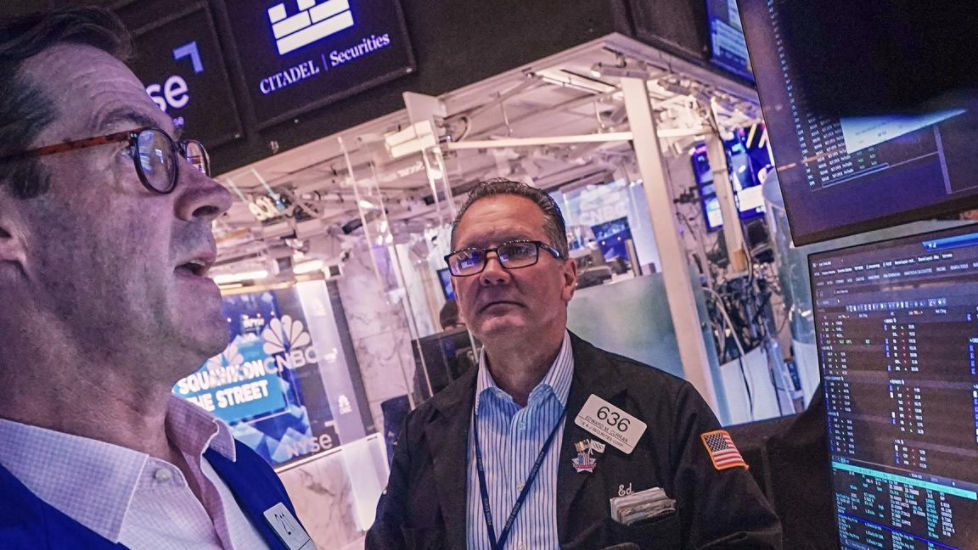
The S&P 500 has ended lower, pulled down by declines in JPMorgan, Blackstone and other financials, while Nvidia and Alphabet lifted the Nasdaq as investors shifted towards AI-related stocks.
The drop in the S&P 500 followed an intraday record high earlier in the session on Wednesday.
Shares of housing acquisition companies tumbled after President Donald Trump said he was moving to ban Wall Street investors from buying single-family homes in a bid to reduce home prices. Real estate platform Zillow moved higher.
Fed rate cut on the cards
The Dow Jones Industrial Average fell 472.60 points, or 0.96 per cent, to 48,999.39. Data on Wednesday showed US job openings fell more than expected in November after rising marginally in October, while a separate ADP report showed that private payrolls increased less than expected in December.
While the latest labour market datasets mark a return to the standard release of economic data disrupted by the US government shutdown, they did little to change expectations of interest rate cuts from the Federal Reserve ahead of Friday’s key government payrolls report.
Investors were also monitoring geopolitical developments after the US said it seized a Russian-flagged, Venezuela-linked tanker as part of Trump’s aggressive push to dictate oil flows in the Americas and force Caracas’ socialist government to become its ally.
Investors return to AI stocks, defence sector under scrutiny
Major defence groups Northrop Grumman and Lockheed Martin lost ground after Trump said he would not permit dividends or stock buybacks for defence companies until they fixed problems with the production of military equipment.
Nvidia, Microsoft and Alphabet rose as investors shifted back into AI stocks following recent worries they were overvalued. Underscoring investor appetite for heavyweight AI players, Anthropic is planning a multibillion-dollar fundraising that would value the Claude chatbot maker at $US350 billion.
That would make the privately held company more valuable than the vast majority of corporations, including Advanced Micro Devices, Chevron and Wells Fargo.