This article picked by a teacher with suggested questions is part of the Financial Times free schools access programme. Details/registration here.
Read our full range of US High School economics picks here.
Read the FT article and then answer the questions below.
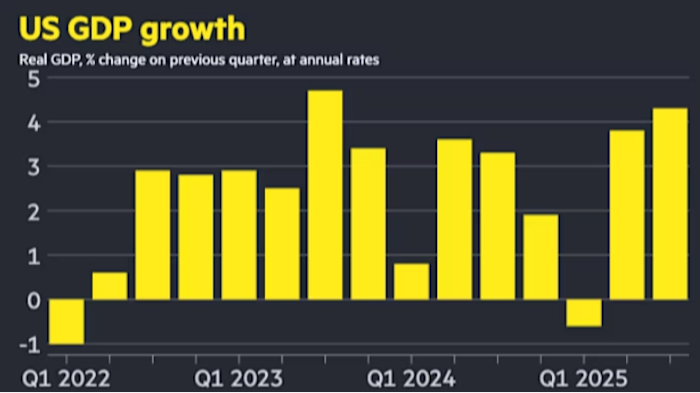
US economy grew at 4.3% rate in third quarter
-
The official data showed the US economy grew at an annualised rate of 4.3 per cent in the third quarter. How did this actual figure compare to the expectations of economists polled by Bloomberg, and what does this difference imply about the overall strength of the economy during that period?
-
Consumer spending on healthcare and computing helped boost growth. What economic role does consumer spending play in GDP?
-
The article states that a fall in imports “helped” the GDP figure, and “overall net trade added 1.6 percentage points to the headline rate.” Why do imports have a negative effect on the calculation of a country’s GDP?
-
The article mentions that consumer confidence fell to its second-lowest level in five years. Why might lower consumer confidence affect future economic growth?
-
An economic counsellor to the US Treasury Secretary states, “Exports are up almost 9 per cent, imports are down about five,” which contributed to a large net trade boost to growth. Explain how a strong emphasis on exports over imports (improving the trade balance) could lead to a “re-industrialisation rejuvenation” in the US
-
The article mentions a “sharp slowing in inflation to 2.7 per cent.” If your personal income or allowance only increased by 1 per cent this year, what would this 2.7 per cent inflation rate mean for your purchasing power?
-
Economists watch the pace of national inventory rebuild. If businesses see slowing consumer momentum, how does their action on inventory levels affect the calculation of the country’s GDP growth in the following quarter?
-
In your own words, explain why GDP is such an important measure for economists, policymakers, and ordinary people. What can GDP tell us, and what are some things it cannot tell us?
Joel Miller and James Redelsheimer, Foundation for Economic Education.
Click here for FEE FT Classroom Edition with classroom-ready presentations and suggested answers for teachers.