West of England
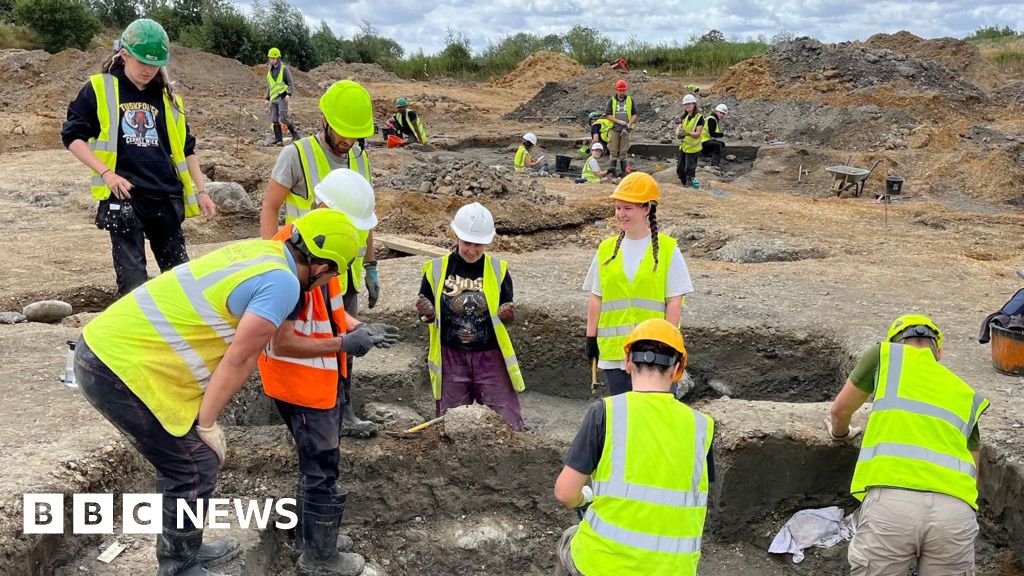
A palaeontology dig – believed to be the biggest in the country, with more than 200 volunteers – has uncovered mammoth skulls, a 7ft (about 2.1m) tusk, evidence of Neanderthals and 160 million-year-old fossils.
The site at Cerney Wick in the Cotswolds is famous for the discovery of mammoth remains, with a David Attenborough documentary previously on the site.
This is the last time the team can investigate the area – which belongs to a quarry company – before it has to become a pond.
New species to science are believed to have been found in fossils, as well as potential ice age wolves, rhino and lion bones.
The site – which would once have been a river – has ice age remains from about 214,000 years ago but also fossils from about 160 million years ago.
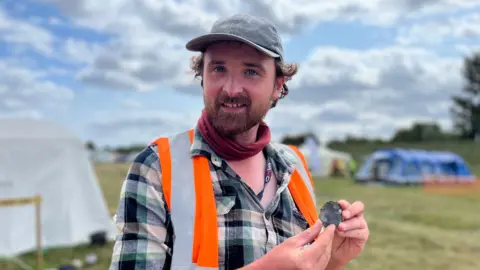
While the site has yielded yet more mammoths, archaeologist Kieran Mason has been the one looking at the human side of it – namely, the flint tools discovered.
He explained that before the site was excavated, it had been questionable whether Neanderthals were living in the area at the time, but he said: “It’s clear evidence of Neanderthal. Modern human flint knapping is very different to Neanderthal techniques.”
“The fact we’re getting these artefacts in the same layer that we’re finding these bones that have been carbon dated is telling us there were people around, we just need to find a skeleton next.”

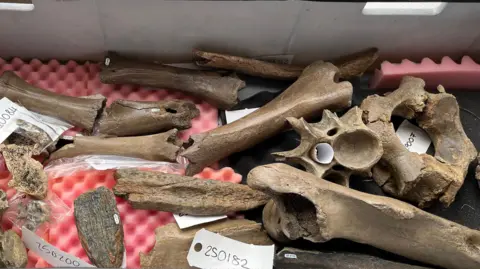
Bones of other types of elephant aside from mammoth have been found too.
Some bones, such as those of big ice age horses, show the gnaw marks of hyenas.
Sally and Neville Hollingworth are the people who kicked if all off. They first noticed the significance of the area about eight years ago, when they spotted a mammoth bone sticking out of the ground when the owners, Hills Quarry Products, had just begun to dig a trench.
Since then, the company has had teams back a few times to gather finds.
“We have bison, rhino, the giant horse, a possible wolf vertebrae, evidence of hyena,” said Ms Hollingworth.
There is a lot more than just digging on site – bones and fossils have to be cleaned and preserved at the conservation tent, where the larger things that had to be carefully lifted, like the 7ft tusk and skull, are also covered in plaster to keep them safe.
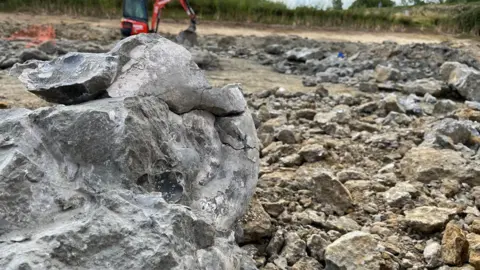
One hundred and sixty million years ago, the Cotswolds would have been underwater. The area of the dig site examining fossils is full of ammonites, but to the trained or enthusiast’s eye, there is a lot more in the rock.
Palaeontologist Richard Forrest is an expert in Jurassic marine reptiles and told the BBC the site had been “incredible” and they had been able to expand their knowledge of the area hugely.
That includes a possible 12 new species of invertebrate the team may have found as they comb through the finds.
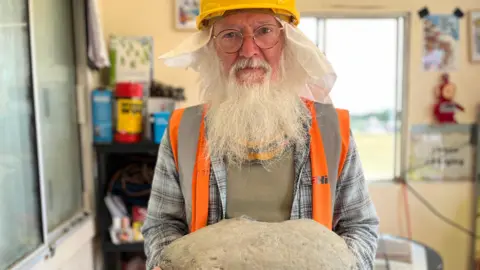
The sea monsters Mr Forrest researches are somewhat more fierce than the ammonites – they have also found a baby Plesiosaur.
It would have been about 2m (about 6.6ft) long just as a juvenile.
He described it as a “snake threaded through a turtle. They effectively flew underwater, with two sets of flippers. No animal ever has hit that formula.”
They had very long necks too – the rock has parts of the bones sticking out, but Mr Forrest will need to do careful work to get it out.
“I use what’s called an air pen – like a miniature drill. They work at a minute level. I’ll do a lot of this under a microscope.”
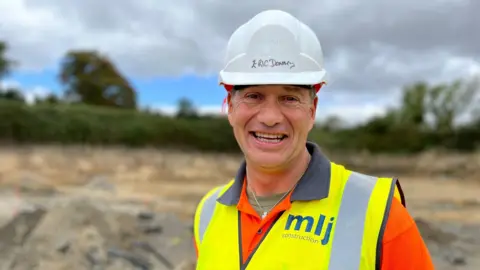
The dig has been a good opportunity for students and volunteers too – Mr Hollingworth explained that about 20 universities had had people involved, including internationally.
“We’ve been really lucky that we’ve a great big group of very enthusiastic volunteers and researchers,” he added – the numbers are what have made the dig so huge.
Volunteers have also come in from all backgrounds, a few being geologists.
Eric Downey is one of them – he is now office-based in his usual work, but jumped at the chance to “get his hands dirty”.
“This is the cream of the cream. This is one of the best places in the UK to come and dig. Everyone here is a volunteer. It just shows the passion,” he said.
“No-one has touched this thing since it was deposited thousand or millions of years ago. You are the first person to see this in modern times.”
Many volunteers have been camping beside the dig in the area nicknamed Mammothville for the three-week dig.
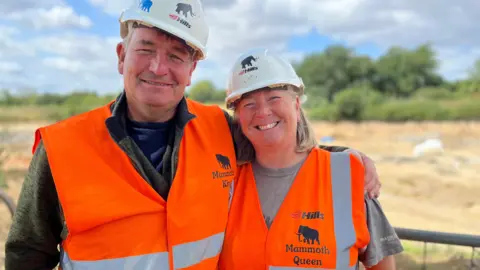
Mr and Ms Hollingworth, so passionate they have their own high-vis jackets with “Mammoth King” and “Mammoth Queen” printed, explained the site would soon become a silt pond and returned back to nature.
“Everything here will be locked away back into it’s very own time capsule,” said Mr Hollingworth.
For them, as the people who kicked it all off, there is more to it than finds.
“This has been an incredible journey. This site has held so many fabulous memories. It’s not just about the dig here. It’s passing on that legacy for the future,” added Ms Hollingworth.