What’s going on here?
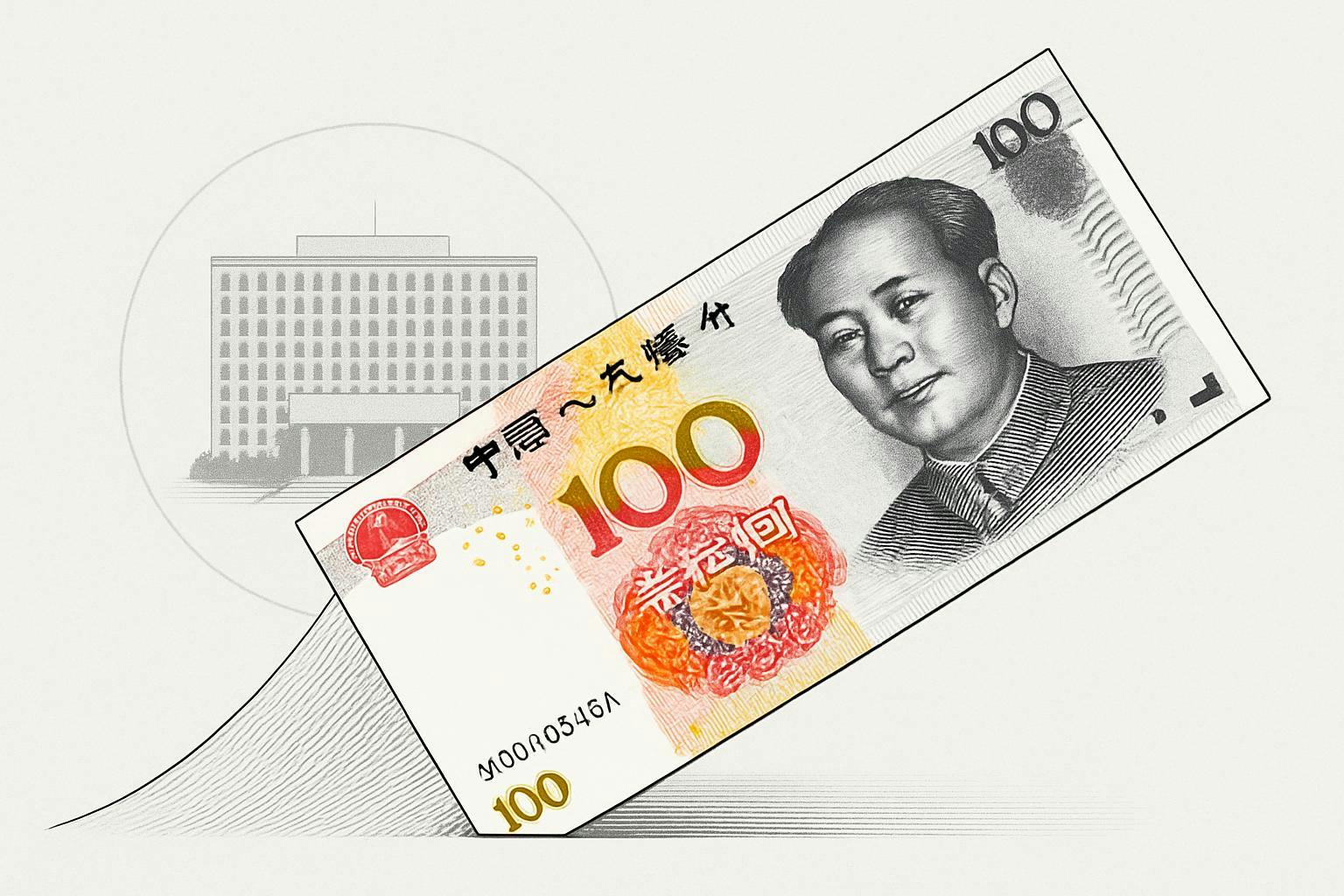
China’s yuan is on its best run in years, but the country’s central bank already looks like it’s trying to tap the brakes.
What does this mean?
The onshore yuan is on track for a fourth straight monthly gain versus the dollar – its longest winning streak in four years – after touching a 13‑month high. Both the onshore and offshore yuan are up solidly this year, by about 3.2% and 3.7% against the dollar as of early Friday. But traders say that strength doesn’t quite square with China’s softer backdrop, with recent data pointing to weak domestic demand and factory activity still under scrutiny. The rally is mostly riding on a broadly weaker dollar, which is heading for its worst week in four months, with thin US Thanksgiving trading exaggerating moves. That leaves the People’s Bank of China in a tricky spot, and it’s pushing back by setting its daily midpoint fix weaker than market models suggest for a second day in a row, using its 2% trading band to lean against further gains.
Why should I care?
For markets: Currency moves are shouting more than the economy is whispering.
The yuan’s climb is coming even as China’s money markets loosen, with the volume‑weighted overnight repo rate down to around 1.29% – its lowest level in more than two years. Easier cash conditions and ongoing policy support usually point to a weaker, not stronger, currency, which is why the PBOC seems wary of letting the yuan run too far. Morgan Stanley reckons the real driver from here will be the dollar and the Fed, and expects the yuan to gradually strengthen toward 7.0 per dollar by mid‑2026, before easing slightly to roughly 7.05 by the end of that year. In the short term, though, traders are zeroing in on November factory data and the upcoming Central Economic Work Conference – two events that could jolt Chinese stocks, bonds, and regional currencies.
The bigger picture: A stronger yuan does not mean a stronger China just yet.
A firmer yuan can help tamp down imported inflation and project confidence, but it can also squeeze exporters at a time when China’s recovery is still fragile. Recent indicators have underscored weak domestic demand, right as policymakers try to shore up growth with targeted easing and looser funding conditions. That tension helps explain why the PBOC seems comfortable with relative currency stability, but not with an unchecked rally driven mainly by a wobbly dollar. For global investors and governments, how China manages that balance between growth, currency control, and capital flows into 2025 and 2026 will influence trade patterns, commodity demand, and how other Asian central banks steer their own exchange rates.