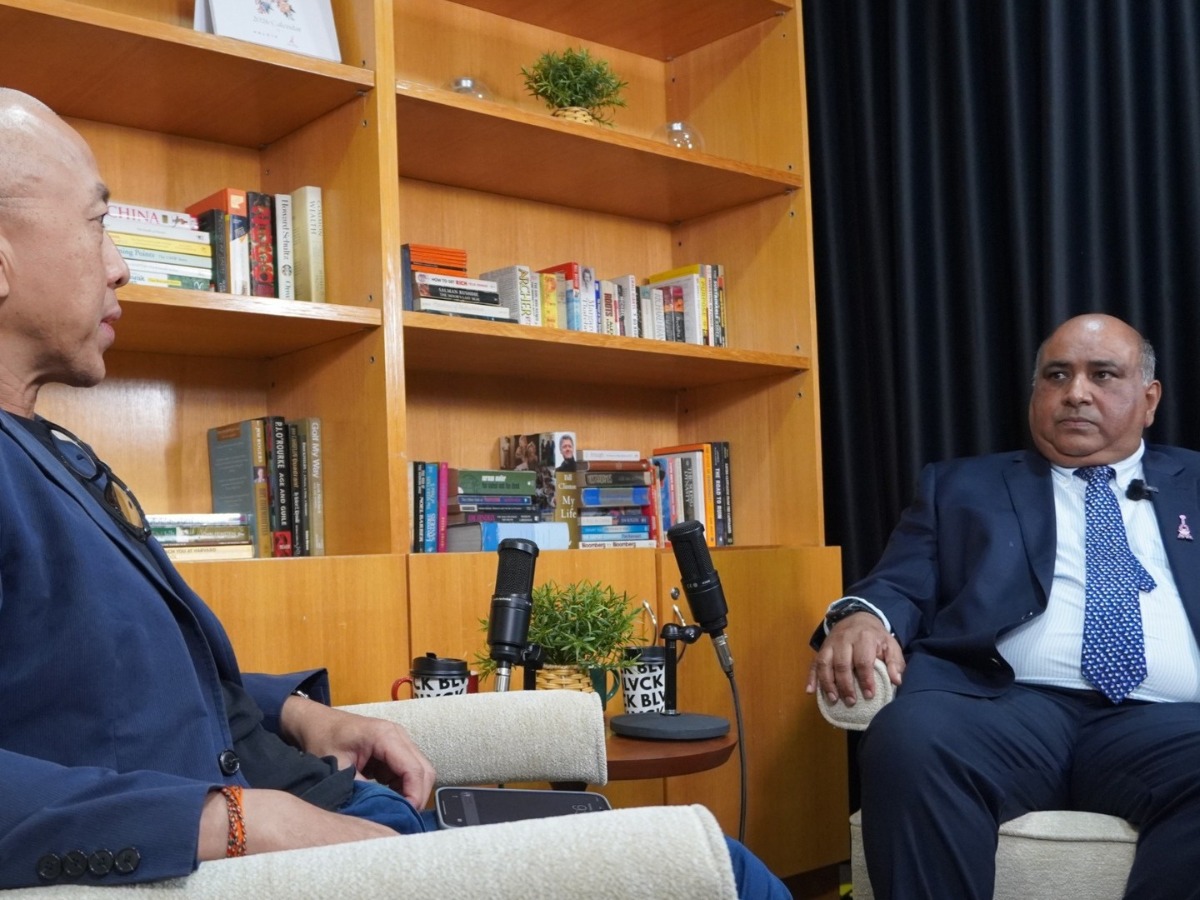
KUALA LUMPUR, Dec 1 — A senior oncologist has advised patients to get lawyers to send letters to insurance companies that deny their medical claims, without necessarily going to court.
Dr Mohamed Ibrahim A. Wahid, a senior consultant clinical oncologist who has been in practice for more than three decades, said he has suggested to some patients to consult lawyers when coverage was denied over what he believed to be a “gray area”.
“I have seen patients who go to a lawyer and all the lawyer has to do – no need to take them to court – is to write a letter to the insurance,” Dr Ibrahim told the Do More – Today financial podcast hosted by Khoo Hsu Chuang that aired last November 18.
“‘Why did you deny? On what account did you deny? Where in your policy says you will not pay for this?’
“The whole thing flips.”
“Oh, so they’re deathly afraid of lawsuits?” Khoo remarked. “Fantastic.”
Dr Ibrahim, who is former president of the Malaysian Oncological Society, pointed out that even if insurance companies decided to go to court to defend claims denials, the industry might have difficulty recruiting specialist doctors as expert witnesses.
“I think none of the specialists will sit down and represent them. Certainly my own oncology society, we’re not going to help defend. They will defend the patients; they will not defend the insurance industry.”
The senior oncologist advised the general public to discuss claims denials with lawyers, who would be able to interpret their health insurance policies and decide whether denials should be challenged.
“And when it comes to a challenge, most of the specialists, certainly the oncologists, will be protecting their backs – they will help patients.”
Raja Eileen Soraya Raja Aman, a management partner at Raja, Darryl & Loh, previously said patients could take insurers and takaful operators (ITOs) or third-party administrators (TPAs) to court for health insurance denials or delays.
RM1 Million Policy, RM130 Monthly Oral Cancer Therapy Denied
During the Do More – Today podcast, Khoo noted that some people take up medical plans with RM1 million coverage limits, expecting to be covered for any contingency.
“But when the crunch time comes and they go through the process with the hospital, they’re then denied coverage,” said Khoo. “Is that what you’re saying?”
Dr Ibrahim affirmed it. “When it comes to claims, there are a lot of little hidden phrases in the insurance clause that you signed. You’re not aware of the limits to the RM1 million [policy] that you can claim, how much, and what they will pay or what they will not pay.”
The oncologist cited, as an example, hormone tablets that breast cancer patients need to take, sometimes up to 10 years, which he said was part of the standard of care.
However, he noted that insurers often refuse to cover such oral therapy that costs RM130 per month, paying only for surgery or chemotherapy for breast cancer. RM130 monthly over 10 years is equivalent to RM15,600, just a fraction of RM1 million.
“But the problem is, if you don’t pay for that, there’s a high chance that your cancer might come back,” said Dr Ibrahim. “It’s not maintenance treatment; it is part and parcel of ongoing cancer treatment.”
He likened it to taking medication for diabetes. “When you stop taking your tablets, your diabetes will come back and your blood sugar will shoot up.”
Dr Ibrahim said he has had patients complaining to him about how their insurers deny RM130 claims, despite having an RM1 million medical plan. These patients are then forced to be referred to government hospitals because they can’t afford to pay out of pocket.
“The responsibility shifts from insurance who are supposed to provide that cover, and you still have that amount of coverage, but that cost now has to be borne by the Ministry of Health.
“Ministry of Health hospitals are already burdened with lots and lots of patients,” he noted. “Why should the government take the responsibility that belongs to the insurance company?”
Khoo said his sources have told him that most claims denials come from “big players” that control about 20 per cent of the insurance industry.
The financial journalist added that he personally raised his medical insurance cover to over RM1 million earlier this year to reach a certain comfort level. “Clearly, that peace of mind is not really a real peace.”
Patients Allegedly Reimbursed 50% After Tribunal Determines Wrongful Claims Denial
Dr Ibrahim and Khoo also discussed regulatory gray zones in health insurance. Khoo noted that Bank Negara Malaysia (BNM) is a financial regulator that regulates banks and the financial services industry, which the insurance industry falls under.
“But Bank Negara doesn’t know about medical issues,” Khoo said. “So if you’re an aggrieved customer or an aggrieved patient, where are your points of resolution?”
Dr Ibrahim similarly said the central bank doesn’t know much about health care, whereas the MOH lacks regulatory authority over ITOs.
“So I think there’s a huge grey area in Malaysia in terms of governance. Because of that, insurance companies are taking advantage of this grey area and they’re making their own rules and doing their own thing.”
In a statement last October, Health director-general Dr Mahathar Abd Wahab warned ITOs and TPAs against interfering with doctors’ clinical decisions that he said might be in breach of the Private Healthcare Facilities and Services Act 1998 (Act 586).
“They’re contravening the private health care Act if they deny patients standard-of-care treatment,” said Dr Ibrahim. “Despite coming up with such a circular, nothing has changed.”
Citing public disclosures by insurance companies, Khoo noted that some of the biggest houses are “literally making billions of ringgit”.
“I’ve done the research, I’ve spoken to many insurers, and they’re literally making at least a few hundred million, if not a few billion ringgit,” said the financial journalist.
BNM recently reactivated its Grievance Mechanism Committee (GMC) to resolve disputes between health care providers and ITOs, with the GMC holding its first meeting last November 10. There is also an existing Financial Markets Ombudsman Service (FMOS) that manages disputes involving insurance, among other financial services or products.
Dr Ibrahim, however, noted that even if the tribunal found that a health insurance claim was wrongly denied, the ITO would merely be instructed to reimburse the claim, which he described as a “slap on the wrist”. Even then, some of his patients allegedly received only 50 per cent reimbursement instead of the full amount.
“I would like to see them [ITOs] get penalised – pay a summons of maybe 10 times the value to the government as a penalty,” said the oncologist. “Once you start penalising these people, this nonsense will stop.”
Malaysia Among Cheapest For Health Care In Southeast Asia
Dr Ibrahim said despite the rise in private health care costs over the past few decades, Malaysia remained one of the cheapest countries in Southeast Asia for health care, illustrated by Malaysia’s medical tourism.
“We’re a lot cheaper than our neighbouring countries,” said the oncologist.
“To do a PET scan in Indonesia costs RM5,000 to RM6,000, but in Malaysia, it costs RM2,300.”
Comparing his experience working in the United Kingdom and the United States, Dr Ibrahim said, “I’m proud to say the Malaysian health care system is one of the best in the world.”
Medical equipment and treatment in Malaysia are at par, if not better than other countries.
“I don’t want the health care industry to be destroyed by false accusations of, you know, private hospitals charging so much,” said Dr Ibrahim, stressing that treatment costs have gone up, in line with the rising prices of food and other goods.
The oncologist maintained that the problem was with health insurance denials, despite companies promising protection with RM1 million annual coverage.
“But when the claim comes, you cannot claim for this, you cannot claim for that.”