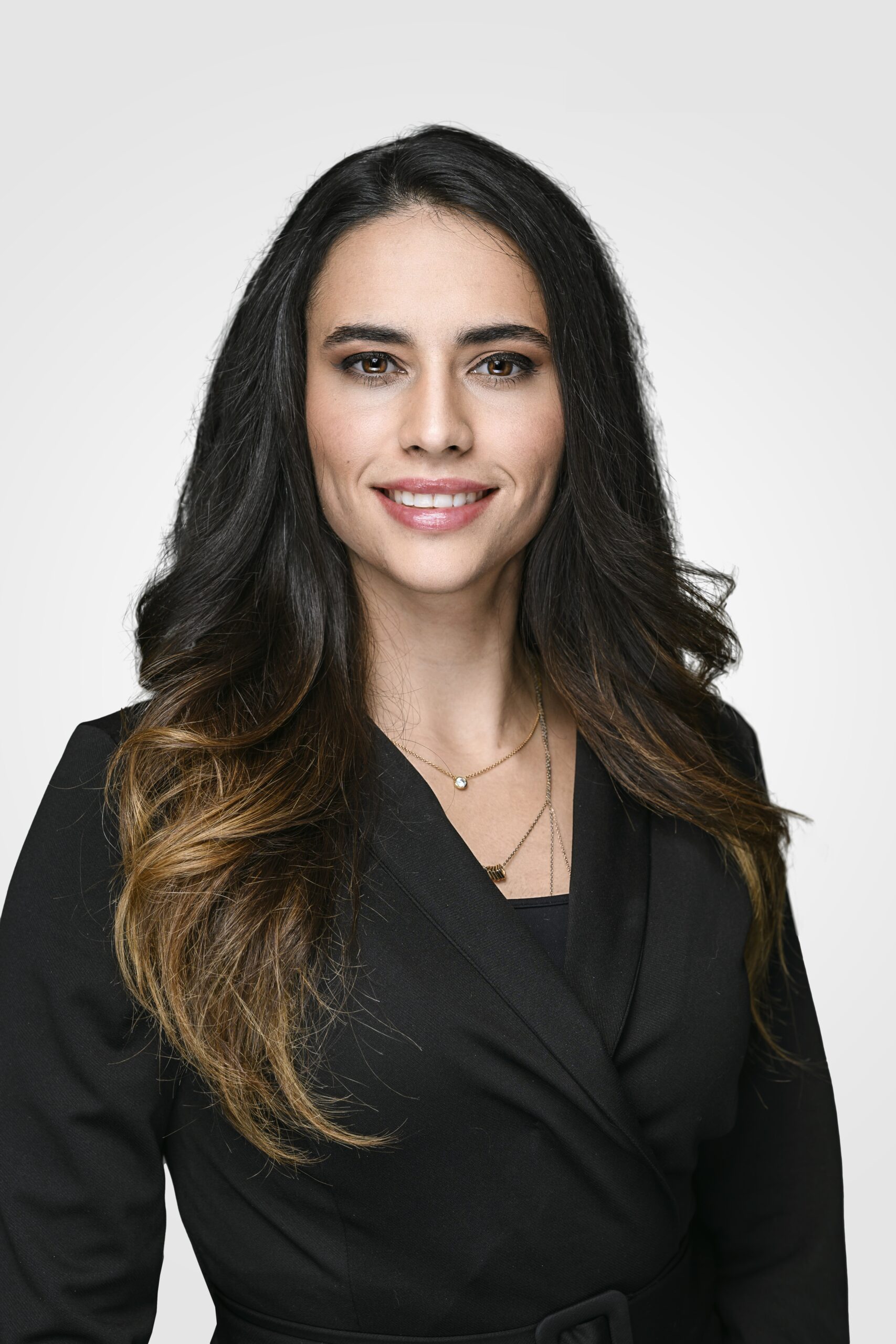
Supporting equality in countries where Baker Hughes operate is embedded in the company’s DNA. Meet Luiza who recently returned from such a project.
As Senior Finance Compliance Manager for Baker Hughes in Poland, Luiza Souza is driven by a deep sense of integrity. “The field of compliance is magnetic to me,” she says, “because it brings attention to the right way of doing things.” As a Brazilian working with Baker Hughes first in Hungary and then in Poland for the past 11 years, she has sought to foster community in her new European environment. Luiza joined in in every Baker Hughes Employee Resource Group (ERG) and led one of them locally – the Women’s Network, while she worked in Budapest.
She says, “The ERGs provide an environment of inclusion and belonging,” a place to meet and engage with people she wouldn’t necessarily meet in the course of her work and “an opportunity to grow beyond my role at Baker Hughes”.
The principles of inclusion, equality and appreciation of diversity came together with the Baker Hughes Foundation support of Nurturing Minds, a charity nominated by the Multicultural ERG. The organization provides a framework for volunteers to spend time as English Fluency Role Models at the SEGA Girls’ Secondary School in Tanzania. Nurturing Minds’ mission is to support quality education, life skills, and entrepreneurship to help at-risk girls in Tanzania become leaders in their communities. They run four programs: the SEGA School, a community outreach initiative, a career development and continuing education scholarship program, and a micro-loan and business development program. Together, they serve more than 2,500 girls and women across the country.
The Multicultural ERG, within Baker Hughes, aims to foster a global sense of community where diverse cultures, perspectives, and employee experiences come together. The team’s purpose is to build cultural awareness and leverage diverse experiences to enrich collective growth through education, engagement, and collaboration.
Active in over 70 countries, and with more than 5000 members, the group strives to create an inclusive workplace where everyone feels respected, empowered, and truly belongs. Find out more about Baker Hughes Employee Resources Groups here.
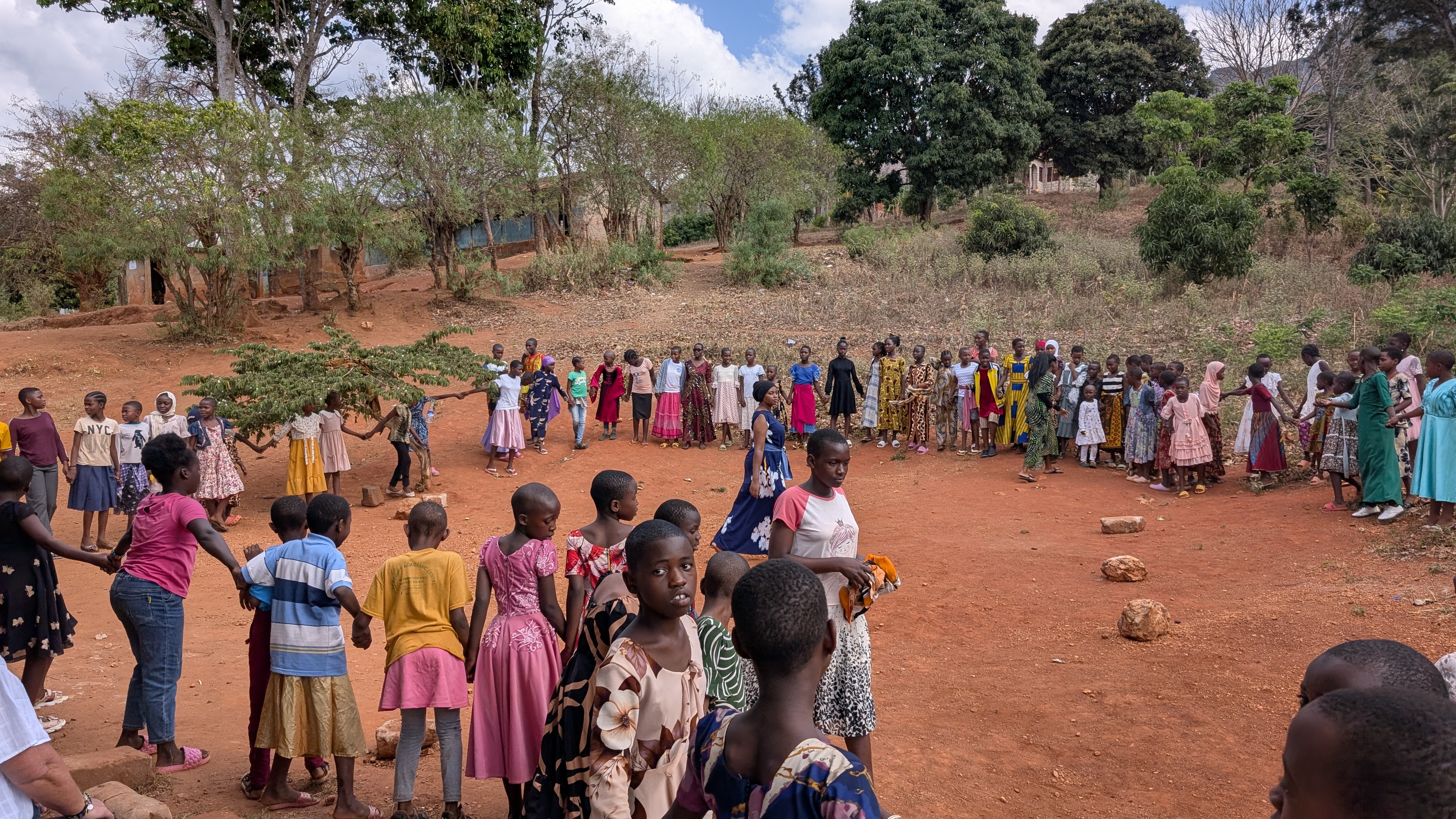
“In Tanzania”, explains Luiza, “young girls are rarely encouraged to pursue an education beyond primary school. Poverty can force them into early marriage and teen pregnancy.” To progress to secondary school, girls must pass a national exam. If they are successful and their families can afford it, their education continues with lessons in English. This is a difficult transition to negotiate, as school began in the local Kiswahili language.
Nurturing Minds and SEGA, which runs a scholarship program for qualifying girls from families in poverty, recognized the need for a fun and engaging English immersion program. This would help girls cross the language divide and more confidently pursue their studies. When Luiza applied to join the program as a volunteer in Tanzania for two weeks in October 2025, she wasn’t entirely sure what to expect.
This is the story of how her journey unfolded and reinforced her lifelong desire to help change young lives for the better.
What were your first impressions of Tanzania?
My first impression was great! At the airport, when our plane arrived there was a welcome, a presentation with local music and people dancing. It was a very nice surprise. I travel a lot, and this was the first time I’ve ever experienced this kind of welcoming presentation for everybody who arrives from anywhere in the world. I had just landed and there was a party!
Where did you stay while you were volunteering?
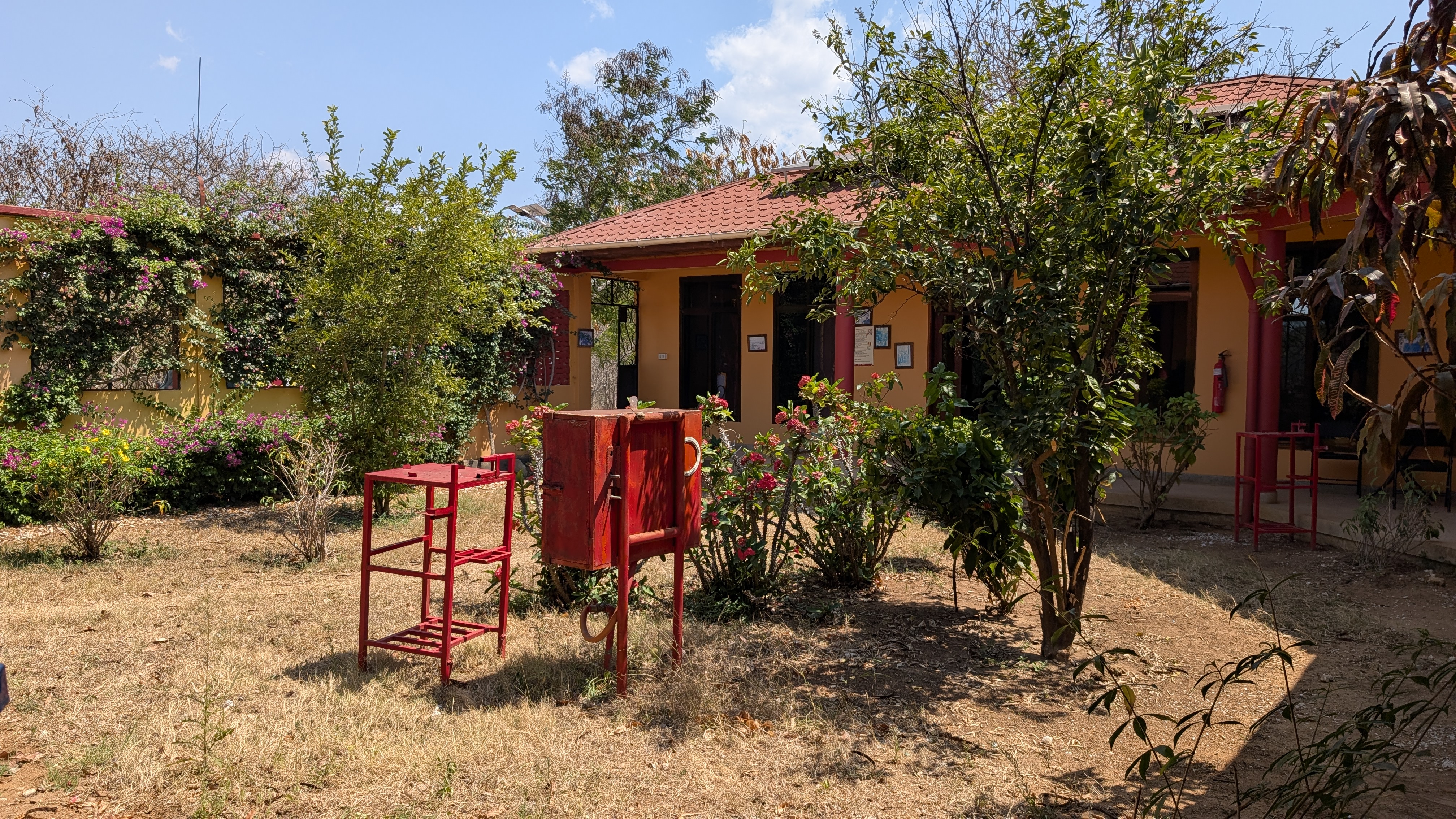
Nurturing Minds provides two volunteering opportunities: the English Fluency Program and the STEAM Program (STEM Adventures), which encourages girls to explore science and engineering. As a volunteer in either program, you stay in onsite accommodation, separate to the dormitories of girls who board there.
How many girls were you assigned to work with?
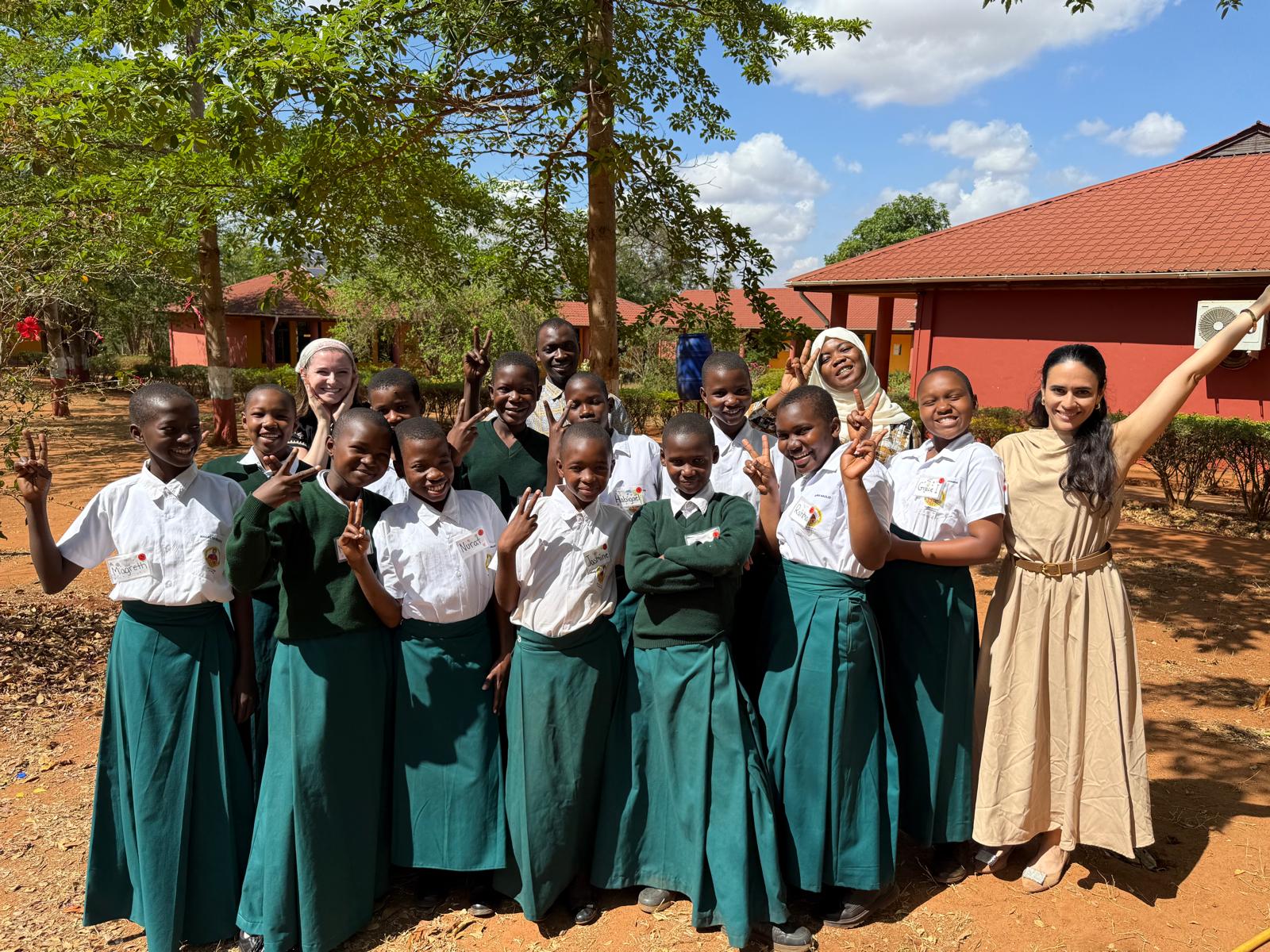
The school itself has around 280 students between the ages of 12 and 16, depending at what age they passed the national exams to get into secondary school. My cohort of volunteers was responsible for 12 girls each.
What struck you about the girls? In your LinkedIn post you say that they are smart, kind and full of light, and that they live with intention. How do they live with intention?
All the girls in the school come from situations where life is tough. They are not privileged. The way they approach life is very genuine. They know they are there to learn, so they are curious. Often, they are shy because they don’t yet fully understand English, but they are very eager. They learn so fast because they want to. At the same time, they are very caring and want to help with everything.
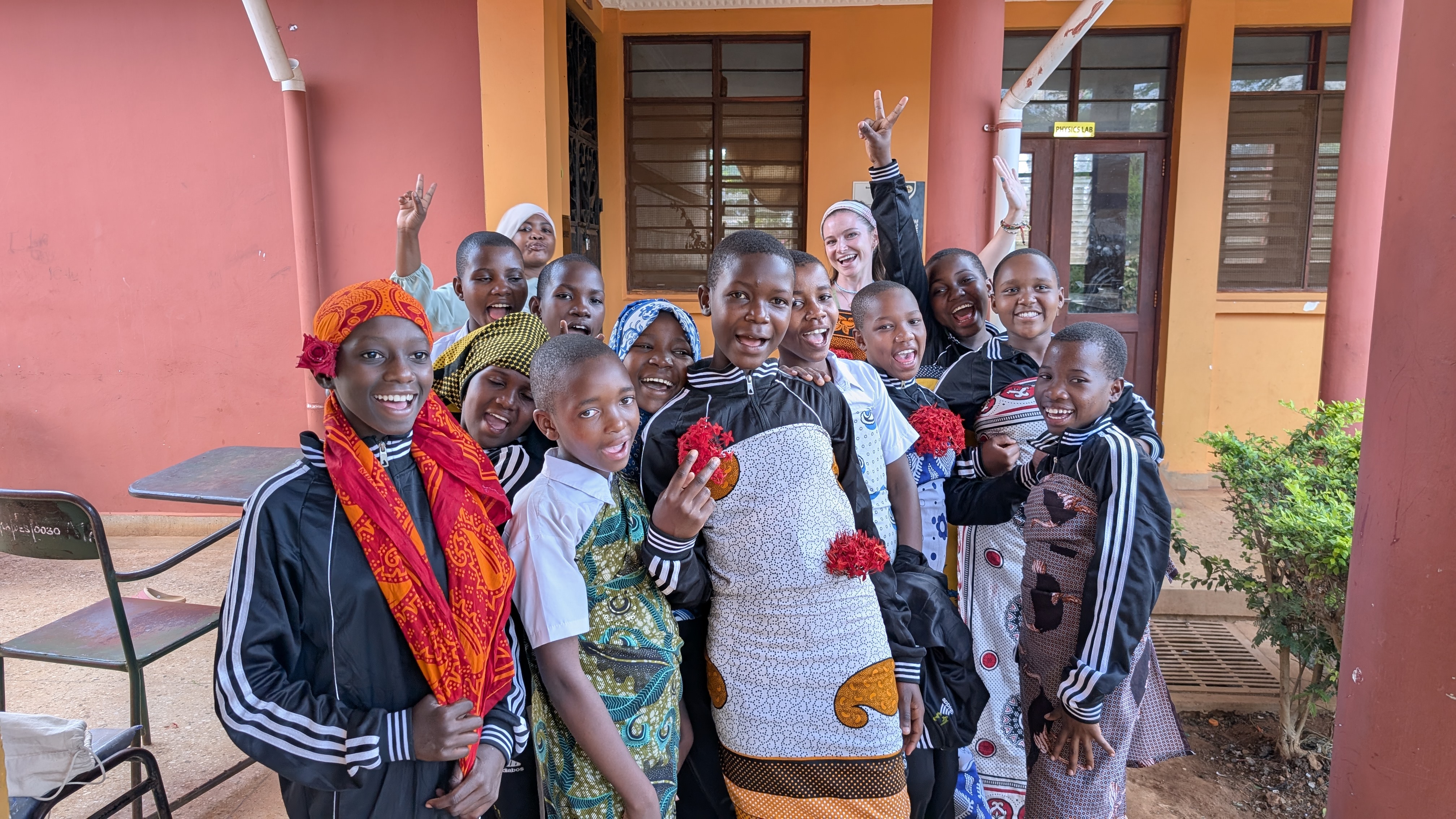
What were the challenges of this volunteering experience? What did it demand of you that you’re not used to?
Nurturing Minds welcomes participants even if they don’t have a background in teaching. I had never had the experience of teaching, but they have an amazing, organized way of arranging the classes so that anyone can understand how to do it.
The challenge is in getting used to talking with kids, to give the lessons in a way that they understand. Sometimes you have to change the program a bit because you can see in their eyes that they aren’t fully following. As you get to know them, you recognize how to express things so that they understand better. By the third lesson you have your own way, and you really start to engage. The way that Nurturing Minds has prepared the lessons and materials, which include songs and books for storytelling, is awesome for people like me who have never taught before. And the volunteers all support each other, sharing advice on what worked for them in their classes.
How were your days at the school structured?
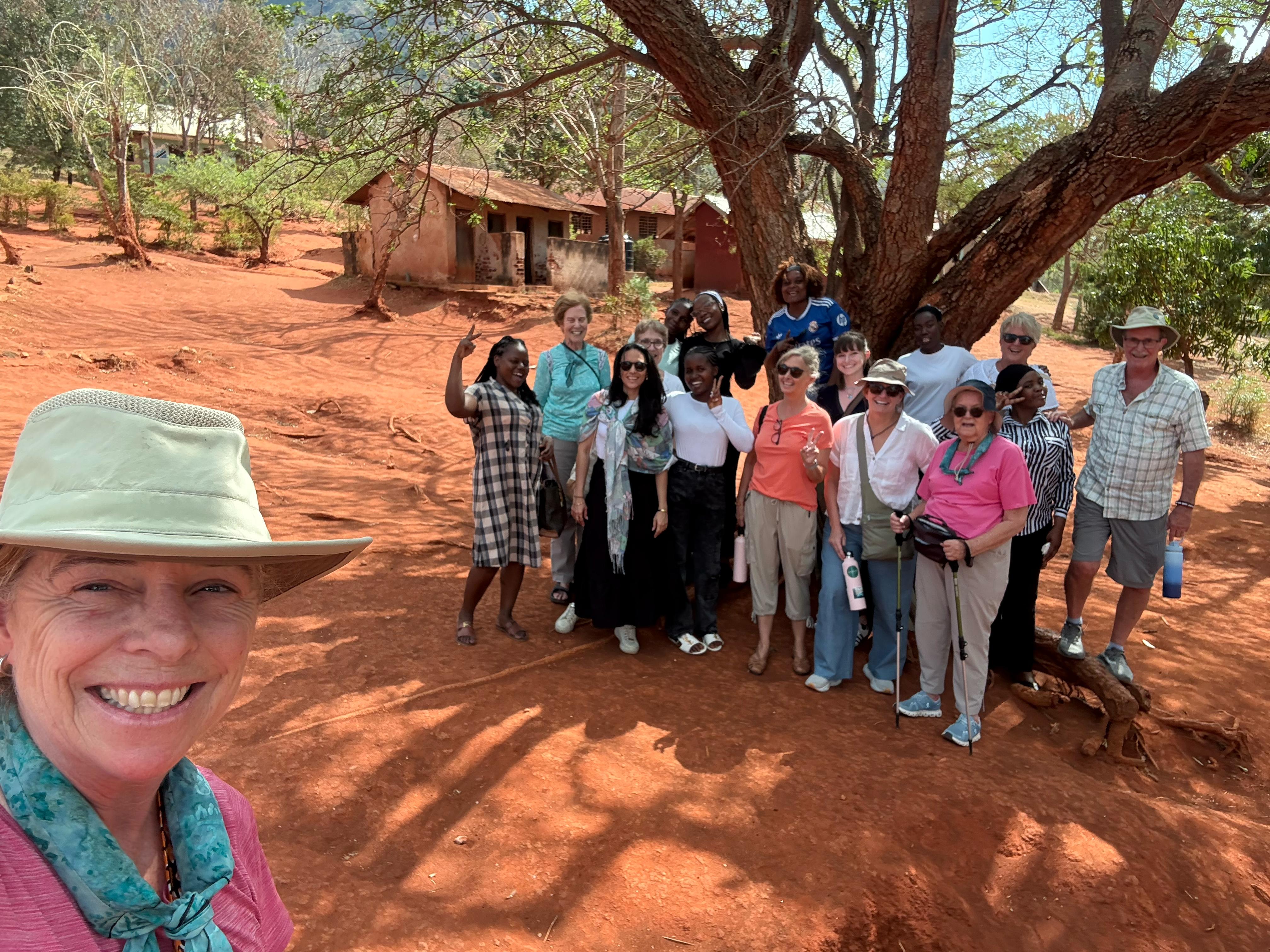
In the mornings and afternoons, we held classes on various themes and topics. For example, one lesson was designed to help the girls get used to learning the present and past tense in English. After classes, we would meet with the volunteers and the main organizer of the English Fluency Program to discuss how the class went, what could be improved, what worked well, and what didn’t. We would also talk about the plan for the next day. Each group is led by two volunteers, and together, at the end of the day, we would prepare the activities and class materials for the following day.
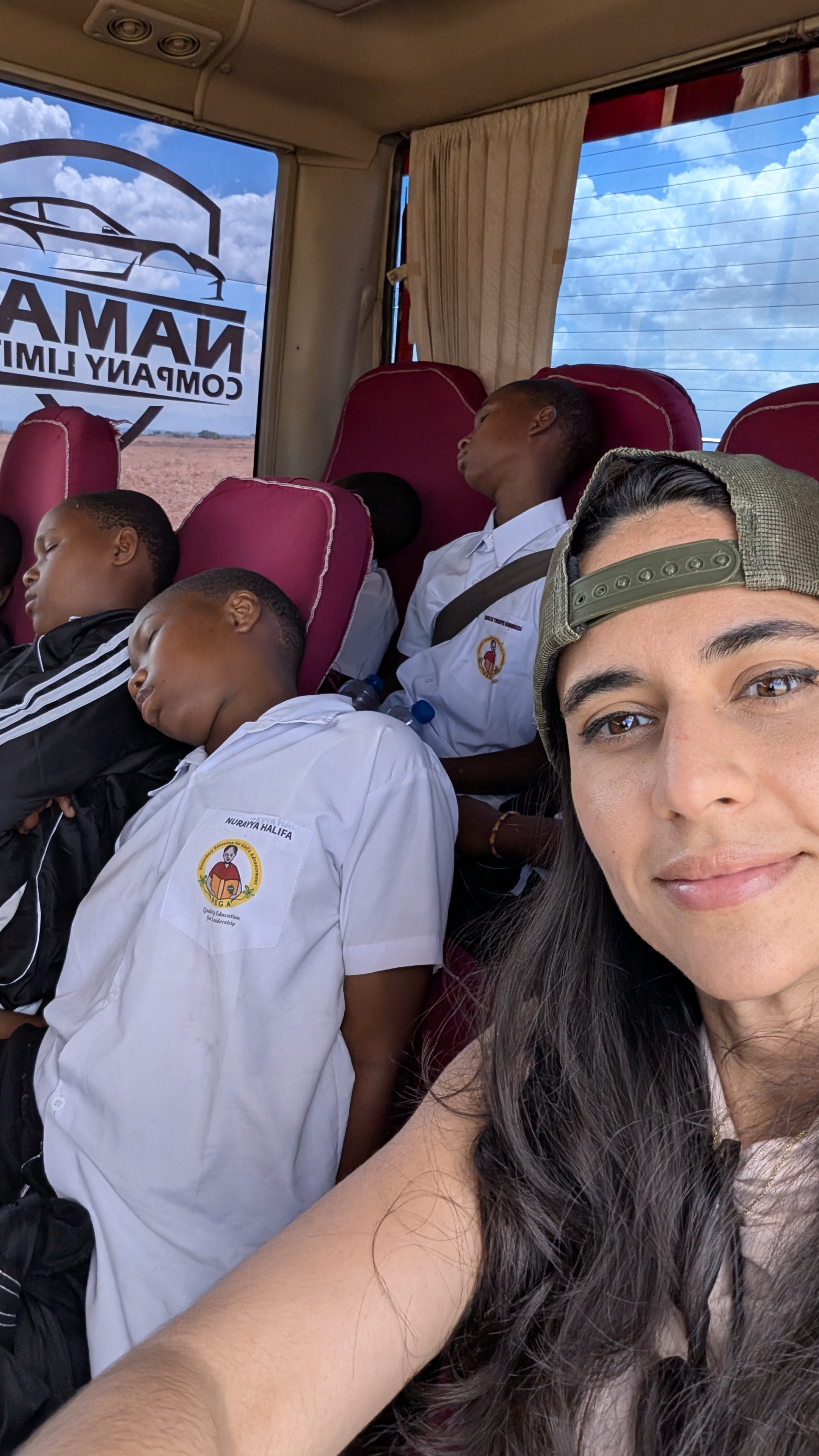
We also went on a two-day safari to Mikumi National Park. The girls were so excited. They talked a lot and played games on the bus. It was a nice opportunity to bond with them in an out-of-school environment. A guide came with us, and the girls were asking so many questions, genuinely curious and expressing how much they love the animals. We saw hippos, zebras, antelopes, lions, a buffalo and a lot of giraffes – it was so beautiful!
For many of the girls going on a Safari had been nothing more than a dream, because they come from very poor villages. On the way back to school they fell asleep in the bus, from exhaustion after all the excitement.
How do you think this experience will influence you in your life, or your career?
To be honest, it was very hard for me to come back. I don’t quite know how to explain it, but you connect in a way that makes you realise that as a volunteer you can positively impact people’s lives. It takes a lot out of you to volunteer, but you are also fulfilled with a sense of so much that is good. The girls in Tanzania don’t have guaranteed or easy access to education, so to see the impact that this opportunity has on them has been incredibly rewarding.
I realize how privileged I am to have this experience. Not everybody has the time, not everybody has the support from their employer, not everybody has the financial conditions to do it.
I want to give more of me to those who need help, or to guide young people. I already mentor three young women graduates who want to grow professionally. I was connected with them through the Global Mentorship Initiative, a non-profit organization, which I also discovered via one of the Baker Hughes ERGs. But I want to create something that has a bigger impact in society. I have the eagerness, I have the means, I have the strength, and I have the genuine desire in my heart to do that. Tanzania opened my eyes to how much need there is in the world, and how I can collaborate better with others to change things.