“I’ve been waiting 25 years for this,” says Annie Sattler.
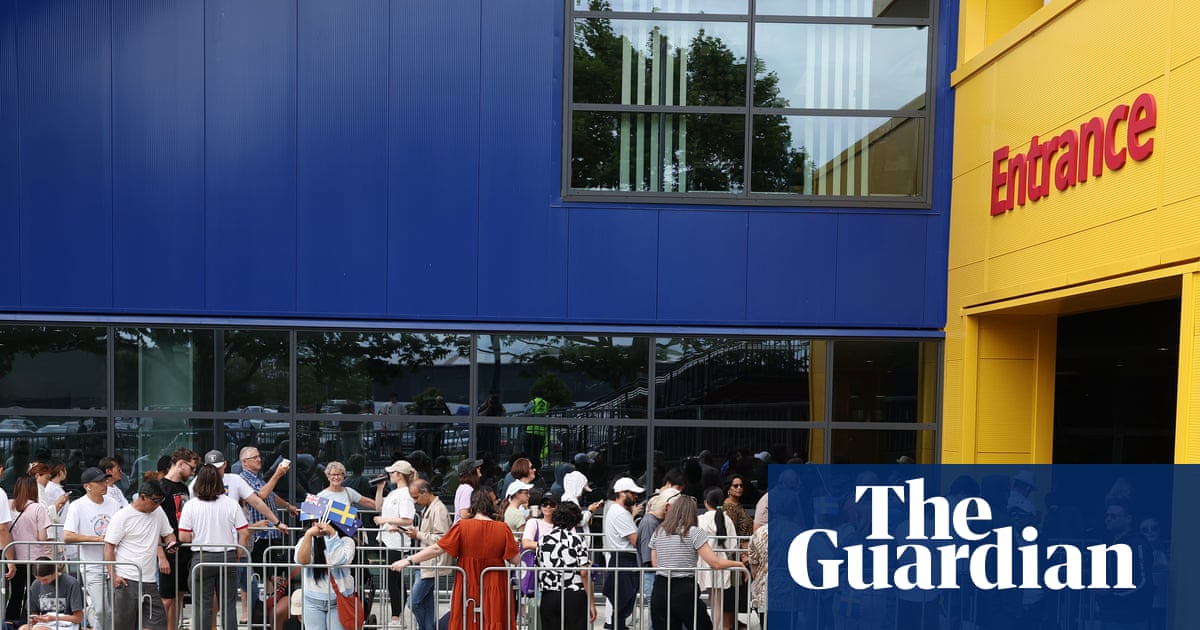
A quarter of a century after she emigrated from Germany, and seven years since the store was first announced, Sattler was prepared to wait just a few hours extra to be among the earliest through the doors of Ikea’s first outlet in New Zealand.
She was joined by hundreds of shoppers queueing on Thursday morning to mark the end of the national waiting game. Ikea was founded more than 80 years ago – and now has more than 400 stores worldwide – but the Swedish furniture giant had until now been absent from these shores, making New Zealand one of the last developed nations to get a store.
Sattler, who grew up with family trips to Ikea to furnish her childhood bedroom, says the opening event reminds her of home. “It was such a treat. I loved it – the staff, the furniture, the whole story of it.”
The store was announced in 2018, with foreign minister Winston Peters at the time taking credit for the move, saying he was sure his decision to open an embassy in Stockholm had played a part. By Thursday, excitement had reached fever pitch, with one local media outlet running a live blog and signs appearing along major roads warning motorists to “plan their journey” accordingly.
By 9am, solid lines had formed at the two main entrances, although one queue member, there for the spectacle more than the shopping, described it as “a bit of a fizzer”.
However, others said they would have camped overnight if it hadn’t been banned in advance, and Ulla Bennet – wearing a Denmark football jersey under her Swedish flag throw – was at the front, having established a “pre-line” outside the property boundary at 4am. “We thought it would be like it is now at 6am, but people didn’t really start arriving until six or seven,” she says.
In the end, the long-promised traffic jams failed to materialise, but a steady stream of shoppers continued to arrive as the 11am opening neared.
As local media assembled, beaming their reports live into morning TV, the awaiting customers spoke of their excitement to try Ikea’s iconic meatballs, with one group chanting “meatballs, meatballs” at a nearby reporter.
‘New Zealand is always the last to get anything’
Bennet sees the opening as a sign of global recognition. “New Zealand is always the last on the list to get anything. Every other country gets things but [companies] think ‘Oh, they’re little and way down there’. But they’re here! I’m rapt!”
The opening is a significant event for a country grappling with a sharp cost of living crisis. Ikea’s global pitch of affordability lands amid a squeeze on household budgets, with year-on-year Black Friday spending having fallen by 4-6%.
Keen to amplify any whiff of economic optimism, New Zealand prime minister Christopher Luxon arrived to cut the ribbon. As the doors opened, Luxon, who was meant to be the first customer, lost the honour to a faster shopper.
The crowds were greeted by staff in bright yellow T-shirts who alternated between genuinely enthusiastic cheering and well-practised chants of “Hej! Hej! Hej!”.
The sight of shoppers piling trolleys high with cushions, lamps, and storage solutions suggests that for many, the novelty and promise of value outweighed the wider economic gloom, at least for today.
The company has signalled competitive pricing, with its Billy bookcase advertised at NZ$99 (£43), undercutting most local competitors.
After the initial rush, Luxon denied the opening was a slap in the face for local small business owners, many of whom are struggling in a stalled economy. He told journalists it was “great for competition and great for consumers” and he was confident local businesses would “stand up and compete”.
The launch’s scale is a statement of intent, with a full online shopping network and 29 collection points from Kaitaia in the North Island to Invercargill down south. But for a nation accustomed to waiting, the era of Swedish self-assembly has, finally, begun.