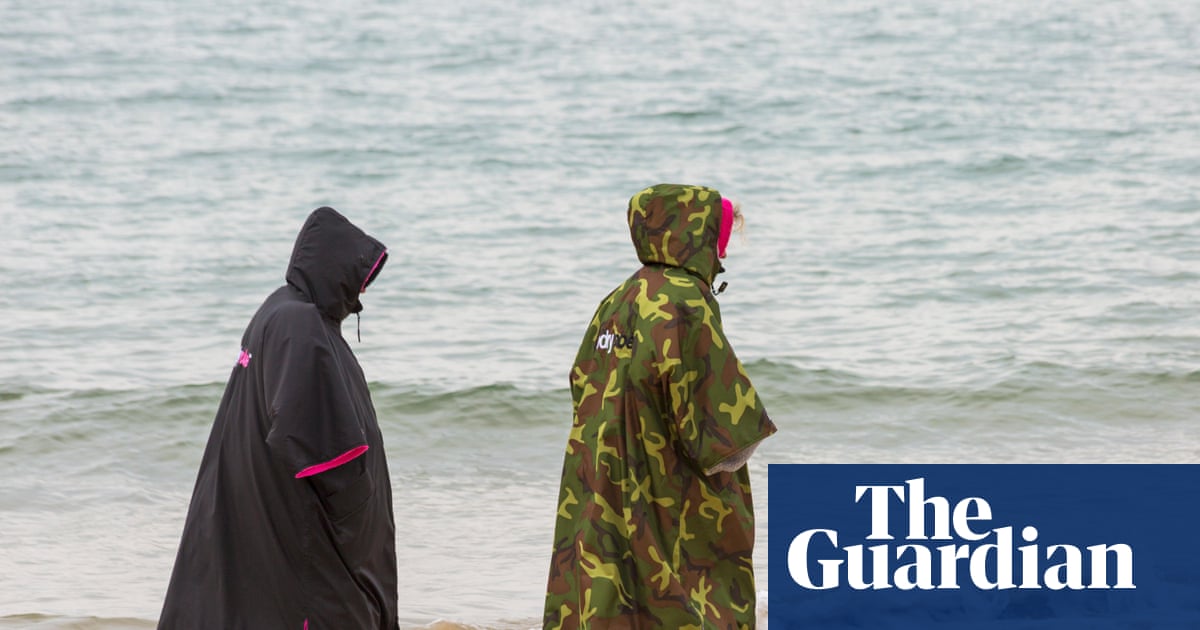
Dryrobe, the maker of huge waterproof towel-lined coats favoured by cold water swimming fans, has won a trademark case against a smaller label that must now stop selling items under the D-Robe brand within a week.
A judge at the high court in London ruled the company was guilty of passing off its D-Robe changing robes and other goods as Dryrobe products and knew it was infringing its bigger rival’s trademark.
The ruling described a Dryrobe as “an oversized waterproof coat with a towelled lining, designed for surfers or swimmers to change under whilst also drying them, keeping them warm, and protecting them from the weather”.
The company has rigorously defended its brand against being used generically by publications and makers of similar clothing and is expected to seek compensation from D-Robe’s owners for trademark infringement.
Dryrobe was created by the former financier Gideon Bright as an outdoor changing robe for surfers in 2010 and became the signature brand of the wild swimming craze.
While they shot to prominence during Covid lockdowns, when outdoor swimming became a popular alternative exercise while gyms and leisure centres were shut, Dryrobes are now just as likely to be sported on the high street or by dog walkers in chillier and wetter parts of the UK as they are on beaches and riverbanks.
They have even sparked their own culture war. A sign appeared at a beach in Ireland warning visitors to “beware of Dryrobe wankers”, which prompted a counter action online, with social media posts by fans under the hashtag #dryrobewankers.
Sales of the brand, whose signature coats sport a large Dryrobe logo on the back, rose from £1.3m in 2017 to £20.3m in 2021 and made profits of £8m. However, by 2023 sales had fallen back to £18m as the passion for outdoor sports waned and the brand faced more competition.
Bright said the legal win was a “great result” for Dryrobe as there were “quite a lot of copycat products and [the owners] immediately try to refer to them using our brand name”.
He said the company was now expanding overseas and moving into a broader range of products, adding that sales were similar to 2023 as “a lot of competition has come in”.
Judge Melissa Clarke said: “In my judgment, D-Robe and Dryrobe have a high degree of visual similarity.” She said a “substantial proportion of attentive consumers” who knew the Dryrobe trademarks would link and “indeed confuse them” with the D-Robe sign.
The smaller label sought to defend itself against the claim by arguing that the term Dryrobe had become a generic descriptive term, but the judge ruled that most members of the public understood the term to be a brand name in 2022.
after newsletter promotion
D-Robe changed its name to Delta Roam in May. A spokesperson said the rebrand had been in train before the case and it had already sold out of the majority of its D-Robe stock.
“We are in a good place,” the spokesperson said, adding that it had recently launched a product with the backing of the model Jodie Kidd. He said the new name was part of efforts to expand in the US, “where they think a robe is a jazzy dressing gown”.
Geoff Steward, the co-head of the intellectual property team at Addleshaw Goddard, the law firm that represented Dryrobe in the case, said: “As well as being an interesting judgment on trademark genericide, the case highlights the importance of a clear, modern and relentless trademark strategy in protecting brands against free riding, which Dryrobe deployed to great effect.”
The win for Dryrobe came almost two years after it settled out of court with the British fashion label Superdry in a separate trademark case.
Dryrobe agreed not to depict the “dry” element of its logo using “any member of the Helvetica family of fonts” after Superdry sought damages in a high court claim.