Rotherhithe Community Kitchen in south London has been delivering hundreds of cooked meals a week for the last two years to pensioners and vulnerable residents. Yet the volunteer group’s plans have been thrown into disarray by the news that they will not have access to cars and vans on New Year’s Day.
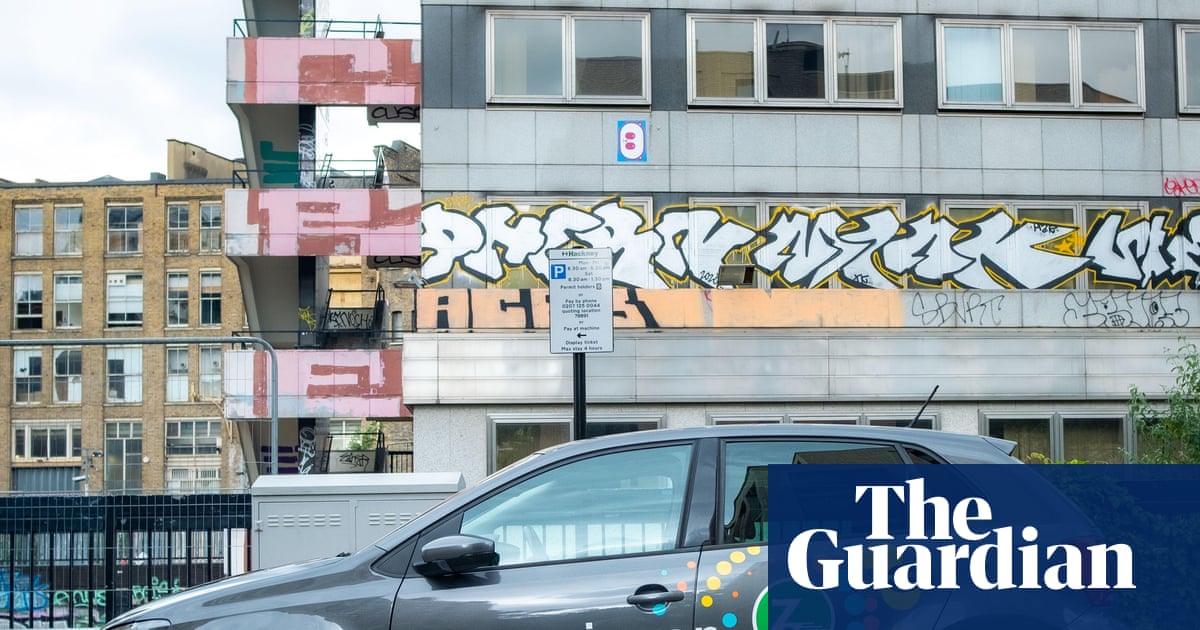
The group had relied on Zipcar, the car-sharing company that offered customers the ability to access its fleet of vehicles from the street using an app. The company caused shock across London on Monday when it said it would shut down UK operations from 1 January.
It will mean many of the volunteers will be unable to collect food from the Felix Project, a charity that gathers surplus food from supermarkets, cafes and restaurants. Obvious alternatives are further away, more expensive, or do not offer the same flexible hours.
“It’s going to be affected massively,” said Vimal Pandya, the community kitchen’s founder. “Personally me and my team, we are worried about the logistical challenge we will face. A lot of people like our group are going to struggle.”
The community kitchen’s drivers are among more than half a million people in London registered as car club members in 2020, and who could be left without convenient access to cars and vans, without the hassle and cost of ownership. The vast majority of those people were likely to be members of Zipcar, which had a near-monopoly position in the city.
The planned closure, subject to consultation with Zipcar’s 71 UK employees, is a big blow to hopes that car sharing in urban areas could reduce the need for private vehicle ownership. Yet some experts also suggested that Zipcar’s departure (the company still operates in the US and Canada) need not spell the end of the road for the idea in Britain.
Car sharing is prized by many urbanists and environmentalists as a way of reducing the ills associated with vehicle ownership. Most cars sit as two-tonne dead weights on the side of the road for 95% of the time, using up space. They also require large carbon emissions to produce, and people who do not own cars tend to walk, cycle and take public transport more. That benefits cities – reducing congestion and pollution – and improves people’s health further because they build more exercise into their daily routines.
Zipcar was founded in 2000 by two American entrepreneurs before being bought by US car rental group Avis Budget in 2013 for $491m (£371m). Zipcar’s revenues of £47m in UK barely registered compared with Avis Budget’s overall annual revenue of $12bn, and so a loss that grew to £11.7m in 2024 gave the parent company little incentive to continue.
Avis Budget has said the closure of Zipcar’s UK operations is part of a “broader transformation across our international business, where we are taking deliberate steps to streamline operations, improve returns”.
Zipcar’s most recent accounts, for 2024, said revenues had fallen as drivers had been taking fewer and shorter trips. “These changes reflect the ongoing impact of the cost-of-living crisis, which continues to suppress demand for discretionary spending,” it said.
Last year, Zipcar closed its operations in Oxford, Cambridge and Bristol to focus on London.
However, several experts noted that London has specific problems that made it much harder for the company and its rivals to succeed.
Some councils were very supportive but across 33 boroughs car-club operators face a patchwork of varying processes and prices that made it harder to operate. Zipcar’s closure will also coincide with the electric cars becoming liable for London’s congestion charge, adding unavoidable costs for any vehicles enter the charge zone.
As often seems the case in local politics, parking is a central issue. Residents in the wealthiest London borough, Kensington and Chelsea, pay as little as £63 for a year’s electric car parking. The same vehicle in a floating car club (accessible via app, without a fixed parking space) would pay £1,110 annually. For a petrol or diesel model it is £2,217.
Co Wheels has found success in towns and cities outside London, ranging from Glasgow, Bristol and Oxford all the way to the Orkney islands. Yet the cost and complexity of the capital have so far limited its efforts there.
“We should literally be charged one-twentieth of a resident’s permit,” said Robert Schopen, the head of partnerships at Co Wheels. “We’re taking cars off the street. We’re putting less polluting cars in their place.”
Elly Baker, the chair of the London assembly transport committee, said there needed to be central leadership across all of the capital’s boroughs on car clubs, allowing a single process and unified price guidelines for parking permits.
A spokesperson for London’s mayor, Sadiq Khan, said car clubs could play an “important role” in reducing private car ownership.
after newsletter promotion
Other European countries offer examples for London to follow. Germany introduced national car-sharing legislation in 2017, giving a nationwide framework for parking, subsidies and exemptions. Now, the country has 5.4 shared cars per 10,000 people, while France has 2.1 and Belgium has 6.3, according to the vehicle-sharing software company Invers. The UK lags behind at 0.7 (and Zipcar accounted for more than half of that).
“What we see is that car sharing around the world, especially in Europe, is growing,” said Bharath Devanathan, the chief business officer at Invers.
Devanathan said authorities should start to treat car sharing as a form of public transport, and integrate it with train and bus stations. He added that one unnamed client was already seriously considering entering the London market even before Zipcar’s exit, and despite the challenges: “There will be a group of operators that will fill this gap.”
Speaking about the closure of Zipcar’s UK operation, Devanathan said: “It’s very unusual that it’s happened at this scale and the biggest player, but this is definitely not the end.”
The company’s competitors can roughly be divided into two camps: fleet operators, which own or lease and maintain their own cars; and peer-to-peer services, that allow users to rent out their own vehicles to others via app unlocking or by providing lockboxes for keys – a kind of Airbnb for cars.
Examples of the fleet model across Europe include: Denmark’s GreenMobility, France’s Free2Move, which is owned by Peugeot and Fiat owner Stellantis; Germany’s Miles Mobility; Belgium’s Poppy; and Renault’s Mobilize in Madrid. Peer-to-peer players include Britain’s Hiyacar and the US’s Getaround.
One company already weighing up the UK gap left by Zipcar is Turo, a US-headquartered peer-to-peer platform. Rory Brimmer, the managing director of Turo UK, said his company had a “big opportunity” to win more users in London and would look at increasing marketing efforts. UK car owners earn an average of £400 a month from renting their vehicle, he said, enough to fully cover the cost of ownership of some cars.
“There is a void there that is going to need to be filled, because London still needs to move,” Brimmer said.
Yet it could take some time for other players to build momentum. In the meantime, more people will feel forced to buy cars, and others across London will be left without access.
For Rotherhithe Community Kitchen, the next month will be a scramble to find a way to get food out. Pandya said of the volunteers: “Knowing the reality, they are all worried and thinking: ‘How are we going to carry on?’”