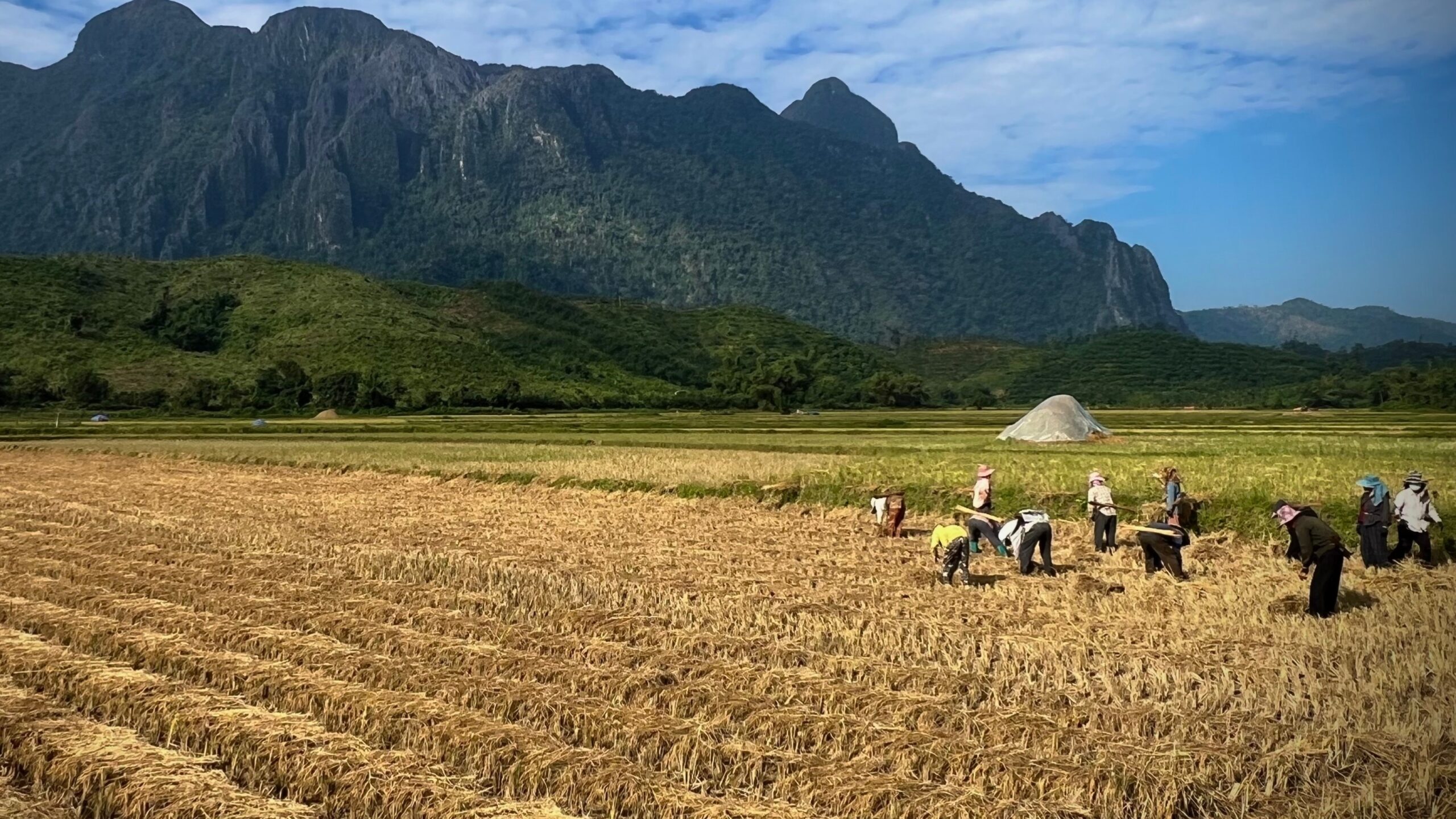
Agriculture exports play a significant role in the Lao PDR economy, and their seasonal cycles have inadvertently complicated the foreign exchange (FX) management of this small, landlocked nation of the ASEAN.
Agricultural exports of Lao PDR have exhibited a seasonal cycle shaped by the country’s monsoon weather pattern — rising sharply during the dry season and harvest months from December to March, while slowing down during the rainy off-season from July to October. In recent years, this pattern has become more pronounced with growing exports of perishable products such as vegetables, cassava, and bananas (Figure 1).
Strengthening kip during harvest season
These seasonal export flows directly affect the exchange rate. At harvest time, limited storage and processing facilities prompt farmers to sell their produce quickly, leading to a surge in export receipts. Much of these earnings are converted into kip to meet domestic liquidity needs, boosting FX supply and strengthening the kip.
In contrast, in the off-season, agricultural export receipts and FX inflows decline, exerting downward pressure on the kip. In recent years, while export earnings fall during the rainy months, import demand and external debt repayments remain high, intensifying FX pressures. A recent AMRO report shows that this co-movement is especially visible since 2021 for both the commercial bank rate and the parallel market rate of the kip (Figure 2).
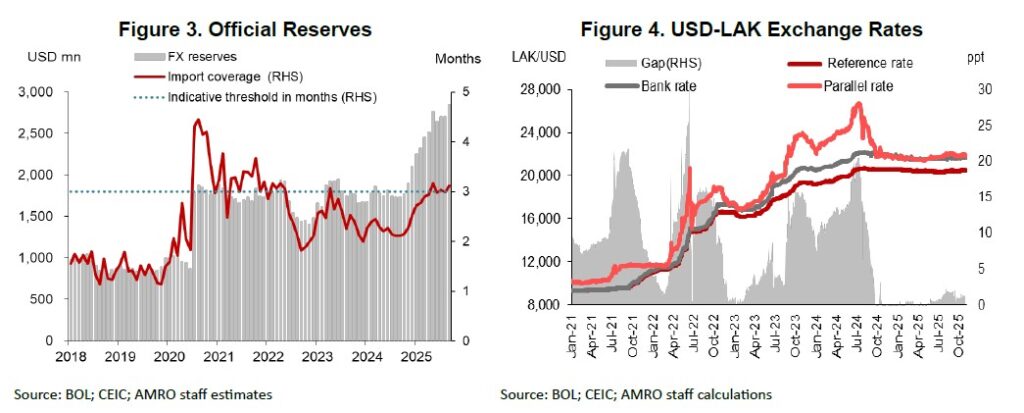
For the Bank of the Lao PDR (BOL), the seasonal cycles complicate its FX management. FX interventions were used in an attempt to smooth fluctuations, though their effectiveness has been constrained by the country’s limited reserves (Figure 3). Since 2022, the BOL has mandated FX conversion by exporters, while allowing a more flexible reference rate and launching the Lao Foreign Exchange platform to enable market-based trading among individuals and small businesses. These measures have helped stabilize the kip and narrow the gap between official and parallel market rates (Figure 4).
Calibrating FX policy, diversifying exports
While these measures have helped in stabilizing the kip, a more comprehensive policy package is needed to mitigate seasonal pressures from agricultural exports on the exchange rate.
In the short term, the BOL should continue to calibrate its FX interventions carefully while prioritizing reserve buildup through effective enforcement of conversion requirements. The central bank is encouraged to maintain reference rate flexibility, hence allowing the commercial bank rate to be aligned with market conditions and avoiding the accumulation of imbalances and FX market pressures. Clear communication about seasonal FX patterns could also help anchor public expectations.
Ongoing efforts to deepen the domestic money market—particularly the interbank market—through the issuance of BOL bills with different maturities to absorb excess kip liquidity and improve liquidity management are in the right direction. These measures can support exchange rate stability and smooth seasonal FX fluctuations.
In the longer term, export diversification and agro-processing development are essential. Expanding storage and developing processing facilities would help spread agricultural export earnings more evenly throughout the year. Over time, diversifying the export base toward less seasonal exports such as manufacturing will generate more stable FX inflows and reduce external vulnerabilities.