Louise CullenAgriculture and environment correspondent, BBC News NI
 Getty Images
Renewable energy generation in Northern Ireland “is sliding backwards” an industry body has said, with the latest figures confirming another decrease.
In the 12 months to September 2025, 44.2% of electricity came from renewable sources, down 0.3% on the same time the previous year.
This is the third consecutive year that has shown a decline in renewable generation, since a peak of 51% in 2022.
The director of RenewableNI Mark Richardson said delays in policy and infrastructure reform were contributing to the ongoing decline.
A final design for the Renewable Energy Price Guarantee (REPG) scheme was launched earlier this year, but the terms and conditions have yet to come before the Northern Ireland Assembly.
Northern Ireland has a target of generating 80% of electricity from renewable energy by 2030.
While less renewable energy was generated in the year to September 2025, slightly more of it came from wind – about 82.2% compared to 81.9% in 2024.
Wind supplies most of the renewable energy in Northern Ireland, with the remainder coming from biogas (6.5%) and biomass (5%), solar (4%), landfill gas (1.4%) and other (0.9%).
2030 target
Mr Richardson said there was “growing concern” across the sector.
“Quarterly figures will always shift slightly with changes in weather, but overall, the trend should be rising as we approach the Climate Act obligation of 80% renewable electricity by 2030,” he added.
“Instead, because we have no market support scheme in place, very few new projects are progressing, and generation is sliding backwards.”

 RenewablesNI
Mr Richardson warned with 500 days left in the assembly mandate, the clock is ticking.
“The renewable electricity sector is ready with enough projects in pre- and planning to meet future demand,” he said.
“We can prepare for de-carbonising heat and transport, but we cannot do it while market security and planning timelines need to be addressed to stop stagnating as RoI and GB power ahead.”
What are the types of renewable energy?
While wind and solar are familiar, the figures show the increasing role biogas and biomass are playing.
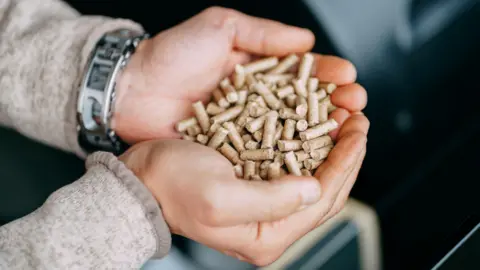
Biomass is material like wood, straw and energy crops including willow, that can be burned to produce electricity, heat and power.
Biogas comes from the fermentation of biomass in anaerobic digesters to produce .
Landfill gas is primarily methane, produced by decomposition of organic waste. It can be captured and used to generate electricity.
 Getty Images
What is the REPG?
The REPG was launched in September.
It could lead to reduced bills by providing support for additional locally generated renewable energy.
But its terms and conditions have not been published and a draft bill has yet to be laid before the Assembly.
With the first auction to award generation contracts under the scheme expected in early 2027, Mr Richardson said that, without “urgent action”, there is concern the timetable will slip.
“The legislative timetable is tight, but all parties signed up to the target of 80% by 2030.
“The same cross-party support can ensure the support scheme goes through at pace unlocking investment in Northern Ireland as well as a secure energy supply.”