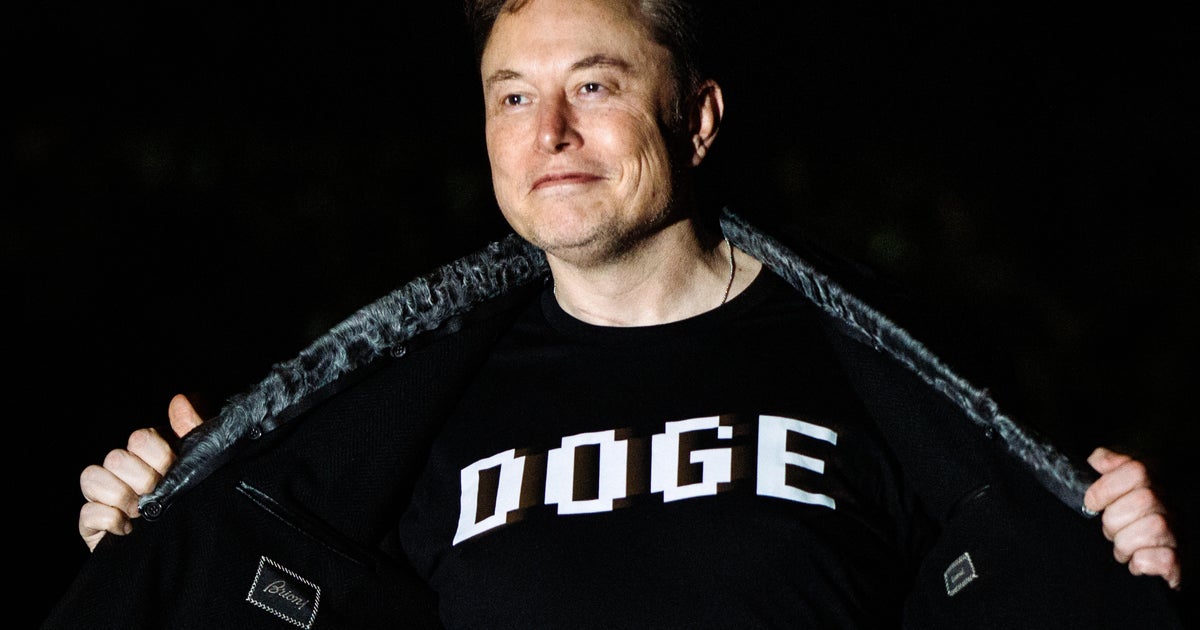
Six months after stepping down from leading the Trump administration’s Department of Government Efficiency, billionaire Elon Musk suggested he likely would not repeat his time helming the controversial cost-cutting mission.
Musk discussed his time at the White House in a nearly hourlong podcast interview with former Trump administration aide Katie Miller that was released Tuesday. Asked if he believes DOGE was successful, Musk responded that it was “a little bit successful.”
“We were somewhat successful,” the world’s richest man said, adding that he believes the initiative “stopped a lot of funding that really just made no sense” and was “entirely wasteful.”
Miller asked Musk if he would repeat his time leading the cost-cutting initiative, knowing what he knows now. He demurred before saying: “I think instead of doing DOGE, I would’ve basically…worked in my companies, essentially.”
He continued: “They wouldn’t have been burning the cars,” referring to a series of arson and vandalism incidents that hit dealerships for Musk’s electric carmaker, Tesla.
Named after an internet meme, DOGE was formed just hours after President Trump was sworn in. Musk, who spent hundreds of millions supporting Mr. Trump’s presidential campaign, quickly became a near-ubiquitous presence at the White House.
Musk and his young team at DOGE quickly tore through the executive branch, shutting down programs that they found wasteful and pushing for massive reductions to the federal workforce through a combination of layoffs and voluntary buyouts. In some cases, entire agencies — including the U.S. Agency for International Development — were effectively shuttered.
Musk has suggested the effort could save the government hundreds of billions, and possibly $2 trillion, though some of the cost savings figures touted by DOGE have been called into question.
His aggressive approach — epitomized by a February event in which he waved around a chainsaw, calling it “the chainsaw for bureaucracy” — had its share of detractors, including federal workers who faced layoffs and disruptions, and Democratic lawmakers who argued the initiative was wielding vast power without approval from Congress. Lawsuits were filed to halt some of the cuts. Musk defended DOGE, arguing the government needs to slash its spending.
Musk and the Mr. Trump’s once-close relationship ruptured shortly after the Tesla CEO left the White House in late May. In a public back-and-forth, Musk attacked the president in personal terms and criticized his signature tax legislation, and Mr. Trump threatened to cut off lucrative federal subsidies for Tesla and Musk’s rocket company SpaceX.
Musk has also flirted with launching his own political party — though his plans are unclear.
The two have appeared to at least partially mend their relationship since then, with Musk visiting the White House last month for a dinner with Saudi Arabia’s crown prince.
Asked last week if Musk is back in his circle of friends, Mr. Trump said, “I like Elon a lot,” before suggesting that their rift was due to cuts to electric vehicle subsidies.
“I think we get along well,” the president added.
And Musk, for his part, told Miller in his podcast interview that Mr. Trump is the funniest person he knows.
“He’s got a great sense of humor,” he said, pointing to the president’s Oval Office banter with New York City Mayor-elect Zohran Mamdani. “It’s like naturally funny. It’s somewhat effortless.”