Kumail JafferLocal Democracy Reporting Service
 Getty Images
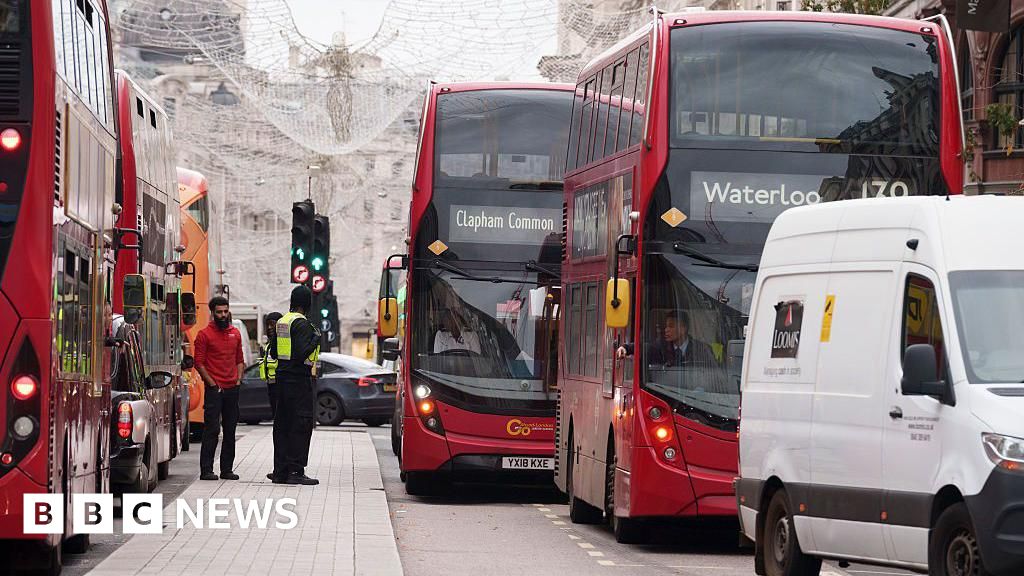
Bus speeds in London have slowed to their lowest level in years, causing a fall in passenger numbers, the London Assembly has heard.
Average speeds on the capital’s bus network fell to 9.17mph in 2024–25, down from 10.27mph four years earlier, according to City Hall data. In August, the latest month available, buses were travelling at 9.06mph on average.
Passenger numbers also fell last year for the first time since the pandemic, dropping from 1.869bn journeys to 1.842bn.
Transport for London (TfL) said its Bus Action Plan would speed up travel, with 15.5 miles (25km) of new bus lanes, 1,900 signals prioritising buses and 52.8 miles (85km) of existing lanes operating 24 hours a day.
The assembly’s transport committee was told this week slower services and “endless traffic” were making buses less attractive.
Paul Lynch, managing director of Stagecoach London, said conditions had “worsened over the last few years to a point where somebody who works for me… and has been around for 40 years operating buses in London says it’s the worst he has ever seen”.
He added: “It’s making them less attractive and less reliable… It’s got to be one of the reasons why bus passenger numbers are declining at the same time that bus speeds are.”
TfL’s latest Travel in London report recorded a 1.5% fall in bus journeys compared with last year, alongside rises in passenger numbers on the Underground and Elizabeth line.
‘Bad for London’
Michael Roberts, chief executive of London TravelWatch, told members that slower journey times “mean reduced patronage, which in turn means reduced income to TfL”.
He said slower speeds also increased operating costs because “you need more buses to run a given level of service”, adding that buses are “an effective use of road space” and declining use was “bad for London”.
“For every 10% reduction in journey speeds, there’s a 6% reduction in demand,” he said.
London TravelWatch estimates that meeting the mayor’s aim for 80% of trips to be made by walking, cycling or public transport by 2041 would require bus journeys to rise by 40%
TfL analysis suggests daily trips must grow from 5.1m to 9m.
Some boroughs experience far slower services than others, with average speeds under 7mph in the City of London, Camden and Westminster.
Bexley, Hillingdon and Havering recorded average speeds above 11mph.