The COP30 climate conference ended on November 21st without much success. The hoped-for roadmap for phasing out climate-damaging energy sources such as coal, oil, and gas failed due to fierce resistance from some countries. But the conference made clear: China is dominating the climate discourse now, says Johanna Krebs.
“China keeps its promises and delivers on its commitments.” This is how China’s leading negotiator on international climate issues, Vice Premier Ding Xuexiang, described his country’s approach at the COP30 conference in November. And China’s contribution to the conference was indeed more visible than that of European countries, let alone of the United States.
China sent the second largest delegation to COP after host country Brazil, signaling that it considers these meetings important. In the runup to the conference, Ding had stated China’s priorities: further drive the green and low-carbon transformation, uphold the principle of “common but differentiated responsibilities” and remove trade barriers that are an obstacle to the development of green products. China also openly pushed to put “unilateral trade measures” – like the EU’s Carbon Border Adjustment Mechanism (CBAM) and EV tariffs – on the agenda of COP. It didn’t succeed, but the move showed that climate and trade interests are increasingly intertwined, pitting China against the EU.
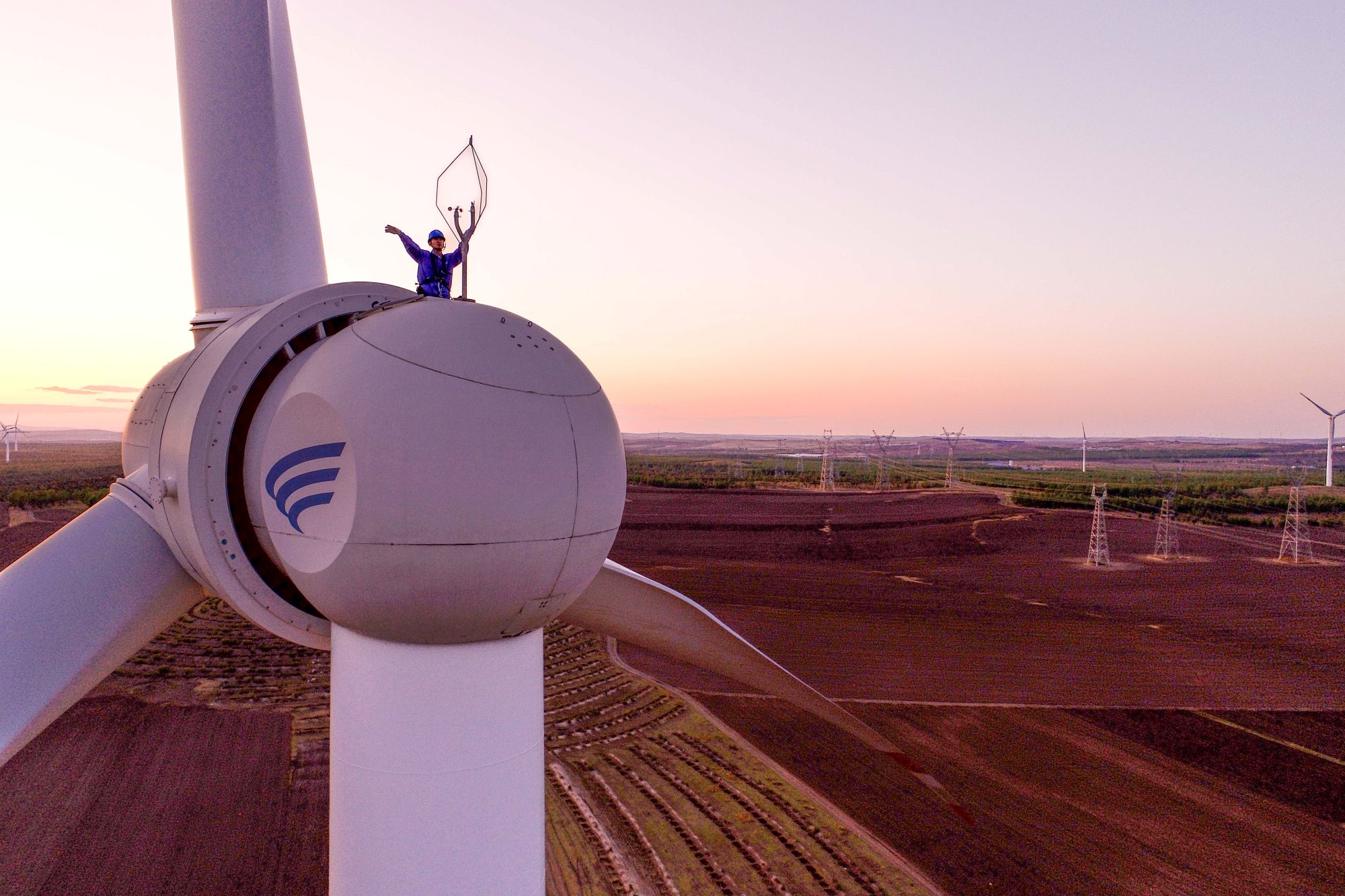
At the conference, it became clear that China dominates the climate discourse now. Its envoys engaged in the discussions around green development in the Global South, with an event on the topic in the China pavilion reportedly being “packed”. China offers real solutions for climate mitigation like, for instance, the export of cheap green tech, wind turbines and solar panels. By doing so, it shifts the international climate discourse to an international green tech discourse – an area where China and the EU are competing.
China’s image as a climate actor benefits from the US’s withdrawal and Europe’s dividedness
Germany and the EU used to be pioneers in climate action, but this image has suffered greatly, also because the EU published weakened NDC (nationally determined contributions) due to disagreement among its member states. Germany has a legacy as a climate leader, however, at this year’s COP it did not stand out as such, also because the Merz government has ranked the topic lower on its priority list.
China, on the other hand, stresses that it will stay the course: In autumn, Xi Jinping stated that “green and low-carbon transition is the trend of the time. While some country is acting against it, the international community should stay focused on the right direction.” The United States’ (second) withdrawal from the Paris agreement and other formats enables China to present itself as an alternative model for tackling the climate crisis.
Beijing also assertively criticizes the EU, with climate envoy Liu Zhenmin calling the Union’s pollution-cutting targets insufficient and a Chinese diplomat allegedly calling the EU’s backtracking on its climate targets right before COP30 “shameful”. Vice Premier Ding stressed that China still expects developed countries to “implement their obligations to take lead in reducing emissions” and “fulfill their investment commitments”. By positioning itself as a defender of Global South interests and criticizing developed countries for abandoning the developing world, China’s government currently also occupies much of the international climate negotiation space and avoids having to justify its own, widely seen as less ambitious climate commitments, untransparent climate finance, or the installation of new coal fired plants.
Bridging the gap between industrial upgrading and climate policy in the next Five-Year Plan
How is China making progress on its domestic climate goals? The proposal for the 15th Five-Year Plan (FYP), that will be passed next spring, shows that Beijing views decarbonization and industrial development as two sides of the same coin. It offers a glance into how China imagines its industrial future: being a climate role model which fuses industry and climate policy to the benefit of all. In the coming five years, China plans to double down on domestic industrial modernization and technological progress. As the document states, “green development is a defining feature of Chinese modernization” and part of “high quality development”.
For the first time, an FYP proposal mentions the “safe, reliable, and orderly replacement of fossil fuels”, describing top level momentum to accelerate the structural transition to non-fossil fuel energy. Moreover, it stresses the need to control both the total amount and intensity of emissions, a levelling up compared to the 14th FYP which strongly focused on emission intensity. The proposal also identifies the installation of energy storage technologies, and construction of smart-grids and microgrids as crucial.
However, at the same time, it advocates for the “clean and efficient use of fossil fuels” and the upgrading of coal-fired power plants. Fossil fuelled energy production will continue to play a considerable role in China in the upcoming years.
China’s climate risks: China is highly vulnerable to climate change and due to its large territory will experience various climate related risk profiles. Historically, China is prone to experiencing heat waves, storms, floods and droughts, all of which will be more extreme as climate change progresses. Moreover, China is already witnessing alarming glacier retreats. Lastly, given that a large part of the population lives in China’s coastal provinces, China will also be greatly impacted by sea level rise, with sea levels projected to rise 40-60 centimeters until the end of the current century, potentially receding China’s coastline more than 10 meters in some parts of China.
China’s own climate targets remain “highly insufficient”
China’s officially announced policies and climate targets, including the 2035 NDC remain “highly insufficient” and, according to estimates, will lead to a global warming above 4°C. Its five-year carbon intensity target, as defined in the 14th FYP, would have required a total emissions reduction of four percent in 2025 – China is set to underdeliver here. More stringent policies will be required to reach the energy intensity targets for 2030.
Observers fear that carbon-reduction policies might be counter-played by the renewed uptake in permissions for coal-plans, which reached a high in 2023. Although the number of plants permitted has noticeably decreased since then, the fact that some are still in construction and have yet to come online means that China is still adding coal capacity to its power grid.
However, as data from the last five years shows, adding coal capacity to the grid does not predict a proportional increase in coal-power output; despite building new coal power plants, China does not seem to increase its reliance on coal, leading to a falling utilization rate of coal plants. More relevant to the future trajectory of Chinese carbon emissions are China’s industries, especially the chemical industry which have seen a rising demand for plastic production. The trajectory strongly depends on how fast China can decouple its industries from CO2 emissions.