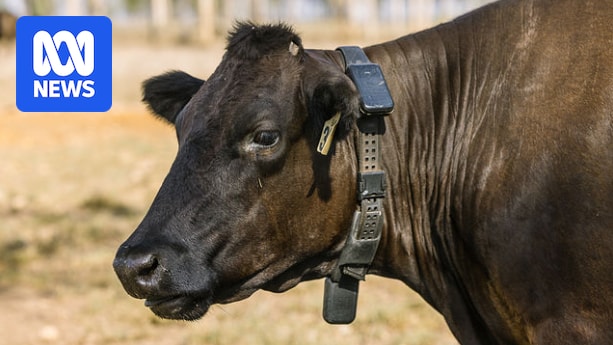
Virtual fencing has been legalised in New South Wales, with users of the technology already labelling it a “lifesaver”.
It allows livestock to be moved or confined without the need for physical fences or gates.
The technology involves the use of a collar on livestock that sends out noises and an electric pulse if an animal leaves the designated area.
Farmers can change the boundaries and check in on an animal’s individual data on a mobile app.
Angus McIntosh is a mixed farmer from Molong. (Supplied: Angus McIntosh)
Virtual fencing is already legal in some other states, where farmers have credited it as a success.
However, some in NSW remain undecided.
“I see the advantage of virtual fencing … but the maintenance of the collars, or the technology, how reliable they are … they’re the real concerns,” farmer Angus McIntosh said.
And with the electronics reliant on telecommunication towers and satellites, some farmers have questioned how they will perform during emergencies.
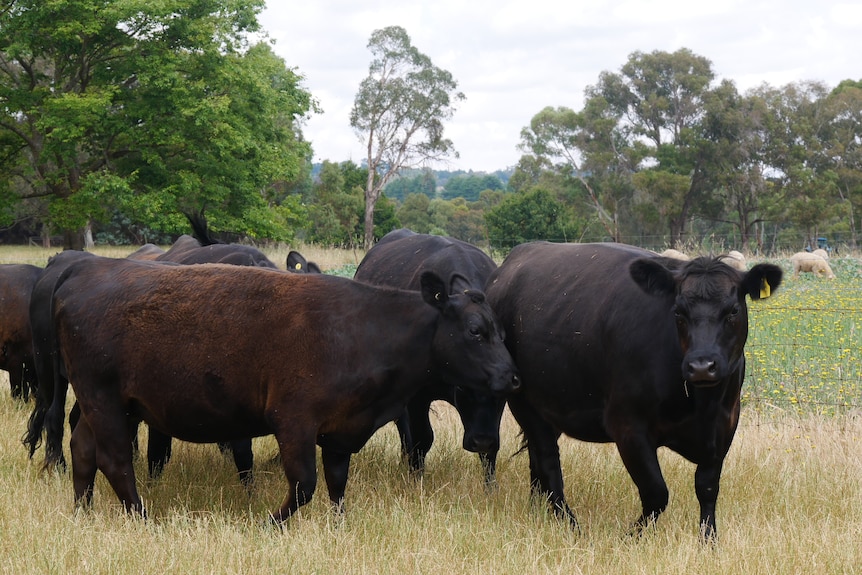
Virtual fences have been made legal in NSW. (ABC Rural: Emily Middleton)
What is the cost?
Mr McIntosh currently operates roughly 2,000 sheep and 100 cows on just over 1,400 hectares of grazing land in Molong in the state’s central west.
He has been thinking about using the technology, but is worried about the cost.
“On our level, it needs to be affordable to do a couple hundred head of cattle at a time, so the price point will be the deciding factor of how well it gets taken up,” he said.
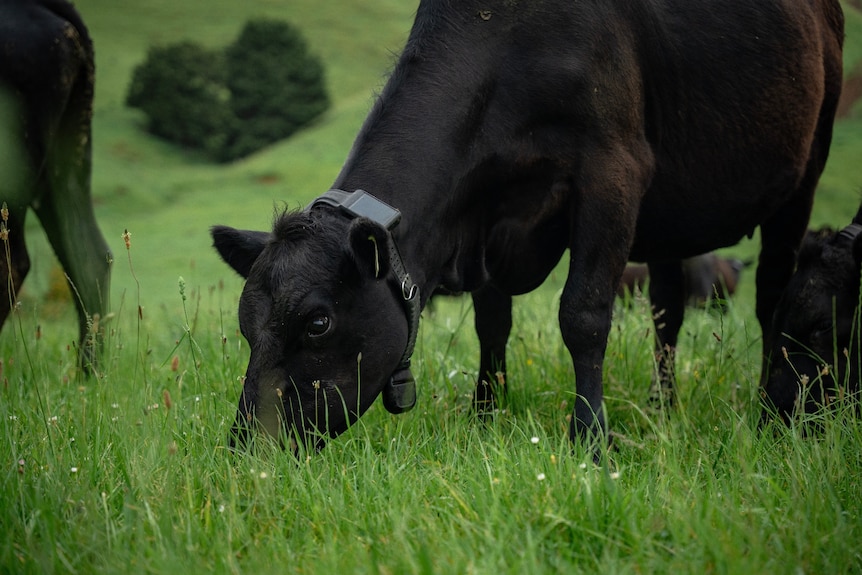
Collars use solar panels to charge. (Supplied: Halter)
In addition to the collars, which can cost several hundred dollars per cow, towers are needed on properties for farmers to set up their virtual fences.
Livestock researcher for the Kondinin Group, Pamela Lawson, said one provider’s towers cost about $6,000 each.
“Which depends on the topography of your land and how many towers you’re going to need,” she said.
The systems are then controlled via an app, which is charged at about $2 to $2.50 per cow per month.
How does the technology work?
Director of strategic relations at virtual fence manufacturer Halter, Brent Thomas, described the technology as an “Apple Watch for cows”.
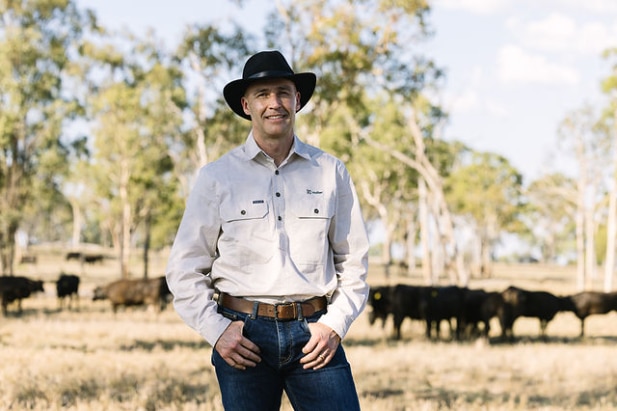
Brent Thomas says the collars can give farmers lots of useful information. (Supplied: Brent Thomas)
He said Halter’s solar-powered collars monitored animals as well as controlled their movements.
“The [collars] can tell the farmer if there’s any health problems or any kind of fertility indicators,” he said.
The technology for Halter’s collars involves the installation of a tower on the property that connects to the individual farmer’s internet or telephone service, which provides a backup if there is a fault.
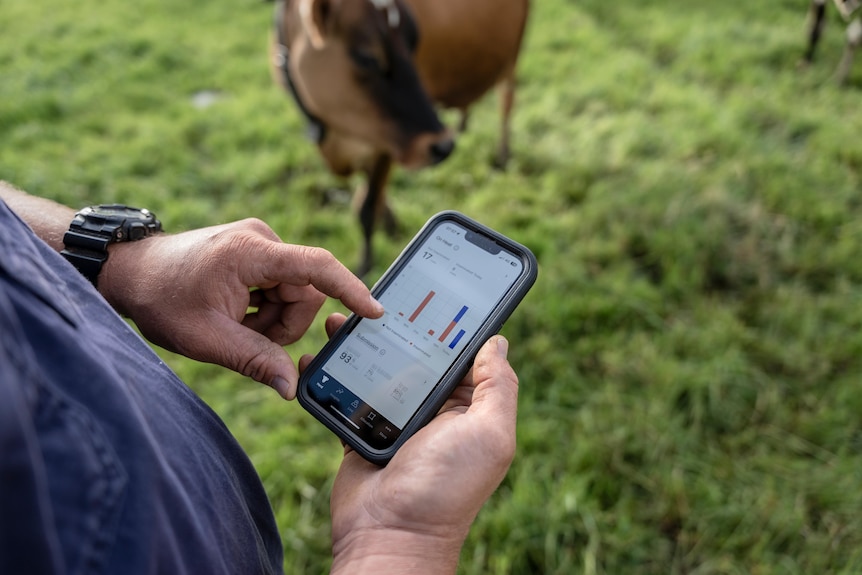
Virtual fencing relies on the use of telecommunication technology such as satellite and service towers. (Supplied: Halter)
Ms Lawson said virtual fencing was already being used in about 23 per cent of Tasmania’s dairy herd, but the take-up in the beef sector may be slower.
“It’s just a bit more questionable about the sort of more broadacre general beef farmers on more extensive grazing country, how it will all work, given the amount of collars they will need and the area they are covering,” Ms Lawson said.
However, Mr Thomas said the fences were currently used on “really big ranches” in Montana and Texas.
“They’re able to work on really large properties,” he said.
Member for Orange, Phil Donato, and Minister for Agriculture, Tara Moriarty. (ABC Rural: Emily Middleton)
Cost savings?
Traditional fencing costs about $12,000 per kilometre, with an average farmer expected to install around two to three kilometres of fencing every year.
The set-up costs of virtual fencing will vary depending on the number of animals it is used for and the topography of a property; however, it’s estimated that the first year’s costs could be comparable to a farmer’s annual fencing budget, with costs after that reducing significantly.
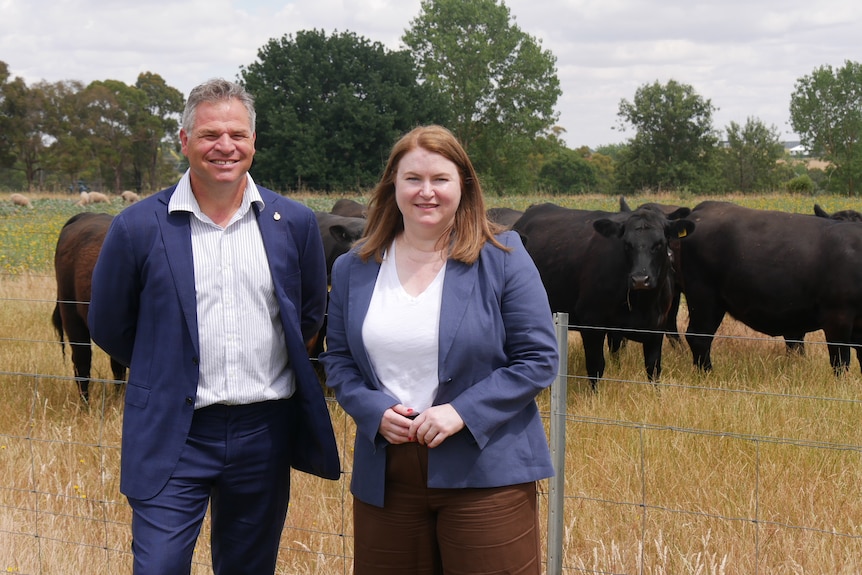
Orange MP, Phil Donato, who has been pushing for virtual fencing to be legalised in NSW for five years, said farmers in other states have reported cost savings.
“I spoke to a farmer in Tasmania who’s been using it … his fuel bill went from $1,000 to $100 a month because he’s not driving around on a quad bike early in the morning,” Mr Donato said.
“He’s got more time to spend with his kids and his wife.”
Emergency performance
When it comes to emergencies like bushfires and flooding, farmers have expressed concern over how the technology will hold up.
Mr Thomas said the collars were put to the test during severe storms in Tasmania last year.
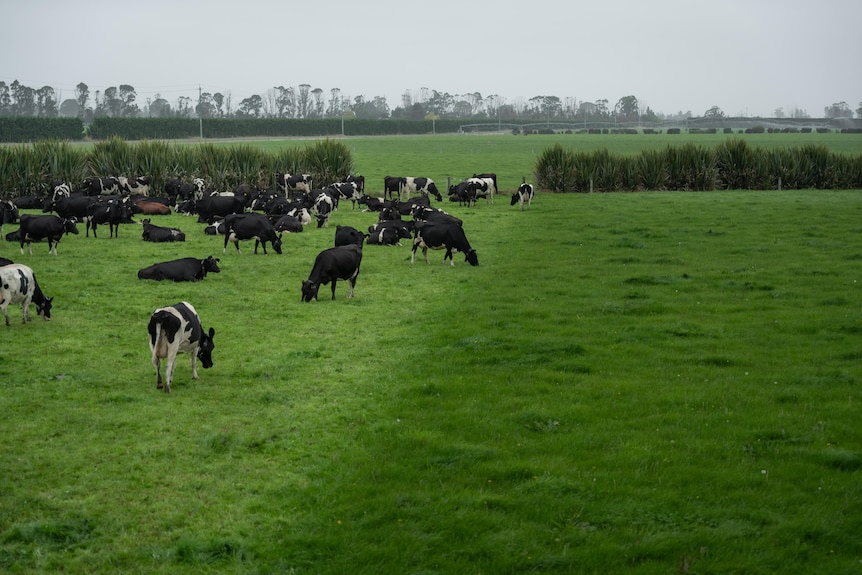
The technology allows farmers to define boundaries without physical fences. (Supplied: Halter)
“Farmers were able to move their animals remotely without sending out staff and putting them in danger in the middle of the night,” he said.
NSW Farmers Association Animal Welfare Committee chair Robert McIntosh said while virtual fencing will be a “game changer” in emergencies, there would be a problem if the technology were reliant on just mobile phone signals due to poor connectivity in rural communities.
However, a lot of the technology also uses satellite navigation.
“That’s a lot more consistent and more reliable for farmers,” he said.