
A former AFL star has been able to wipe millions of dollars in company debt and reopen the collapsed business a few hundred metres down the road, despite owing $4.5 million to staff, suppliers and the tax office.
Chris Knights, a former Adelaide and Richmond footballer, is the chief executive of marketing agency Zib Digital, which engaged in a process known as ‘legal phoenixing’, which allows a company to wind up and start again.
Mr Knights told staff in May he was closing the company’s doors, leaving about a third of its workforce without a job or their owed entitlements.
A former employee said staff were given a day’s notice that “we were surplus … and the business was put into administration”.
Four days later, Zib Digital registered a new ABN without the insolvent entity’s debts. It has reopened in an office close to its original inner Melbourne headquarters.
“Change is as good as a holiday and the new facility’s going to be built for purpose,” Mr Knights said during a company-wide meeting in May that was shared with the ABC.
The new company has opened a new office with the same signage, one street over. (ABC News: Billy Draper)
Zib’s actions are within the law but have raised questions about what some in the industry call “legal phoenix” legislation, which allows restructured insolvent companies to rise again with the same assets — but without the debts of the previous entity, and usually with fewer staff.
Scott Cowen, the assistant national secretary of the Australian Services Union, called the practice “legal trickery”.
“Once a worker finishes their job for the day, they expect to be paid,” he said
“We really need to look at reforming the laws in this area, because workers are definitely at the bottom of the pile when it comes to priority creditors in these situations.
“They’re really left powerless in terms of what they can do and in terms of what legal rights they have.“
Millions wiped
Mr Knights, lauded in an AFL article after the collapse of the company, has remained at the helm of the new entity, which owes more than $4.5 million.
“Don’t be afraid to make mistakes, that is where growth and wisdom come from,” he told the AFL this year.

Former AFL player Chris Knights is CEO of Zib Digital. (AAP: Ben Macmahon)
According to the administrators’ report, the insolvent business has debts to staff, suppliers and the Australian Taxation Office (ATO).
Of that, $3.8 million is owed to subsidiaries and external suppliers, while staff are owed almost $450,000 in entitlements, and the ATO is owed almost $350,000.
Unpaid entitlements continue to plague Australian workers. This month, the ATO said $1.1 billion in unpaid super had been returned to nearly a million individuals’ super funds in 2024-25, with $200 million raised by the ATO in penalties.
Former employees who agreed to speak to the ABC anonymously said Zib told them to apply for the Fair Entitlements Guarantee (FEG), meaning taxpayer dollars would fund financial assistance as part of a safety net when companies go under.
“It was very much like, ‘How is this even possible?’ when … about three weeks before this happened we were meant to be going to the Philippines to celebrate how wonderful our year was,” a former staff member said.
In a statement to the ABC, Mr Knights said: “We’ve been navigating an extremely challenging economic period.
“Our industry, in particular, has experienced a sharp decline in advertising spending since the end of COVID, which has forced many major media and digital organisations to make difficult redundancies.
“No-one ever wants to let people go but, unfortunately, market conditions made it unavoidable.
“Throughout the process, we appointed an external administrator and followed their guidance and all required procedures diligently and correctly.”
Same name, same logo, new ABN
A staff member who was not made redundant said that, when the business went insolvent, he was given 24 hours to sign a contract with a new company, Zib Holdings.
In an email seen by the ABC, his manager confirms “the only thing that changes is the name of your employer”.

The former employee says he was given 24 hours to sign a contract with a new company, Zib Holdings. (ABC News: Billy Draper)
“Same name, same logo, same communications [and] emails — nothing changed,” the employee, who is no longer with the company, told ABC News.
“The communications were not to let clients know — business as usual. There was no difference to the previous business and the current business.“
According to the Australian Securities and Investments Commission (ASIC), Zib Digital’s ABN closed on May 19 and entered into administration. On May 23, a new ABN was registered under Zib Holdings.
It was not until the former staff member spoke to the administrator that he realised he had not been paid superannuation since March, something not covered by the FEG scheme.
“It’s really hard to now believe people on face value, given that we were told that we were excellent and everything was going great and the business is very profitable, to find out almost within a couple of days that the messaging had changed and this had happened,” the ex-employee said.
During a company-wide meeting after the business entered voluntary administration, Mr Knights referred to the insolvency as a “restructure” that had been planned for some time.
During the same meeting, one of Zib’s executives told staff the way to remove “frustrations” within the business was to “create a slightly leaner business, keep the right people in the right seats and ensure that people are being listened to”.
“There’s no impact on the client, so finance stays the same because we always bill the client from Zib Production,” the executive said.
About a month after the business entered voluntary administration, the new company opened an office a street away from the old business, with the same signage.
“The interesting thing for me about the whole thing is that this seems like it’s maybe a loophole that you can get away with if nobody talks about it,” a former employee said.
“Basically a business can just hand their debts over to the federal government and have them pick up the bill.“
‘Legal phoenixing’ used to wipe slate clean
The practice of phoenixing — where directors of a company deliberately shut the business to avoid debts, by transferring assets to a new company without paying true or market value — is illegal.
Corporate regulator ASIC has described illegal phoenixing as giving companies “an unfair advantage” because they have less debt and lower operating costs than other businesses.
However, there are lawful processes that can be used to wind up businesses and wipe debts, for example, a small business restructure. In Zib’s case, it used the insolvency process and then sold the assets to a new company for market value.
Zib’s administrator Adrian Hunter said the insolvency process was about making the most of a failed company’s assets and distributing money to creditors via a structured framework.
He said it allowed companies to essentially “start again”.
“[It’s known as] a ‘legal phoenix’, which is the lawful restructuring of an entity where the assets of the old insolvent company are sold at true market value to another entity, which is often a related party,” Mr Hunter, a partner at RSM Australia, said.
He argued it was a better outcome than if a company were to close down altogether.
“The value achieved for the sale of these distressed assets exceeds what would be realised in a forced sale liquidation scenario and generates a greater return for the insolvent company’s creditors,” he said.
But Mr Cowen from the ASU was critical of this kind of company restructuring and said it should not be used by companies as a way of getting out of paying their workers what they are owed.
“If we have a situation where a company can wind up one day, wipe its debts, have the taxpayer foot the bill for some of their employee entitlements, and open up … under a different legal name, you really need to question whether the law is fit for purpose.”
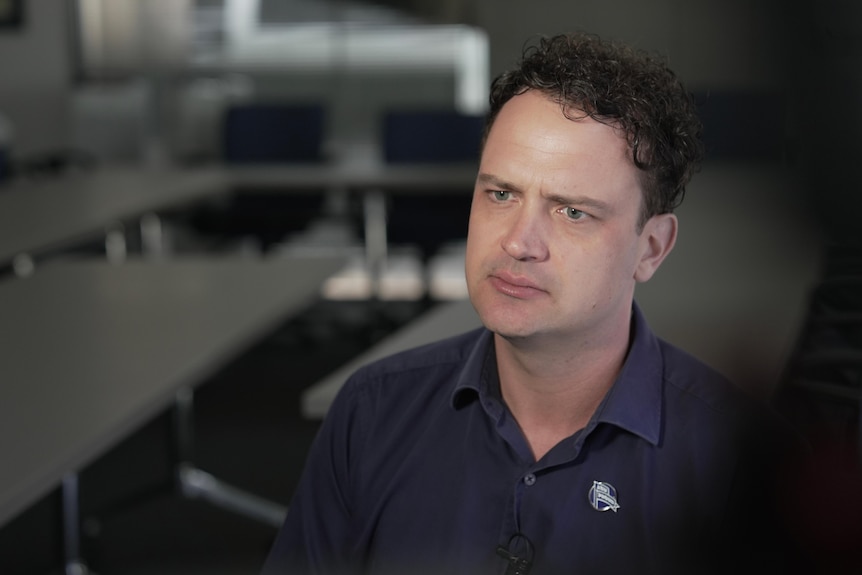
Scott Cowen says workers expect to be paid for the jobs they do. (ABC News: Patrick Stone)
Mr Cowen said the union had seen this practice across a number of industries and it was unfair on the workers, but also taxpayers, who ended up covering the salaries of unpaid workers once they went to to FEG.
“Sometimes [workers] see a notice posted on the office door, they can’t come into work because the company’s closed up, only to open up again in a few days time under a different legal trading name.”
In a statement to the ABC, a spokesperson for the ATO said it could not comment on individual cases, but “if a company is wound up in insolvency, the ATO will pursue recovery of outstanding debts owing to it through the liquidation process”.
“If there are insufficient funds after paying the liquidator’s or trustee in bankruptcy’s costs and priority creditors, the debt owing to the ATO is generally written off as irrecoverable at law.”
Sponsored staff lose thousands
Many of those made redundant from Zib could apply to the FEG scheme, but some were not entitled to.
Renee was sponsored by the company to work in Australia and said she was owed almost $20,000 in entitlements.
The Dutch woman, who asked that ABC News use only her first name, worries she will never see the money because the FEG scheme does not cover employees on sponsorship visas.
Renee said she had been encouraged to engage a lawyer, but would instead return to the Netherlands in January, a decision greatly influenced by her experience at Zib.
“Businesses can have financial hardship, that’s inevitable. But there is a huge difference in handling this with a human approach,”
she said.
Other staff said the impact of Zib’s manoeuvring affected them greatly.
“I think it’s the way that it’s been done, where it’s, ‘We don’t have any money’, but yet they’ve moved down the road,” one said.
“They’re telling clients nothing’s changed, everything’s still status quo.
“And yet there’s all of us who are left with nothing.”
Some staff have received their FEG entitlements, but say thousands of dollars were missing because there is a maximum weekly wage cap of $2,793 applied to all FEG payouts (meaning if you make more than that in a week, you miss out).
“It’s been really tough and I think the financial side of it is probably less so than the mental side of it. I was pretty broken,” another former employee said.
“I think if you’re going to make somebody redundant, you need to do it in the right way, which is provide them a runway to at least find another opportunity.
“I think it’s a really inhumane way of going about it.“