Listen to this article
Estimated 4 minutes
The audio version of this article is generated by AI-based technology. Mispronunciations can occur. We are working with our partners to continually review and improve the results.
Maritime Electric has officially filed plans with the Island Regulatory and Appeals Commission for the rotating power outages it says may be necessary this winter to prevent a provincewide blackout.
IRAC formally requested the plans in a letter to the utility’s CEO, Jason Roberts, dated Dec. 11. The regulator said it only learned about the potential for rolling outages, which Maritime Electric calls “load shedding,” through media coverage in late November.
The commission wanted to know whether any measures would be put in place to reduce the likelihood of rotating outages and how the utility would notify the public if such outages were necessary.
Roberts said Monday, however, that Maritime Electric filed its official application on the same day it received the letter from IRAC.
“There is some more information that we do need to file just to complete the request as outlined in the letter, but by and large, most of that information has been filed,” Roberts told CBC News: Compass host Louise Martin.
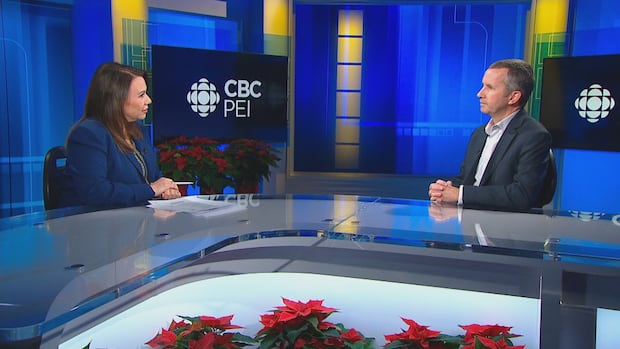
Maritime Electric says it has now officially filed its plans for rotating power outages with the Island Regulatory and Appeals Commission. CBC News: Compass host Louise Martin asks the utility’s CEO, Jason Roberts, about those details and the strain on P.E.I.’s power grid.
Roberts said Maritime Electric will aim to avoid rotating outages unless they’re deemed necessary,
He said if the utility needs to use the practice, customers will be notified through Maritime Electric’s website, social media and media outlets.
“It’s kind of like planning for a storm. You don’t know exactly where the storm is going to hit, you don’t know how long it’s going to last, and you don’t know how strong it’s going to be,” Roberts said.
“We don’t know exactly where that load is going to occur, we don’t know how high it’s going to be or how much we’re going to have to shed at a particular point in time.”
In its filing to IRAC, the utility said it should be able to give people notice of up to one or two hours before it has to cut power to a particular area — but in an emergency situation, that warning could be just minutes.
Maritime Electric also said the outages will cost the utility money.
It said planning and responding to an overwhelmed power grid is labour intensive, and will likely mean overtime for many staff. But because it’s never dealt with them before, the company said it can’t say how much rotating power outages would cost.
The utility said it will also cost money to run ads to let Islanders know what’s happening.
Pressures on P.E.I.’s grid
Roberts said keeping up with the pace of change on P.E.I. has been difficult as Maritime Electric deals with an increased population and government programs that encouraged customers to convert from oil heat to electricity.
When asked whether P.E.I. is in a crisis situation when it comes to the power supply, Roberts said “it really does feel that way.”
“We’ve got an increasing demand and we’ve got a shrinking supply on the Island, and then when you look across Atlantic Canada, we’ve got the same thing happening,” he said. “We’re all faced with the same problem, and we’re all working towards adding new generation.”
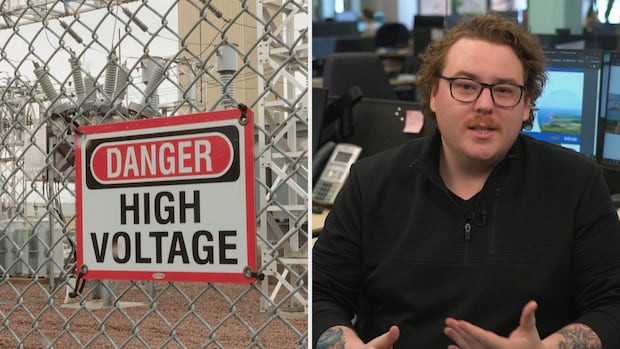
With recent outages shining a light on the fact that the P.E.I. electrical grid is nearing capacity, you may be wondering how the Island gets power in the first place — or what the difference is between Summerside Electric and Maritime Electric. Here’s a breakdown from CBC’s Cody MacKay.
The commission has applied to add more fossil fuel power generation to the system, but is still waiting on approval from IRAC.
Roberts said a recently implemented smart meter program could help manage demand for electricity, as it will give Maritime Electric the ability to see the usage of individual consumers.
“Our job is to make sure we have enough generation and transmission capacity in place to be able to deliver the energy that you want,” Roberts said.
“On the demand side… that’s the conversation where we say, let’s try and reduce as much as we can and help each other out.”