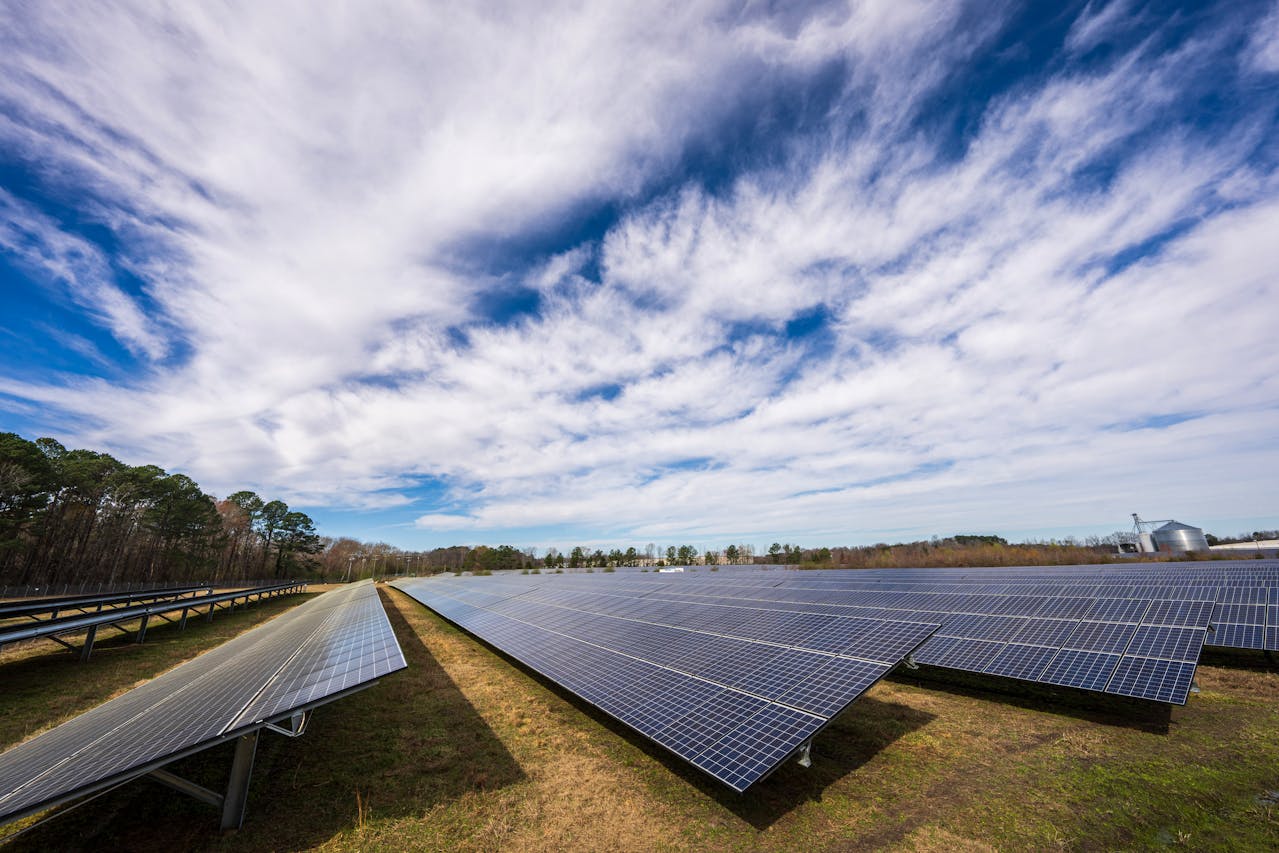
Solar photovoltaics (PV) is central to the global energy transition. In 2024 alone, solar PV accounted for 42% of installed renewable capacity worldwide and more than three-quarters of new renewable additions. Looking ahead, IRENA projections indicate that solar PV will contribute around half of the renewable capacity required by 2050 to meet the Paris Agreement goals.
As deployment accelerates and projects scale up, attention is increasingly turning to how solar PV interacts with local environments. Solar projects can generate significant climate and air quality benefits, yet they may also affect biodiversity, ecosystems, and land use if environmental considerations are not fully integrated into planning, siting, and design. Conversely, when well planned, solar PV can deliver environmental co-benefits—supporting ecosystem restoration, land productivity, and biodiversity through approaches such as agrivoltaics, solar grazing, ecovoltaics, floating PV, and land degradation recovery.
This session, convened during the Sixteenth IRENA Assembly under the theme Powering Humanity: Renewable Energy for Shared Prosperity, will explore how to balance rapid solar PV deployment with environmental protection and enhancement, ensuring that the energy transition benefits both people and nature.
The session will convene policymakers, energy experts, industry representatives, and conservation organisations to:
- Examine the potential negative and positive interactions between large-scale solar PV projects and local environments;
- Share lessons and tools to avoid, minimise, and mitigate environmental risks during project planning, siting, construction, and operation;
- Explore opportunities to scale nature-positive co-benefits from solar PV projects across diverse contexts; and
- Discuss policy, planning, and financing approaches that can enable environmentally responsible solar deployment.
IRENA will present key findings from its latest report on the local environmental impacts and benefits of large-scale solar PV projects, jointly developed with IUCN and the China Renewable Energy Engineering Institute (CREEI). Participants will exchange policy experiences and best practices from different regions and market contexts.
IUCN and IRENA signed a Memorandum of Understanding (MoU) at the IUCN World Conservation Congress in Abu Dhabi in October 2025, with the aim of accelerating a renewable energy transition that is both sustainable and nature-positive.