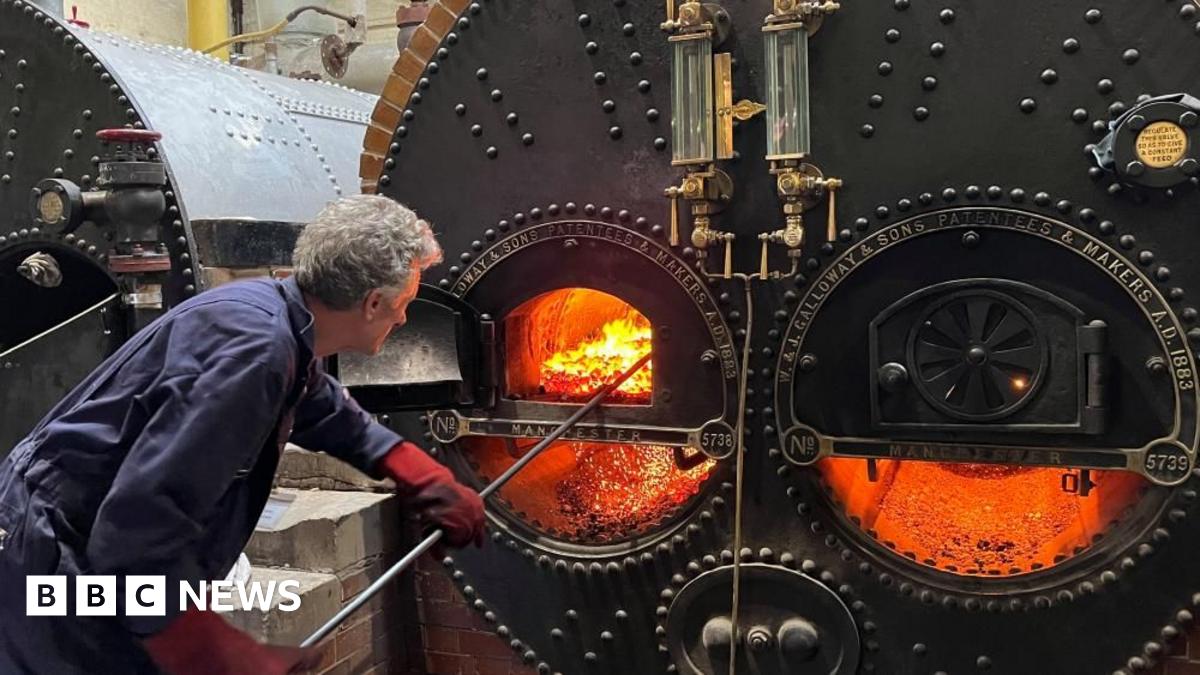
The end result was a system with two James Watt-style steam engines, powered by six coal-fired boilers, Mr Saint said.
With each stroke of an engine, 96 gallons (363 litres) of water would have been lifted to the surface as a 13-tonne beam got pushed in-and-out of the ground.
There were also two huge flywheels, one for each beam engine, which kept everything running “nice and smoothly” by storing excess energy, Mr Saint said.
However, despite the ingenuity, the technology was actually old for the time.
James Watt-style steam engines were an improvement on earlier designs because they ran far more efficiently, but they were already more than 100 years old by the time Papplewick Pumping Station was built in 1884.
“But being a water pumping station, Nottingham City Water Company wanted engines that they knew would be reliable,” Mr Saint said.
“They knew it would work, and work it did, from1884 right the way through until 1969, when it was superseded by electrical pumps.”