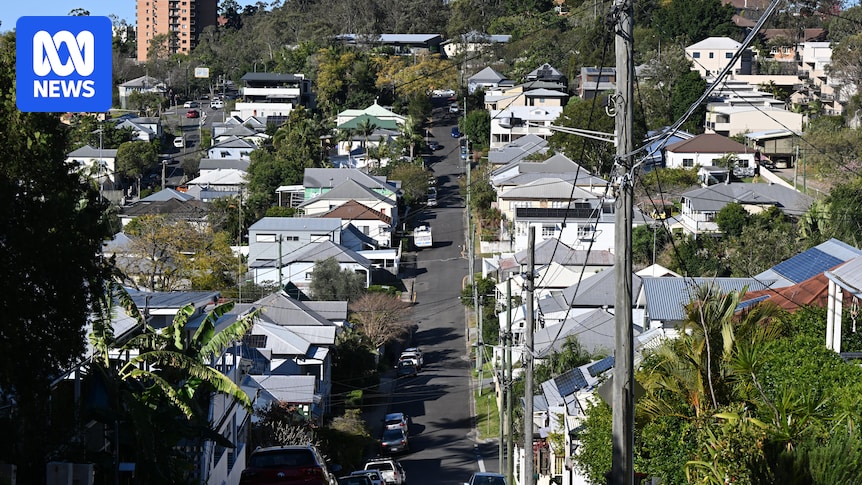
Property data is pointing towards an increasingly expensive housing market across Queensland in 2026, even as price growth moderates in the big southern capitals.
Cotality Research Director Tim Lawless said it was a great time for property owners, but becoming more difficult for those who were trying to get into the market.
“If you own a home, that’s great news. But if you don’t, it’s probably becoming increasingly frustrating, how fast values are rising and how much it costs to get your foot in the door,” Mr Lawless said.
“Brisbane is extraordinarily unaffordable now.“
Brisbane’s property values increased by 1.6 per cent in December alone. That equates to an average of almost $16,000 per property — across both houses and units.
By comparison, Sydney and Melbourne were the biggest drag on the headline growth, with values sliding 0.1 per cent lower. The decline in values across Australia’s two largest cities marked the first month-on-month fall since January last year.
CoreLogic’s Tim Lawless says some investors are looking to invest outside the ACT. (ABC News: Nickoles Coleman)
“Brisbane has gone from being a market that’s around the middle-to-lower end of the pack for affordability, to one that’s now getting pretty close to one of the most unaffordable markets,” Mr Lawless said.
“And the annual growth rate for Brisbane, at 14.5 per cent, implies the market is up about $131,000 over the year.”
He said the unit sector was rising most rapidly, reflecting more buyers looking at apartments at lower price points than houses.
“We’re also seeing more investment in south-east Queensland and investors do tend to be more active in the apartment sector,” Mr Lawless said.
“As well as the ongoing undersupply, we’re not seeing much building happening across the housing market overall.”
In Greater Brisbane, the 10 biggest increases were recorded in Springwood-Kingston (19.5 per cent), Sunnybank, Nathan, Rocklea-Acacia Ridge, Forest Lake-Oxley, Inner Ipswich, Chermside, Capalaba, Mt Gravatt, and Strathpine (16.1 per cent).
Regional Growth
Regional areas west of the state’s capital were the biggest winners among Queensland’s regional markets, with homes on the Granite Belt now boasting an average value of $592,873 — a 20.4 per cent increase over 12 months.
“Toowoomba, the Granite Belt, the eastern area of the Darling Downs — they’ve all seen housing values rise between 18 and 20 per cent over the past 12 months,” Mr Lawless said.
“Markets like Charters Towers also have seen a really strong rate of growth — up 16 per cent. South of Cairns, Central Highlands — including Emerald — and Maryborough. They’re all in the top 10 growth regions.”
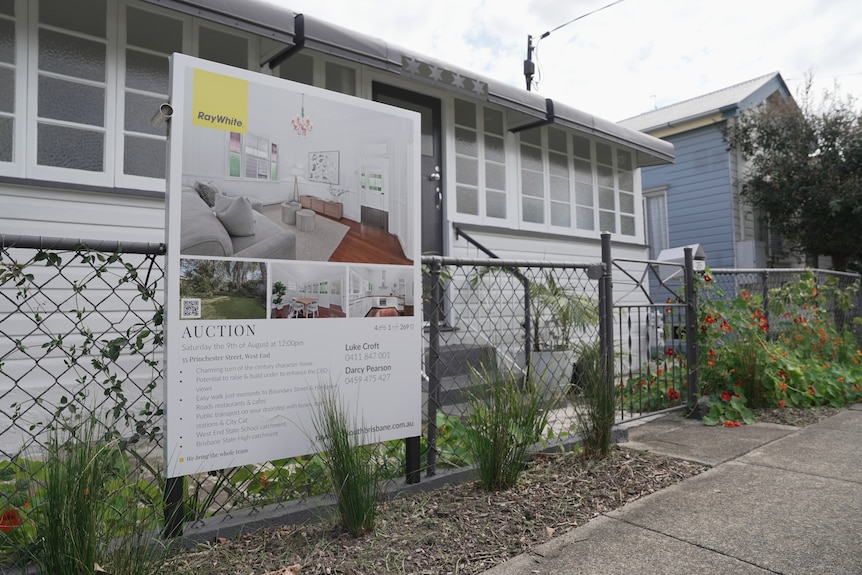
Renewed speculation that the rate-cutting cycle is over has dented housing confidence. (ABC News: Eddy Gill)
Other suburbs in that regional “top 10” list included Ormeau-Oxenford and Nerang on the Gold Coast, and northern areas of the Bowen Basin.
Mr Lawless pointed to affordability and economic diversity in these areas, as well as access to amenities like schools and healthcare services.
He predicted the market will not see the same level of price growth over 2026, pointing toward possible interest rate hikes in 2026, “which could take a bit of heat out of the market”.
“I think there will be a slowing. But I don’t think we’ll see values going backwards simply because of the low supply in the market and population growth, particularly interstate migration coming into south-east Queensland that remains quite high. That, of course, supports demand,” Mr Lawless said.
“It’s clearly an unsustainable brand of growth we’re seeing across many Queensland markets, not just Brisbane. I think we’re seeing the first signs of that momentum leaving the marketplace. We have seen a few months now where the rate of growth remains very high, but it is slowing down.”
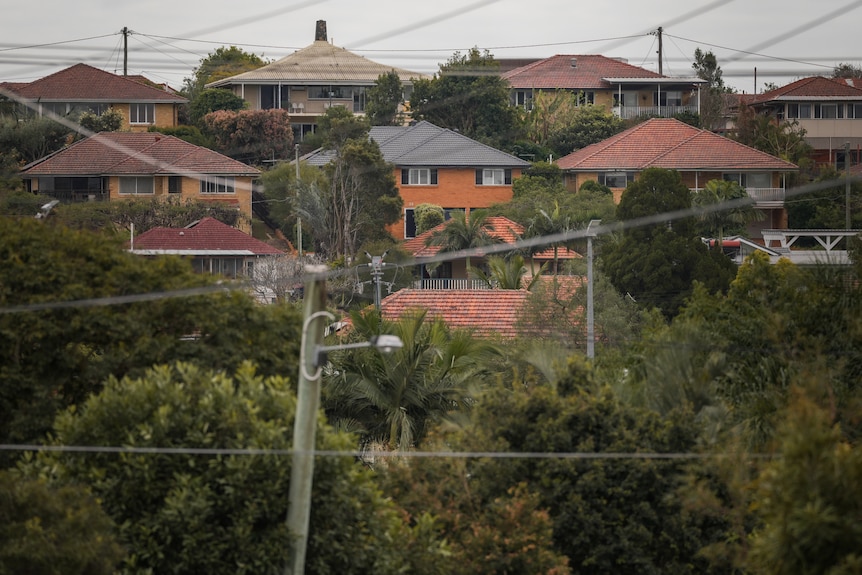
The Brisbane trends are expected to make an already difficult rental market even tighter. (ABC News: Christopher Gillette)
These trends will also affect renters over the coming 12 months.
“It’s going to be a very tight rental market, rents are still going to rise. The past 12 months, we’ve seen Brisbane rents rise about 6.2 per cent — that’s a larger rate of growth than the national average, at 5.2 per cent,” Mr Lawless said.
He added rents had already risen substantially over the past five years, leading to more group households and multi-generational households forming.
“We’ve got a vacancy rate across Brisbane of 2.1 per cent. It’s a lot lower across the apartment market — 1.4 per cent, only marginally off record lows,” Mr Lawless said.
“House vacancy rates are 2.4 per cent. A normal, health vacancy rate is probably closer to 3.5 per cent.”