
As of Jan. 1, most job postings in Ontario need to include salary figures, carbon monoxide alarms need to be on every level of a home and municipalities are now out of the recycling business.
The new job posting rule is one of several changes to Ontario’s Employment Standards Act
Courtney Ginson, the recruitment manager at Levert Personnel Resources in Sudbury, welcomes the changes and says many job seekers are nervous to ask about wages in interviews.
“It’s the uncomfortable thing that people have a hard time asking, they don’t know how to ask. But it’s something that they should know,” she said.
“And I think you’re going to get a better candidate when you do disclose that. There’s no point in posting a position and not disclosing the wage and then somebody applying and coming in for an interview and wasting everyone’s time.”
Among the other changes are a requirement that employers get back to job seekers no more than 45 days after an interview.
“We’ve all been in that position where we’ve applied for something and we’ve interviewed for something and we’re just… it’s unknown, no feedback given,” said Ginson.
“And we get our heart set on a great opportunity that we feel we are perfect for and then we just get nothing in response.”
There are also new requirements as of Jan. 1 for carbon monoxide detectors in Ontario.
Alarms are now required on every floor of a home, not just outside of bedrooms.
“It gives you more time to get out of the home. It’ll give you more warning about the dangers of carbon monoxide and how to react to it and to save your family,” said former Brantford fire captain John Gignac.
He is the executive director of the Hawkins-Gignac foundation, which was created after four members of his family died of carbon monoxide poisoning in Woodstock in 2008.
Laurie and Richard Hawkins, who grew up in North Bay, and their two children died after a blocked vent from their gas fireplace caused carbon monoxide to build up in their home.
“Carbon monoxide is colourless, odorless, and tasteless, so the only way you’ll ever know it’s in your home is if you have a carbon monoxide detector. Otherwise you’re leaving it to chance,” Gignac said.
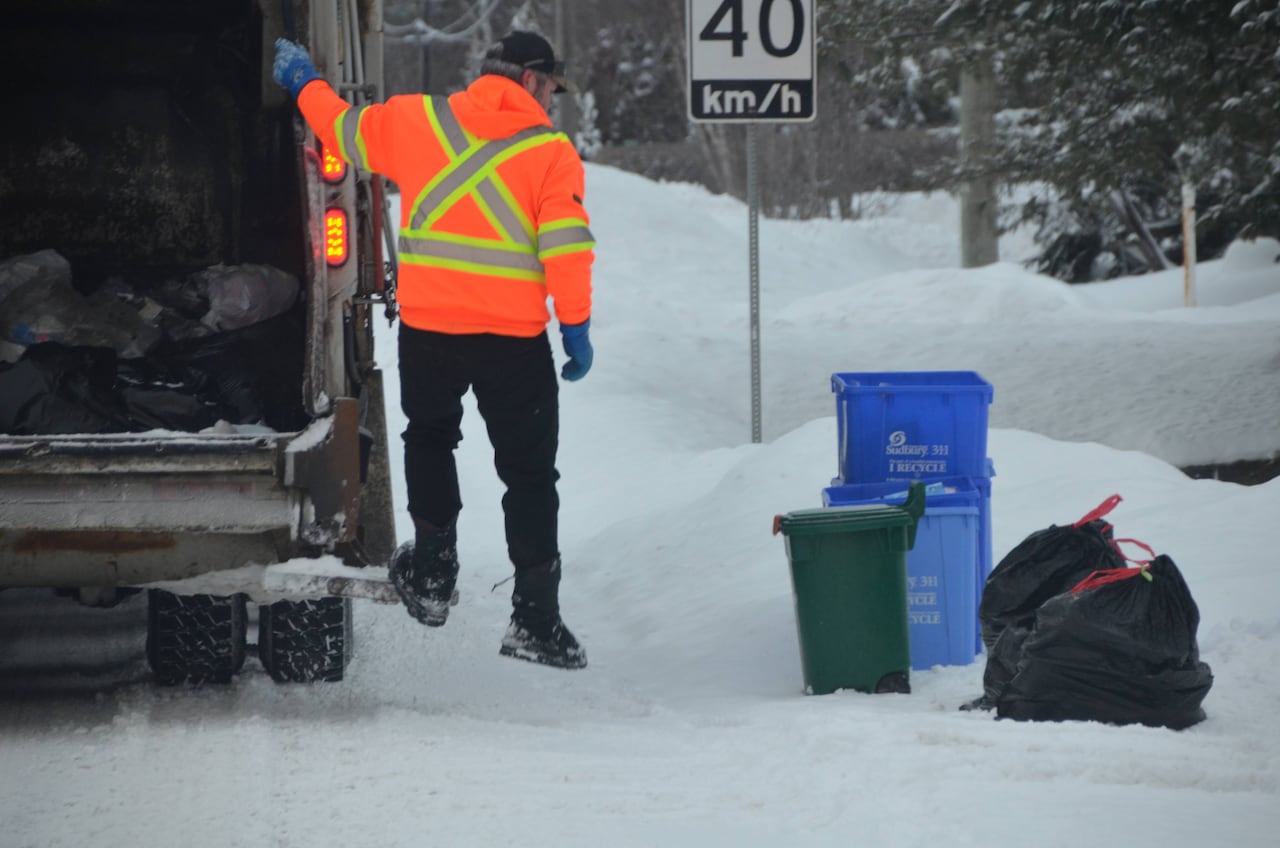
Also with the coming of the new year, comes a big change in Ontario’s blue box program.
A law first passed in 2016, has now taken effect, shifting the responsibility for recycling from cities and towns to the companies that produce the packaging.
They have set up a non-profit called Circular Materials, that now oversees blue box collection across the province.
CEO Allen Langdon says the new provincial law lays out specific targets for how much must be recycled and how much can be sent to landfill.
“They vary from category to category. So cardboard and paper products would be the highest at 80 per cent and the lowest would be flexible plastics at 10 per cent,” he said.
“But starting in 2028 they will be legally enforceable targets and we will be expected to meet them.”
Greater Sudbury just made the switch and environmental services director Renee Brownlee says most people won’t notice.
But the city will continue picking up at apartment buildings and small businesses, which aren’t covered by the new program.
“If you start telling people that they can’t participate in recycling or you make it difficult for them, everything ends up going into the garbage and that is using up space in our landfill site unnecessarily,” Brownlee said.
“The changes that have been made really haven’t left municipalities a lot of time to give people a lot of notice. So a lot of things are a little bit at the last minute. Not exactly how we like to do things.”
Timmins and Sault Ste. Marie also moved over to the new privately-funded recycling program on Jan. 1, while North Bay made the switch last year.
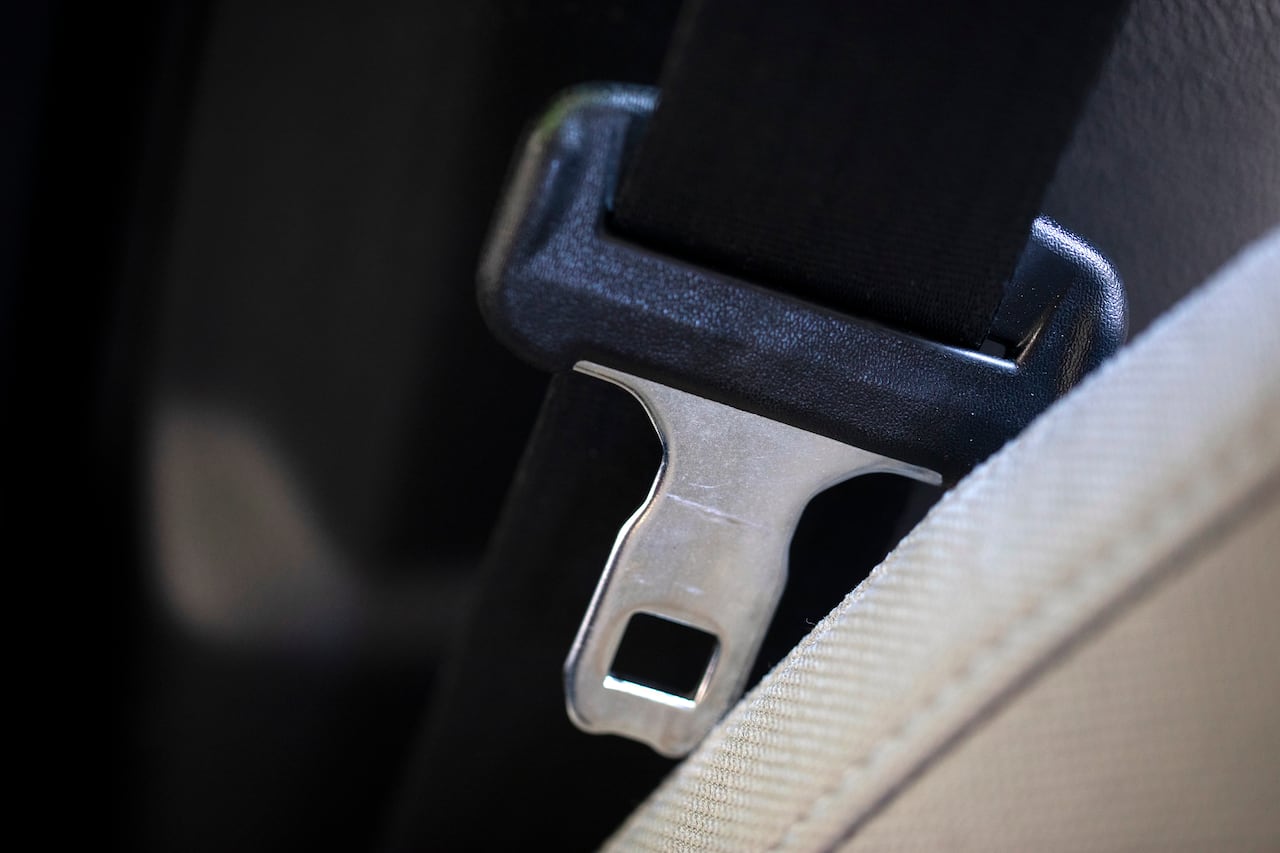
A new Ontario law that took effect 50 years ago— on Jan. 1, 1976— made seatbelts mandatory for the first time in Canada.
But provincial police say, all these years later, they are now giving out more and more tickets for drivers and passengers not wearing them.
OPP wrote 13, 000 tickets for seatbelt violations in 2024, about 7,000 more than they gave out in 2020.
“Yeah it is surprising; once I looked into it that the charges are rising so much year over year. Seatbelt laws are nothing new,” said North Bay OPP Const. Kyler Brouwer, who used to be a car crash investigator.
Const. Kyler Brouwer speaks for the OPP in North Bay and used to be a car accident investigator.
“I’ve been to countless fatalities where you can see the person has been ejected. I’ve been to lots of collisions, where I’ve seen a complete rollover into the ditch, the person is just able to walk away because they were properly wearing their seatbelt.”
Brouwer says the number of seatbelt charges have also been trending up in northeastern Ontario.
About 700 tickets were given out in 2024, more than double what it was in 2020.