Published on
January 10, 2026
Abu Dhabi Sustainability Week 2026 brings together global leaders, innovators, and experts under the theme “The Nexus of Next: All Systems Go” to address the interconnected challenges of sustainability. The event, which has become a symbol of the global sustainability agenda, is taking a bold step forward this year by reconsidering the role of travel and tourism in achieving a sustainable future.
The travel and tourism industry, previously viewed as a sector focused on isolated environmental factors such as aviation emissions or hotel energy efficiency, is now being recognised for its role as a major system integrator. This year’s conference will focus on the interconnectedness of energy, mobility, infrastructure, finance, logistics, culture, and human behaviour, with a particular emphasis on how these systems can be brought together to ensure scaled sustainability.
Rethinking Sustainability in the Travel Industry
The conversation around sustainability in the travel sector has long been dominated by narrow concerns. Efforts often centred on reducing aviation emissions, improving the energy efficiency of hotels, or promoting carbon offset programmes. While these initiatives are important, experts emphasise that they are insufficient to address the full potential of the travel sector’s impact on global systems.
The organisers of Abu Dhabi Sustainability Week have underscored the need for a broader perspective, one that looks beyond the traditional boundaries and instead considers how travel and tourism intersect with, and can strengthen, multiple systems simultaneously. This shift in perspective offers a unique opportunity to build a more resilient and efficient global infrastructure—one that benefits not only the travel sector but also other interconnected industries.
Transportation as the Key to Systemic Change
One of the most significant areas where the travel sector can drive systemic change is in transportation. Innovations in electric mobility, sustainable aviation fuels, smart ports, and low-carbon logistics all depend on more than just technological advancements. These innovations require coordination across energy generation, grid flexibility, digital platforms, and financial systems to be truly effective.
Experts stress that when transport planning is fragmented, inefficiencies multiply and lead to greater emissions and resource wastage. On the other hand, when systems are integrated and designed with long-term sustainability in mind, the compounded value created across multiple sectors can have far-reaching positive effects.
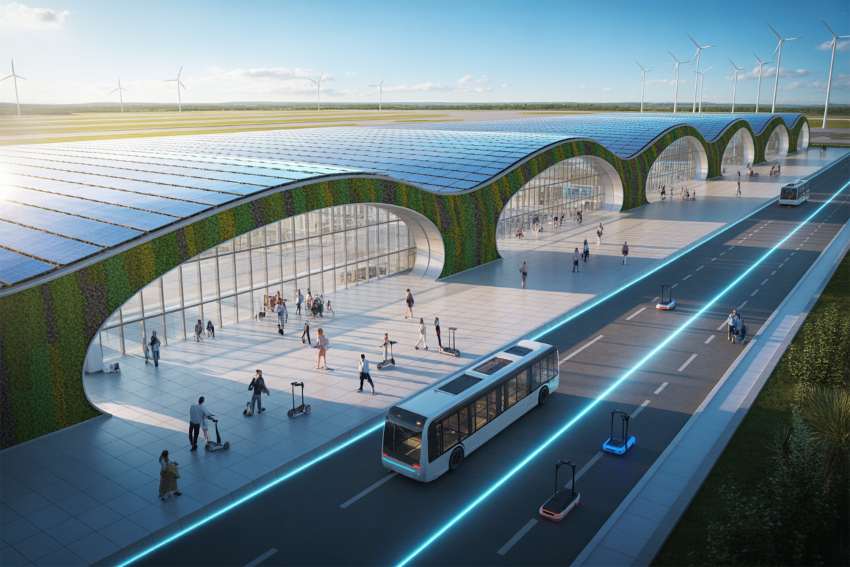
Airports are one of the best examples of this evolution. They are no longer just points of arrival and departure; they are becoming energy hubs, mobility nodes, and data platforms that contribute to a city’s overall sustainability efforts. The growth of AI-enabled planning, resilient power grids, and sustainable fuel supply chains within the aviation sector represents just the beginning of this transformation.
Urban Systems and Smart Cities: A New Way Forward
Cities that are able to integrate sustainable travel, infrastructure, and energy demand from the outset are seeing far more successful outcomes than those that must retrofit systems later on. This integrated approach has the potential to create more efficient, sustainable urban environments that can manage the complex demands of urban life, including transport, waste management, and energy consumption.
The relationship between tourism and urban systems is particularly important. Tourism is, in many ways, a real-time stress test for cities’ infrastructure, especially when it comes to transport, water, waste, and energy systems. The surge in visitor demand can either highlight weaknesses in urban systems or accelerate innovation, depending on how these systems are managed.
Properly leveraging tourism can help push cities to adopt renewable energy solutions, invest in clean infrastructure, and explore nature-based solutions to urban challenges. Moreover, tourism can drive job creation, upskilling of local communities, and support for sustainable livelihoods, making it a critical tool for both environmental and economic sustainability.
The Role of Leadership in Achieving a Net-Positive System
To achieve a net-positive world, the leadership mindset must shift dramatically. Travel and transport operators, as well as urban planners, need to step into the role of stewards for interconnected systems. The success of sustainability efforts will no longer be measured by individual goals such as reducing carbon footprints or increasing recycling rates in isolation. Instead, the focus will be on how effectively data is shared, how incentives are aligned across sectors, and how long-term systemic value is created.
Abu Dhabi Sustainability Week serves as an important platform for this shift. It brings together stakeholders from a variety of sectors, including energy, finance, technology, urban planning, mobility, and nature, in order to create a space for cross-sector dialogue. This collaborative environment is crucial for advancing the integrated approach that will shape the future of global sustainability.
Travel and Tourism: A Key Engine of Change
When designed with intent, travel and tourism has the potential to become one of the most powerful engines for a net-positive world. As more sectors begin to understand and embrace the interconnections between their work, the travel industry will increasingly be seen as a crucial player in driving the systemic change needed to achieve global sustainability goals.
By viewing travel through a systems lens, with a focus on integrating sustainability efforts across multiple domains, the sector can become a key contributor to a more resilient and sustainable global infrastructure. As Abu Dhabi Sustainability Week 2026 draws to a close, the message is clear: it is through the intelligent connection of systems, rather than isolated optimization, that a truly sustainable future will be realised.
The Future of Sustainable Travel
Abu Dhabi Sustainability Week 2026 has paved the way for a new era of sustainable travel and tourism. Recognising the travel industry’s unique role as a system integrator, the event has triggered a paradigm shift that will reverberate across industries. As global leaders continue to advocate for systemic change, the travel and tourism industry must transform into a force for good, capable of fostering innovation, increasing efficiency, and creating a net-positive world for future generations.
