Date: 12 January 2026
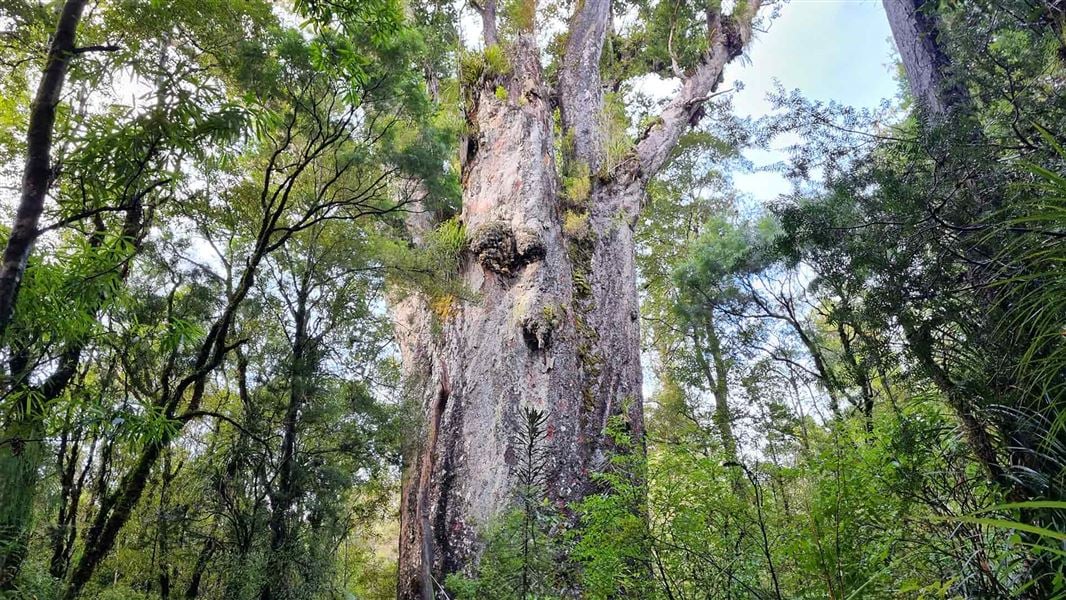
Phase One of the Rākau Rangatira project, opened in December 2024, restored the mana of Tāne Mahuta’s visitor experience, set new standards for kauri protection, and provided a significant boost to Northland’s visitor economy.
“We are excited that now Phase Two is ready to continue that momentum,” says DOC’s Northern North Island Regional Director Sue Reed-Thomas. “We are creating the conditions the forest needs to breathe and regenerate.”
Construction will begin in March 2026. Kauri Walks will be closed for approximately eight to10 months, while the Tāne Mahuta walk will remain open throughout the construction period.
Te Papa Atawhai DOC and Te Roroa iwi have worked closely on Rākau Rangatira, an ambitious multi-year programme. It is focused on safeguarding the mauri of Waipoua Forest while reimagining how visitors experience one of Aotearoa’s most revered natural and cultural landscapes.
DOC is investing $8 M in this next phase, a major step toward in futureproofing the forest and addressing the risks associated with ageing infrastructure near culturally and ecologically sensitive kauri root systems.
The construction will see the removal and replacement of the existing tracks at the Kauri Walks with a modern, elevated boardwalk system made from durable, low-impact materials designed to perform for at least 50 years in the rainforest environment.
“The current infrastructure is no longer fit for the long term,” says Reed-Thomas. “Phase One proved we can deliver infrastructure protecting both the ngahere and enhancing visitor understanding. Phase Two is about extending that standard across Waipoua. This is a bold investment in forest health, the visitor economy, and in the experience of naturing.”
The design will significantly reduce soil movement, one of the primary vectors for the spread of kauri dieback disease, which has been detected within 60 m of Tāne Mahuta.
As kaitiaki of Waipoua, Te Roroa emphasises this project is not simply an infrastructure upgrade, but an expression of intergenerational duty.
“This is about protecting taonga tuku iho that can never be replaced,” says Piripi Moore, Te Roroa Board Representative. “Visitors from across the motu and around the world come to stand beneath these ancient rākau rangatira. Most behave with respect, yet it takes only a few careless actions to cause irreversible damage. The risk is too great, and the loss would be absolute. Our responsibility is to act as good tūpuna today, so our mokopuna can experience the same wonder we do.”
Piripi says the upgraded experience will help transform visitor understanding. “When people understand the cultural and ecological significance of Waipoua, they become part of its protection. We want every visitor to leave not only inspired by the majesty of these giants, but aware of the responsibility we all share to look after them.”
Phase One of Rākau Rangatira upgraded the boardwalk, bridge and viewing platform at Tāne Mahuta. Public response has been overwhelmingly positive, with many noting the infrastructure now reflects the mana of Tāne Mahuta.
Phase One also demonstrated construction can be managed responsibly within this sensitive environment. No workers or machinery touched the forest floor at any point, and strict protocols were followed throughout.
Economically, the first phase will support visitor interest in the region, strengthening the Northland tourism sector. Phase Two is expected to further position Waipoua as a world-class nature destination and deliver long-term environmental and economic returns.
A recent 1080 operation in the Waipoua core zone has also reduced predators such as rats and stoats, which threaten native wildlife and weaken forest health. Early monitoring results show promising reductions in pest activity.
Rākau Rangatira forms part of a wider nationwide shift toward infrastructure and experiences that work for nature rather than against it.
“For Te Roroa, this mahi is about honouring our role as kaitiaki and ensuring that Waipoua remains a living legacy,” says Piripi. “If we do this well, these trees will continue to stand long after us, carrying forward the stories, identity and life force of our people.”
DOC staff and Te Roroa will continue working closely with iwi, local communities, tourism operators and conservation stakeholders.
NATURE LOOKS DIFFERENT FROM HERE
Nature isn’t scenery. Nature is a society that we rely on for everything, every day. It’s behind our identity and our way of life.