12 January 2026
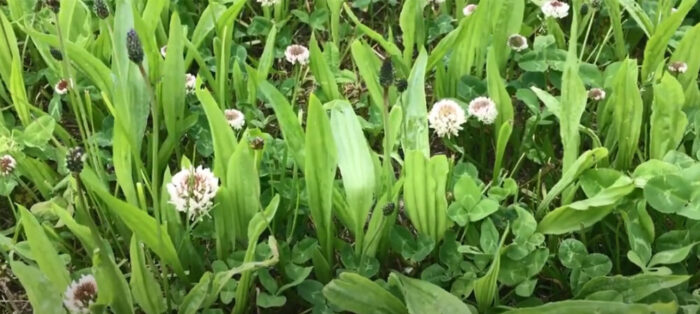
Plantain (the pasture herb Plantago lanceolata) looks like a practical tool to help cut nitrogen losses from pasture – but it isn’t a silver bullet. That was the message from a recent webinar jointly hosted by the Teagasc Climate Centre and New Zealand’s Ag Emissions Centre.
The webinar featured presentations by Dr Cecile de Klein from Bioeconomy Science Institute on plantain research in New Zealand, followed by Dr Dominika Krol from Teagasc, who gave the Irish context. The findings presented, drawn from glasshouse mesocosms, lysimeter work and field trials, and in New Zealand and Ireland, demonstrate a clear plant/sward effect: increasing plantain proportion in swards can reduce N2O emission factors (field plots reported reductions up to ~40%), although lysimeter studies produced mixed outcomes depending on soil type and wetness. Persistence of plantain and other species in multispecies swards can be an issue and this requires further research to identify more persistent varieties and low cost management practices to maintain species persistence.
On Irish soils and farms, multispecies swards that include plantain (often with chicory, clovers and two grasses) consistently lowered emission intensity i.e. N2O per tonne of grass or per unit of nitrogen in the crop. The key findings were:
- Six‑species mixtures (including plantain) cut N2O intensity by ~24% per unit of dry matter and by over 40% per unit of N compared with ryegrass monocultures (same N fertiliser rate).
- Swards with plantain produced larger urine volumes per event but with lower nitrogen concentration, so overall urinary N deposited to the paddock was lower. This helps reduce both ammonia and N2O losses from urine patches.
- Mixed swards produced lower emissions from urine patches than less diverse swards.
- Adding 30–50% plantain to ryegrass reduced nitrate leaching in well‑drained soils (and after establishment also in poorer soils).
- On farm‑scale trials, multispecies swards with plantain maintained milk yield, milk solids or pasture productivity with much lower fertiliser inputs.
Taken together, these findings suggest that plantain can deliver environmental gains across a wide range of conditions, with a broad operating space that does not rely on exact species proportions. Ongoing research and modelling efforts will build on this momentum to better define plantain’s contribution within future grassland systems.
Watch the full webinar below:
Click here to learn more about the Teagasc Climate Centre.