Multi-Criteria Decision Making
Over 60 participants from 30 countries and three international organizations discussed how their countries have used multi-criteria decision making (MCDM) to plan decommissioning activities in line with national regulatory requirements, sustainability goals and long-term site objectives. Also used in spent fuel management, environmental remediation and advanced reactor technology assessment, MCDM assigns numerical weights to criteria based on input from regulators, industry representatives, operators and other stakeholders. Stakeholder groups may have differing views on the relative importance of these criteria, highlighting the need for constructive dialogue throughout the decision-making process.
“MCDM can help us make good decisions by structuring complex decisions, balancing competing criteria, managing quantitative and qualitative factors and providing a shared understanding of both the problem and the preferred options,” said Simon Boniface, Decommissioning Strategy Manager at the UK’s Nuclear Decommissioning Authority. “It’s important to build confidence in the decision-making process, and so the views of all stakeholders need to be considered.”
Throughout the five-day meeting, participants presented decommissioning success stories as well as challenges and compared their approaches to decision making. They also collaborated on hypothetical decommissioning planning scenarios using MCDM tools.
“In the past, decisions often relied on experience rather than systematic evaluation,” said Inhye Hahm, a Senior Researcher in the Decommissioning Technology Research Division at the Korea Atomic Energy Research Institute. “Cost is typically the dominant factor in technology selection, however in some national or facility-specific contexts where disposal capacity is constrained, waste volume reduction may become a higher priority than cost.”
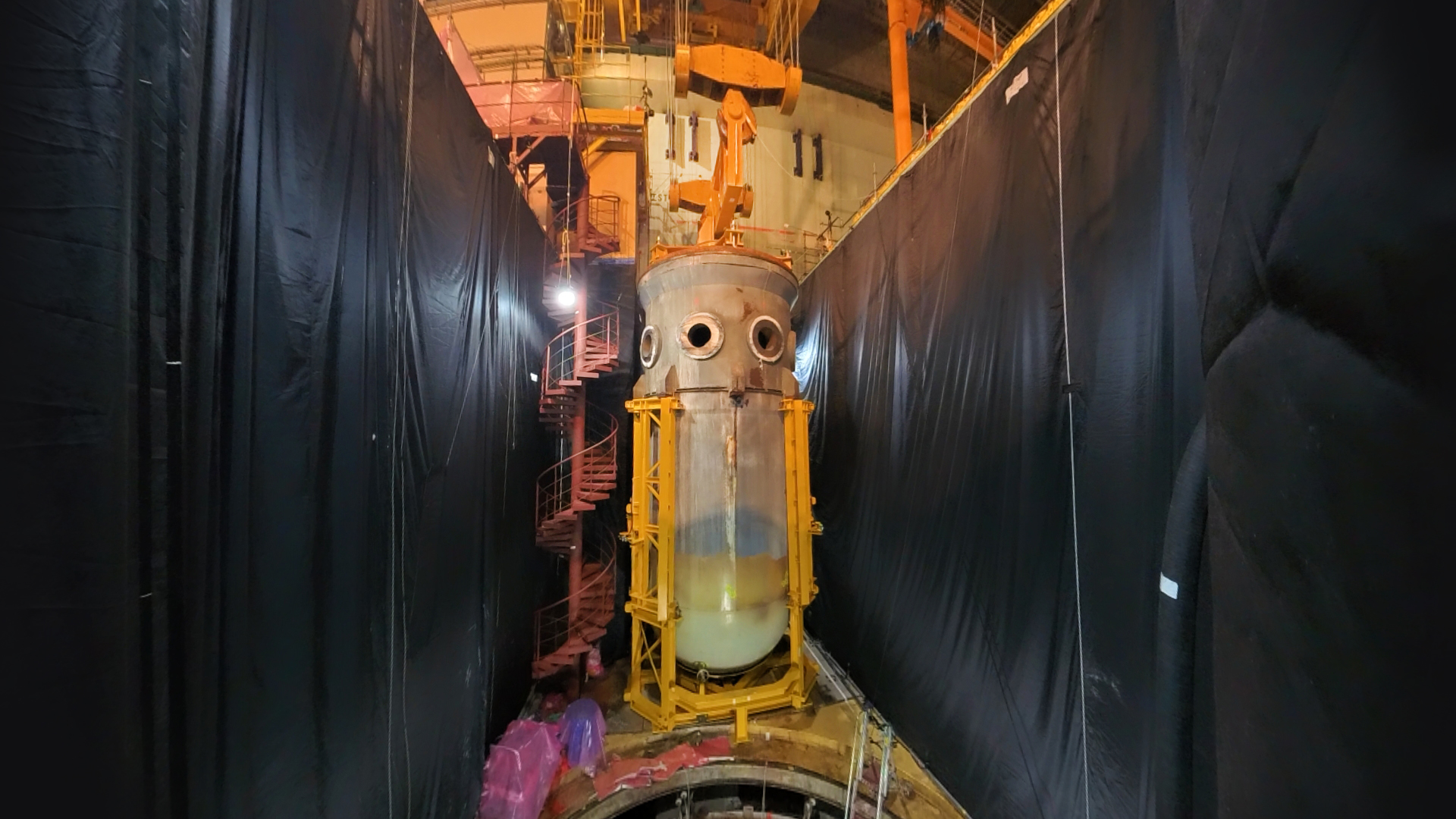
MCDM provides a structured and transparent way to integrate these competing factors, reducing reliance on experience-based or intuitive decision making, she added. The Kori-1 nuclear power reactor, which entered permanent shutdown in 2017, is set to become the Republic of Korea’s first decommissioned reactor after approval to begin this process was obtained last June.
“Amelioration factors, or technical solutions that were not available when the initial decision was made, are important to consider as part of a holistic approach to decommissioning,” said Alexia Mercier, a nuclear chemist and project lead at the Organisation for Economic Cooperation and Development’s Nuclear Energy Agency. “These can include developments in the maturity of a particular technique, new reuse or recycle options for material and new proposals for site repurposing.”
Meeting recommendations included developing a publication on an adaptive MCDM framework for decommissioning; identifying additional case studies; and evaluating the demand for an IAEA Coordinated Research Project on the subject. Participants also called for workshops and other exercises to support capacity building in this area.