Author: admin

  • A geometric shape regularity effect in the human brain

    A geometric shape regularity effect in the human brain

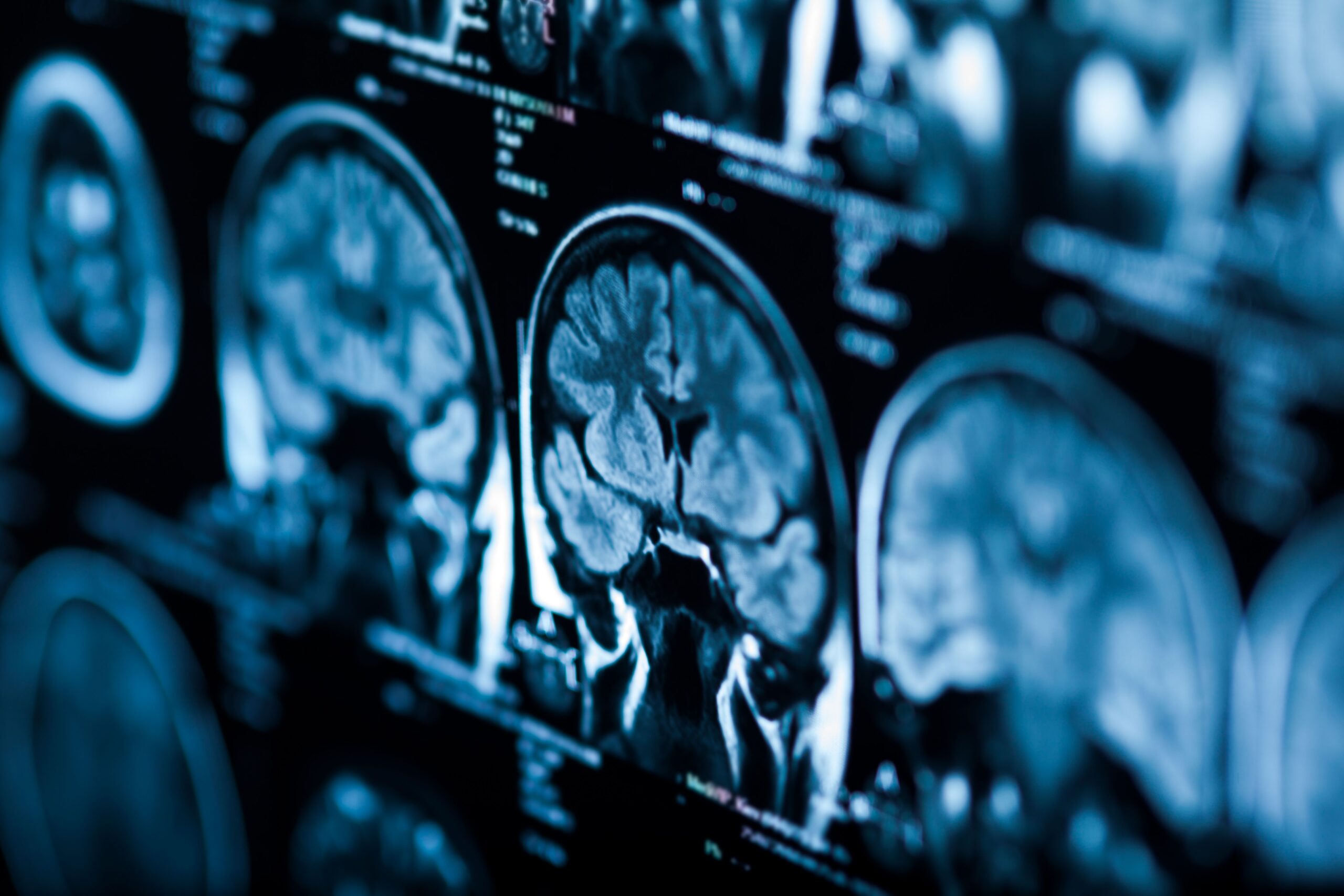
    Long before the invention of writing, the very first detectable graphic productions of prehistoric humans were highly regular non-pictorial geometric signs such as parallel lines, zig-zags, triangular, or checkered patterns (Henshilwood et al., 2018; Waerden, 2012). Human cultures throughout the world compose complex figures using simple geometrical regularities such as parallelism and symmetry in their drawings, decorative arts, tools, buildings, graphics, and maps (Tversky, 2011). Cognitive anthropological studies suggest that, even in the absence of formal western education, humans possess intuitions of foundational geometric concepts such as points and lines and how they combine to form regular shapes (Dehaene et al., 2006; Izard et al., 2011). The scarce data available to date suggests that other primates, including chimpanzees, may not share the same ability to perceive and produce regular geometric shapes (Close and Call, 2015; Dehaene et al., 2022; Sablé-Meyer et al., 2021; Saito et al., 2014; Tanaka, 2007), though unintentional-but-regular mark-marking behavior has been reported in macaques (Sueur, 2025). Thus, studying the brain mechanisms that support the perception of geometric regularities may shed light on the origins of human compositionality and, ultimately, the mental language of mathematics. Here, we provide a first approach through the recording of functional MRI and magneto-encephalography signals evoked by simple geometric shapes such as triangles or squares. Our goal is to probe whether, over and above the pathways for processing the shapes of images such as faces, places, or objects, the regularities of geometric shapes evoke additional activity.

    The present brain-imaging research capitalizes on a series of studies of how humans perceive quadrilaterals (Sablé-Meyer et al., 2021). In that study, we created 11 tightly matched stimuli that were all simple, non-figurative, textureless four-sided shapes, yet varied in their geometric regularity. The most regular was the square, with four parallel sides of equal length and four identical right angles. By progressively removing some of these features (parallelism, right angles, equality of length, and equality of angles), we created a hierarchy of quadrilaterals ranging from highly regular to completely irregular (Figure 1A). In a variety of tasks, geometric regularity had a large effect on human behavior. For instance, for equal objective amounts of deviation, human adults and children detected a deviant shape more easily among shapes of high regularity, such as squares or rectangles (<5% errors), than among irregular quadrilaterals (>40% errors). The effect appeared as a human universal, present in preschoolers, first-graders, and adults without access to formal western math education (the Himba from Namibia), and thus seemingly independent of education and of the existence of linguistic labels for regular shapes. Strikingly, when baboons were trained to perform the same task, they showed no such geometric regularity effect.

    Measuring and modeling the perceptual similarity of geometric shapes.

    (A) The 11 quadrilaterals used throughout the experiments (colors are consistently used in all other figures). (B) Sample displays for the behavioral visual search task used to estimate the 11 × 11 shape similarity matrix. Participants had to locate the deviant shape. The right insert shows two trials from the behavioral visual search task, used to estimate the 11 × 11 shape similarity matrix. Participants had to find the intruder within nine shapes. (C) Multidimensional scaling of human dissimilarity judgments; the gray arrow indicates the projection on the Multi-Dimensional Scaling (MDS) space of the number of geometric primitives in a shape. (D) The behavioral dissimilarity matrix (left) was better captured by a geometric feature coding model (middle) than by a convolutional neural network (right). The graph at right (E) shows the general linear model (GLM) coefficients for each participant. An accompanying explainer video is provided in Figure 1—video 1.

    Baboon behavior was accounted for by convolutional neural network (CNN) models of object recognition, but human behavior could only be explained by appealing to a representation of discrete geometric properties of parallelism, right angle, and symmetry, in this and other tasks. We sometimes refer to this model as ‘symbolic’ because it relies on discrete, exact, rule-based features rather than continuous representations (Sablé-Meyer et al., 2022). In this representational format, geometric shapes are postulated to be represented by symbolic expressions in a ‘language-of-thought’, for example ‘a square is a four-sided figure with four equal sides and four right angles’ or equivalently by a computer-like program from drawing them in a Logo-like language (Sablé-Meyer et al., 2022).

    We therefore formulated the hypothesis that, in the domain of geometry, humans deploy an additional cognitive process specifically attuned to geometric regularities. On top of the circuits for object recognition, which are largely homologous in human and non-human primates (Bao et al., 2020; Kriegeskorte et al., 2008b; Tsao et al., 2008), the human code for geometric shapes would involve a distinct ‘language of thought’, an encoding of discrete mathematical regularities and their combinations (Cavanagh, 2021; Dehaene et al., 2022; Fodor, 1975; Leeuwenberg, 1971; Quilty-Dunn et al., 2022; Sablé-Meyer et al., 2022; Sablé-Meyer et al., 2021).

    This hypothesis predicts that the most elementary geometric shapes, such as a square, are not solely processed within the ventral and dorsal visual pathways, but may also evoke a later stage of geometrical feature encoding in brain areas that were previously shown to encode arithmetic, geometric, and other mathematical properties, that is the bilateral intraparietal, inferotemporal, and dorsal prefrontal areas (Amalric and Dehaene, 2016; Amalric and Dehaene, 2019). We hypothesized that (1) such cognitive processes encode shapes according to their discrete geometric properties including parallelism, right angles, equal lengths, and equal angles; (2) the brain compresses this information when those properties are more regularly organized, and thus exhibit activity proportional to minimal description length (Chater and Vitányi, 2003; Dehaene et al., 2022; Feldman, 2003); and (3) these computations occur downstream of other visual processes, since they rely on the initial output of visual processing pathways.

    Here, we assessed these spatiotemporal predictions using two complementary neuroimaging techniques (functional MRI and magnetoencephalography [MEG]). We presented the same 11 quadrilaterals as in our previous research and used representational similarity analysis (Kriegeskorte et al., 2008a) to contrast two models for their cerebral encoding, based either on classical CNN models or on exact geometric features. In the fMRI experiment, we also collected simpler images contrasting the category of geometric shapes to other classical categories such as faces, places, or tools. Furthermore, to evaluate how early the brain networks for geometric shape perception arise, we collected those fMRI data in two age groups: adults and children in first grade (6 years old, this year was selected as it marks the first year French students receive formal instruction in mathematics). If geometric shape perception involves elementary intuitions of geometric regularity common to all humans, then the corresponding brain networks should be detectable early on.

    Continue Reading

  • Exclusive: Pakistan and Indonesia closing in on jets and drones defence deal, sources say – Reuters

    1. Exclusive: Pakistan and Indonesia closing in on jets and drones defence deal, sources say  Reuters
    2. Pakistan, Indonesia to set up JTC to boost trade  Dawn
    3. First Lady Bibi Aseefa Bhutto Zardari in a meeting with Vice Minister of Trade of Indonesia,…

    Continue Reading

  • ‘My daughter helped shape new autistic Barbie doll’

    ‘My daughter helped shape new autistic Barbie doll’

    Mattel A young girl with blonde hair, smiling. She has a light green knitwear jumper on and is next to a Barbie doll which has ear defenders on and is holding a card and  a fidget spinner.Mattel

    Penelope’s reaction to the new doll formed part of the research process

    The launch of the first autistic Barbie doll has been welcomed by campaigners as a step towards more “authentic, joyful” representation for neurodivergent children.

    The…

    Continue Reading

  • Pakistan,Uzbekistan stress sustained momentum in relations – RADIO PAKISTAN

    1. Pakistan,Uzbekistan stress sustained momentum in relations  RADIO PAKISTAN
    2. Ministers of Foreign Affairs of Uzbekistan and Pakistan hold phone talks to discuss preparations for upcoming high- and top-level meetings  Dunyo
    3. Uzbek and Kazakh presidents…

    Continue Reading

  • Alumnus Matt Brittin OLY Awarded CBE in King’s New Year Honours List – Cambridge University Boat Club

    Alumnus Matt Brittin OLY Awarded CBE in King’s New Year Honours List – Cambridge University Boat Club

    The Club wishes to extend its warmest congratulations to alumnus Matt Brittin OLY who was awarded a CBE in the King’s New Year Honours List for his services to technology and the enhancement of digital skills.

    Brittin spent a decade leading…

    Continue Reading

  • ISS astronaut medical evacuation latest news: New commander to take charge soon

    ISS astronaut medical evacuation latest news: New commander to take charge soon

    Refresh

    Crew-11 pilot to hand control of station over today

    (Image credit: NASA)

    Good morning. NASA and SpaceX are now two days away from their planned “controlled medical evacuation” of four Crew-11 astronauts

    Continue Reading

  • CKM Care Requires Patient Engagement, Lifestyle, and AI: Roy Mathew, MD

    CKM Care Requires Patient Engagement, Lifestyle, and AI: Roy Mathew, MD

    While the pipeline for cardio-renal therapeutics is expanding, clinical success still hinges on a silent variable: patient engagement. Roy O. Mathew, MD, associate professor of medicine at the Loma Linda VA Health Care System, discussed the…

    Continue Reading

  • DNA analysis of colorectal polyps improves diagnosis and treatment

    DNA analysis of colorectal polyps improves diagnosis and treatment

    In about 5–10% of colorectal cancer patients, hereditary factors play a role, with higher percentages among younger patients. Research from Radboud university medical center and university hospital Bonn (UKB) in collaboration…

    Continue Reading

  • AI breakthrough tool to shrink years of drug discovery into days

    AI breakthrough tool to shrink years of drug discovery into days

    AI breakthrough tool to shrink years of drug discovery into days

    A new AI breakthrough could slash the time it takes to discover life-saving medicines, according to researchers in China.

    Scientists at Tsinghua University have developed a powerful system called DrugCLIP, which can screen drug molecules against human proteins at staggering speed compared to traditional drug-testing methods.

    According to Physics.org, DrugCLIP uses deep contrastive learning to convert both drug molecules and protein binding pockets into digital vectors, allowing the system to match them almost instantly.

    The AI screened 500 million molecules across 10,000 human proteins in testing, covering around half of the human druggable proteome.

    Researchers say the system carried out 10 trillion molecule–protein evaluations in a single day, making it around 10 million times faster than classic docking simulations, which are commonly used in early drug discovery.

    To build the platform, the team used AlphaFold2 to generate protein structures and refined the binding sites with a custom tool called GenPack. The results were then validated using both computer modelling and laboratory experiments.

    In their paper, the scientists said: “DrugCLIP is an ultrafast virtual screening method that we rigorously validated through in silico benchmark evaluation and wet-lab experiments.”

    They added, “Its speed enables trillion-scale screening covering the human druggable proteome, providing an open-access resource that forms a foundation for next-generation drug discovery, particularly for less understood targets.”

    Notably, the AI identified potential compounds for TRIP12, a protein linked to cancer and autism that has so far resisted traditional drug-targeting efforts.

    All of DrugCLIP’s data and models are freely available, meaning laboratories around the world can now use the system to dramatically speed up early-stage drug development.


    Continue Reading

  • NASA's Pandora telescope will study stars in detail to learn about the exoplanets orbiting them – Phys.org

    1. NASA’s Pandora telescope will study stars in detail to learn about the exoplanets orbiting them  Phys.org
    2. NASA’s Exoplanet Observing Satellite Separated From Rocket  NASA (.gov)
    3. SpaceX deploys NASA’s Pandora, other smallsats amid 1st…

    Continue Reading