No. 4 North Dakota (16-5-0, 8-3-0 NCHC) at Colorado College (9-9-3, 3-5-3 NCHC)
Colorado Springs, Colo. (Ed Robson Arena)
UND…
Author: admin
-

NOTES: Fourth-ranked North Dakota aims for series win at Colorado College
-
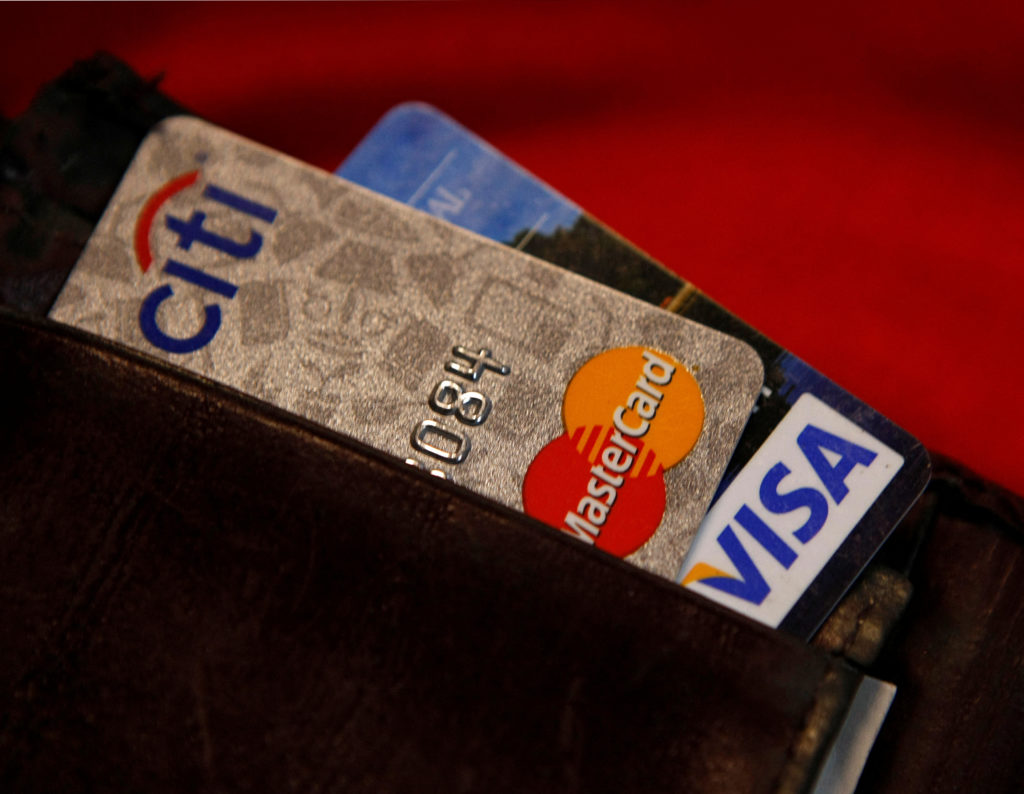
Banks balk as Trump pushes for 1-year, 10% cap on credit card interest rates
NEW YORK (AP) — Reviving a campaign pledge, President Donald Trump wants a one-year, 10% cap on credit card interest rates, a move that could save Americans tens of billions of dollars but drew immediate opposition from an industry that has been in his corner.
READ MORE: The economy is giving mixed signals. Here’s what experts say they mean
Trump was not clear in his social media post Friday night whether a cap might take effect through executive action or legislation, though one Republican senator said he had spoken with the president and would work on a bill with his “full support.” Trump said he hoped it would be in place Jan. 20, one year after he took office.
Strong opposition is certain from Wall Street in addition to the credit card companies, which donated heavily to his 2024 campaign and have supported Trump’s second-term agenda. Banks are making the argument that such a plan would most hurt poor people, at a time of economic concern, by curtailing or eliminating credit lines, driving them to high-cost alternatives like payday loans or pawnshops.
“We will no longer let the American Public be ripped off by Credit Card Companies that are charging Interest Rates of 20 to 30%,” Trump wrote on his Truth Social platform.
Researchers who studied Trump’s campaign pledge after it was first announced found that Americans would save roughly $100 billion in interest a year if credit card rates were capped at 10%. The same researchers found that while the credit card industry would take a major hit, it would still be profitable, although credit card rewards and other perks might be scaled back.
About 195 million people in the United States had credit cards in 2024 and were assessed $160 billion in interest charges, the Consumer Financial Protection Bureau says. Americans are now carrying more credit card debt than ever, to the tune of about $1.23 trillion, according to figures from the New York Federal Reserve for the third quarter last year.
Further, Americans are paying, on average, between 19.65% and 21.5% in interest on credit cards according to the Federal Reserve and other industry tracking sources. That has come down in the past year as the central bank lowered benchmark rates, but is near the highs since federal regulators started tracking credit card rates in the mid-1990s. That’s significantly higher than a decade ago, when the average credit card interest rate was roughly 12%.
WATCH: Rising prices push many Americans further into credit card debt
The Republican administration has proved particularly friendly until now to the credit card industry.
Capital One got little resistance from the White House when it finalized its purchase and merger with Discover Financial in early 2025, a deal that created the nation’s largest credit card company. The Consumer Financial Protection Bureau, which is largely tasked with going after credit card companies for alleged wrongdoing, has been largely nonfunctional since Trump took office.
In a joint statement, the banking industry was opposed to Trump’s proposal.
“If enacted, this cap would only drive consumers toward less regulated, more costly alternatives,” the American Bankers Association and allied groups said.
Bank lobbyists have long argued that lowering interest rates on their credit card products would require the banks to lend less to high-risk borrowers. When Congress enacted a cap on the fee that stores pay large banks when customers use a debit card, banks responded by removing all rewards and perks from those cards. Debit card rewards only recently have trickled back into consumers’ hands. For example, United Airlines now has a debit card that gives miles with purchases.
The U.S. already places interest rate caps on some financial products and for some demographics. The Military Lending Act makes it illegal to charge active-duty service members more than 36% for any financial product. The national regulator for credit unions has capped interest rates on credit union credit cards at 18%.
Credit card companies earn three streams of revenue from their products: fees charged to merchants, fees charged to customers and the interest charged on balances. The argument from some researchers and left-leaning policymakers is that the banks earn enough revenue from merchants to keep them profitable if interest rates were capped.
“A 10% credit card interest cap would save Americans $100 billion a year without causing massive account closures, as banks claim. That’s because the few large banks that dominate the credit card market are making absolutely massive profits on customers at all income levels,” said Brian Shearer, director of competition and regulatory policy at the Vanderbilt Policy Accelerator, who wrote the research on the industry’s impact of Trump’s proposal last year.
There are some historic examples that interest rate caps do cut off the less creditworthy to financial products because banks are not able to price risk correctly. Arkansas has a strictly enforced interest rate cap of 17% and evidence points to the poor and less creditworthy being cut out of consumer credit markets in the state. Shearer’s research showed that an interest rate cap of 10% would likely result in banks lending less to those with credit scores below 600.
The White House did not respond to questions about how the president seeks to cap the rate or whether he has spoken with credit card companies about the idea.
Sen. Roger Marshall, R-Kan., who said he talked with Trump on Friday night, said the effort is meant to “lower costs for American families and to reign in greedy credit card companies who have been ripping off hardworking Americans for too long.”
Legislation in both the House and the Senate would do what Trump is seeking.
Sens. Bernie Sanders, I-Vt., and Josh Hawley, R-Mo., released a plan in February that would immediately cap interest rates at 10% for five years, hoping to use Trump’s campaign promise to build momentum for their measure.
Hours before Trump’s post, Sanders said that the president, rather than working to cap interest rates, had taken steps to deregulate big banks that allowed them to charge much higher credit card fees.
Reps. Alexandria Ocasio-Cortez, D-N.Y., and Anna Paulina Luna, R-Fla., have proposed similar legislation. Ocasio-Cortez is a frequent political target of Trump, while Luna is a close ally of the president.
Seung Min Kim reported from West Palm Beach, Fla.
A free press is a cornerstone of a healthy democracy.
Support trusted journalism and civil dialogue.
Continue Reading
-

Ruth Jones McVeigh, co-founder of long-running Mariposa Folk Festival, dead at 99
Ruth Jones McVeigh, co-founder of Canada’s influential and venerable Mariposa Folk Festival, has died at the age of 99.
Jones McVeigh, who died Wednesday in Ottawa, was a driving force behind the creation of the enduring, community-oriented…
Continue Reading
-

Strand and Wolfe Impress At World Athletics Cross Country Championships
TALLAHASSEE, FLA The most recent Patterson award winners, Ethan Strand and Parker Wolfe, represented the United States at the 46th World Athletics Cross Country Championships in Apalachee Regional Park in Florida on Saturday, Jan 10.
Senior…
Continue Reading
-

All Stars’? Here’s everything to know
What’s new premier date for ITV’s ‘Love Island: All Stars’? Here’s everything to know ITV has confirmed the news of postponing the upcoming Love Island: All Stars series just days before its scheduled…
Continue Reading
-
Iran Toughens Crackdown, as U.S. Sketches Out Military Options – The Wall Street Journal
- Iran Toughens Crackdown, as U.S. Sketches Out Military Options The Wall Street Journal
- Iran authorities signal intensified crackdown as unrest grows Dawn
- ‘There wasn’t even time for CPR’: Iran medics describe hospitals overwhelmed with dead and…
Continue Reading
-

Firefighters continue to battle bushfires across Victoria as towns remain on edge
Firefighters are continuing to battle multiple out-of-control bushfires in Victoria after volatile winds and lower temperatures set in across the state on Saturday.
On Saturday, devastated communities gathered at emergency centres in the…
Continue Reading
-
Microsoft AI CEO to all the companies working on AI: I worry we are – MSN
- Microsoft AI CEO to all the companies working on AI: I worry we are MSN
- Microsoft AI chief questions how safe current AI really is The News International
- The Interview – Mustafa Suleyman, Artificial Intelligence pioneer: People should be…
Continue Reading
-

This Week’s Awesome Tech Stories From Around the Web (Through January 10)
Robotics
Google Gemini Is Taking Control of Humanoid Robots on Auto Factory FloorsWill Knight | Wired ($)
“Google DeepMind is teaming up with Boston Dynamics to give its humanoid robots the intelligence required to navigate unfamiliar environments…
Continue Reading
-

Watched, scared and trapped in an Australian visa nightmare, Kiran is one of India’s ‘abandoned brides’ | Queensland
Kiran’s* husband was more than 10,000km away from the home she shared with her in-laws in a village in northern India. But despite the vast distance, he watched her constantly through cameras which beamed into a screen in his Brisbane home.
Continue Reading