Kiama Council reminds all community members and visitors to use e-bikes responsibly and respectfully. Riding e-bikes in electronic mode through Council property – such as Kiama Coast Holiday Parks and other pedestrian-only areas – is strictly prohibited.
Read more about bike safety in Kiama LGA.
Please note:
Riding e-bikes or e-scooters in electronic mode in Council Holiday Parks or pedestrian-only areas is not allowed.
Anyone found racing or riding through these areas will be required to leave immediately, and police will be contacted.
Holiday Parks are not racetracks. This behaviour creates serious safety and security risks for guests, staff, and property and will not be tolerated.
We ask parents and guardians to speak with your children and make them aware of these rules and consequences.
Learn more about e-bike safetywith resources from Transport for NSW, including:
E-bike advice for families
Bikes, e-bikes and e-scooters
Report Issues
For e-bike compliance concerns within the Kiama LGA, contact NSW Police:
Lake Illawarra Police: 4232 5599
Kiama Police Station: 4247 4150
To report e-bikes posing hazards on roads or in public spaces, contact Transport for NSW – Roads & Waterways.
An exposure draft of the Tranche 9 proposed amendments was published on 27 October 2025. When developing the exposure draft, additional issues relating to the implementation of the new regime for Demand Side Programmes were identified for which rule changes could not be developed in time to be included in the exposure draft. An addendum including these changes was published separately on 10 November 2025. The consultation period closed on 19 November 2025.
Energy Policy WA (EPWA) held a meeting of the Transformation Design and Operation Working Group (TDOWG) on 12 November 2025 to discuss the Amending Rules.
A summary of EPWA’s response to stakeholder submissions is available here.
Following the publication of the Essential System Services Framework Review – Consultation Paper, EPWA published for consultation an addendum with proposed ESM Amending Rules to increase the Rate of Change of Frequency (RoCoF) Safe Limit from 0.25 Hz per 0.5 seconds to 0.75 Hz per second, to implement one of the proposed outcomes of the Review.
The proposed ESM Amending Rules to relax the RoCoF Safe Limit will reduce unnecessary market intervention by the AEMO and the resulting energy uplift payments, thus reducing costs to consumers. This change was included in the Electricity System and Market Amendment (Tranche 9) Rules 2025 to commence on 26 February 2026.
The Electricity System and Market Amendment (Tranche 9) Rules 2025 also include:
Notice of the making of the Amending Rules was published in the Government Gazette on 23 December 2025.
Schedule 1 will commence at 8:00am on 1 January 2026.
New waste collection tender essential to Council’s sustainability goals
Tuesday 23 December 2025
Wollongong City Council has taken a major step toward a sustainable future for the region in awarding the tender for essential kerbside waste collection services for the next decade.
Responsible and sustainable management of domestic waste is a core service of Council and vital to both public health and amenity, and reduction in greenhouse gas emissions through diverting organics and recyclables from landfill.
Evaluation of the tender was carried out collaboratively with Shellharbour City Council in line with a Joint Procurement Agreement. At an extraordinary meeting on 16 December, Wollongong City Council unanimously endorsed a recommendation to accept the tender of Remondis Australia for seven years from July 2027, with a further three-year option.
With Council legislatively required to provide waste collection services to more than 89,000 properties in our local government area, the tender locks in an essential service for the community over the next 10 years.
“Kerbside waste pick-up is a fundamental service offering for Council and our community expects and deserves a safe, reliable weekly collection service,” Lord Mayor of Wollongong Councillor Tania Brown said.
“How we manage waste post-collection underpins our many goals and objectives when it comes to building a sustainable Wollongong and reducing our carbon footprint. We’re committed to our Net Zero target, and diverting waste from landfill and encouraging people to FOGO and use recyclables is a major part of that.
“We know that sustainability is a top priority for our community in all services we offer, so it’s important we work with contractors that share those priorities. That has been demonstrated through the tender evaluation process and we’re very pleased to have secured this vital service for our community for the next 10 years.”
Waste collection services will include pick-up of FOGO (green lid), recycling (yellow lid) and waste to landfill (red lid) bins, as well as bulky kerbside waste and recycling collections (Council pick-ups), supply of bins, FOGO caddies and caddy liners, and collections from Council’s business sites and commercial premises. The tender also includes delivery of customer service and waste education programs.
The tender is aligned with Council’s sustainability objectives, with eight fully electric or hybrid vehicles to be used for delivery of ancillary service components, while a trial is currently underway for the use of biofuel and its long-term viability for use in collection vehicles.
It also includes an undertaking to continue collaboration with Council in reducing overall carbon emissions whilst ensuring excellent service delivery.
The tender is a major step toward achieving net zero emissions and driving a circular economy to reduce the amount of waste going to landfill. The are goals outlined Council’s Community Strategic Plan 2035 and aligns with our Waste and Resource Recovery Strategy 2025-2035.
For over a decade, ENR has celebrated global design and construction excellence and this year examined around 90 submissions, analysing the performance and innovation of each project.
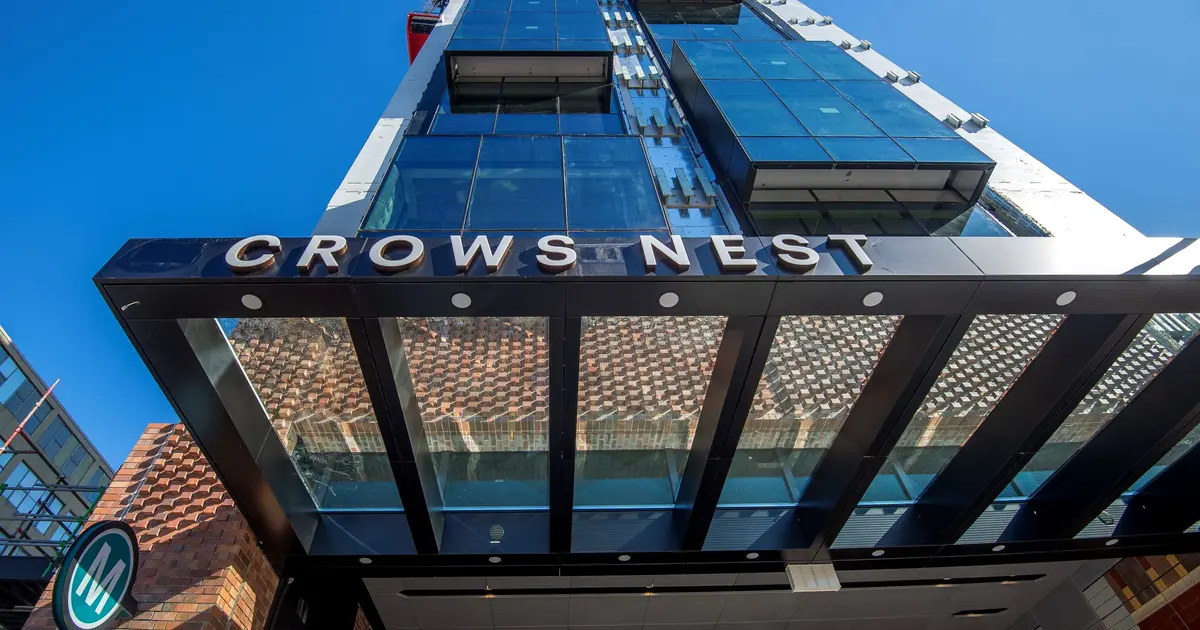
The award highlights the collaborative efforts of Sydney Metro and the Crows Nest Design Consortium (CNDC) in delivering a station that not only meets the needs of passengers today but will also serve generations to come. CNDC consisted of lead consultants SMEC and partners Woods Bagot, Robert Bird Group, Norman Disney Young, and Oculus.
A unique design feature of the station includes the pavers on platform level which were designed with inspiration from historical pavers found at the site during excavation. The geometric pattern reflects the heritage of Crows Nest.
A defining feature of the station is its artwork Ceramic Wall Relief, a series of nine tile collage panels, which frame and embellish the walls in both entrances at the station.
Designed by artist Esther Stewart the colourful artwork references the heritage of the Crows Nest area and the building elements in handmade coloured glazed tiles.
Ceramic Wall Relief bridges both art and design, incorporating functional and decorative elements. The collages’ colours, patterns and motifs celebrate North Sydney’s once booming brick and tile industries and the urban history of artisanal fabrication.
This latest award follows a series of international recognition for Sydney Metro, reinforcing its reputation as a global leader in rail infrastructure design and delivery.
Welcoming around 9700 passengers each weekday, Crows Nest Station is one of six new metro stations, along with new platforms at Central and Sydenham that opened in Sydney’s north and under Sydney’s CBD in August 2024.Passengers can enjoy fast metro rides to Chatswood in 4 minutes, Sydenham in 18 minutes and out to Castle Hill in 28 minutes.
Amazon has seen a nearly one-third increase in job applications from North Koreans in the past year, said Mr Schmidt in his post, external.
He said the operatives typically work with people managing “laptop farms” – referring to computers based in the US that are run remotely from outside of the country.
The firm used a combination of artificial intelligence (AI) tools and verification by its staff to screen job applications, he said.
The strategies used by such fraudsters have become more sophisticated, Mr Schmidt said.
Bad actors are hijacking dormant LinkedIn accounts using leaked credentials to gain verification. They target genuine software engineers to appear credible, he said, urging firms to report suspicious job applications to the authorities.
Mr Schmidt warned employers to look out for indicators of fraudulent North Korean job applications, including incorrectly formatted phone numbers and mismatched education histories.
In June, the US government said it had uncovered 29 “laptop farms” that were being operated illegally across the country, external by North Korean IT workers.
They used stolen or forged identities of Americans to help North Korean nationals get jobs in the US, said the Department of Justice (DOJ).
It also indicted US brokers who had helped secure jobs for the North Korean operatives.
In July, a woman from Arizona was sentenced to more than eight years in jail, external for running a laptop farm to help North Korean IT workers secure remote jobs at more than 300 US companies.
The DOJ said the scheme generated more than $17m (£12.6m) in illicit gains for her and Pyongyang.
The final regulations for Australia’s new merger regime have been released. The regime applies to any deals closing on or after 1 January 2026. The latest version includes changes to the asset, serial acquisition and control thresholds and expanded exemptions.
The majority of the amendments take effect from the commencement of the new merger regime on 1 January 2026. However, some amendments only take effect from 1 April 2026 to give businesses more time to consider if their transactions are now caught. Our Insight sets out an overview of these changes.
We’ve also prepared a ‘quick guide’ covering the key elements of the regime (incorporating these most recent changes), including key thresholds, exemptions, fees, forms and timelines.
Status of the regime
The regime applies to any deals closing on or after 1 January 2026. Mandatory ACCC clearance is required for acquisitions of control (by way of completion / closing) of companies / unit trusts or acquisitions of assets (where no control test applies) that meet the various monetary thresholds, provided the target is connected with Australia. See our quick guide to the new regime for the thresholds.
New voting power thresholds
The voting power thresholds will commence on 1 April 2026. They designate four classes of acquisitions that will be required to be notified (subject to satisfying the monetary thresholds and not otherwise being exempt) despite not resulting in a change of control, at various voting thresholds (for bodies corporate, unit trusts and managed investment schemes):
Private company: voting power increases from ≤20% to >20%.
Private or public company: voting power increases from ≥20% to ≥50%.
Public company (no current control): voting power increases from <20% to ≥50%.
Public company (already controlled): voting power increases from ≤20% to >20%.
Revised asset thresholds
For deals closing on or after 1 January 2026, if the acquisition is of assets, there are two alternative thresholds depending on whether the assets form all or substantially all of the assets of a business:
for assets forming all or substantially all of the assets of a business, the Australian revenue of the business will form the ‘target revenue’.
for assets that do not form all or substantially all of the assets of a business, only the existing transaction value test of $250 million will apply (alongside the $200 million acquirer revenue limb).
The approach of determining ‘attributable revenue’ by calculating ‘20% of the market value’ of the asset will be removed entirely from the regime. For deals closing on or after 1 April 2026, new/additional thresholds will apply for acquisitions of assets that do not form all or substantially all of the assets of a business (unless otherwise exempted):
where the revenue of the acquirer is at least $200 million, the transaction value is at least $200 million.
where the revenue of the acquirer is at least $500 million, the transaction value is at least $50 million.
Revised serial acquisition test
The monetary thresholds include a ‘cumulative Australian revenue’ limb to address serial acquisitions. This limb aggregates the revenue of the proposed target with the revenue of previous targets acquired by the acquirer over the last three years in the same industry.
The serial acquisition test has been amended to now exclude previous targets that (in the case of shares) the acquirer does not control or (in the case of assets) have since been divested or disposed of. This amendment reflects the fact that the acquiring entity cannot use those assets or shares to affect competitive dynamics, and also that businesses may find it difficult to maintain records for divested or disposed previous targets. Note, however, that the concept of ‘control’ still includes the unusual concept of ‘joint control’, which may capture minority investments where there is a shareholders’ agreement in place. See further below.
Narrower definition of ‘connected entity’ (for calculating ‘group turnover’ for monetary thresholds)
The definition of ‘connected entity’ now excludes any interests where the investment is coupled with only minority protection rights. This means these investments can be excluded from ‘group’ wide turnover for the purposes of calculating thresholds and brings the regime closer into alignment with approaches in other jurisdictions.
Expanded exemptions
The categories of acquisitions that are exempt from notification have also been expanded and refined. Notably:
Acquisitions of land or interests in land in the ordinary course of business are now exempt. The explanatory materials issued by the Government take a much more expansive approach to the concept of what is in the ordinary course of business as compared with the position under common case law. This is welcome. The examples included in the explanatory materials of acquisitions that could benefit from this exception include the acquisition of an interest in land for the purpose of an office, headquarters or other routine trading activities, the acquisition of office towers for the purposes of commercial property investment, a property development company acquiring land to develop residential or commercial property, retailers leasing or acquiring land for a warehouse to store their inventory, a manufacturer leasing or acquiring land for a new manufacturing facility, an energy generator acquiring land for a solar farm, or an energy distributor acquiring land to build pylons on. However, it is not intended to capture ‘land banking’ or certain transfers of land between competitors.
The progressive land acquisition exemptions now also apply to ‘quasi-land’. Quasi-land is intended to include certain mining, quarrying or prospecting rights, water entitlements, and rights in relation to land for forestry operations.
Acquisitions of security interests are now exempt regardless of whether they give the acquirer the ability to control a new entity or acquire a new business. However, the enforcement of a security interest is not exempt unless it is in the ordinary course of business of providing financial accommodation and is at arm’s length.
Acquisitions by nominees and other trustees to cover acquisitions upon the conversion of capital instrument that occurs in connection with prudential loss-absorption mechanisms under APRA’s prudential standards are now exempt.
Outstanding issues
Competitive auction processes: under the current merger laws, the ACCC public review process can only begin where there is an intention to enter into transaction agreements, meaning that if a competitive auction process is ongoing, the ACCC can’t review until there is exclusivity or a preferred bidder. However, consultation on the short form or the review of a waiver application can commence earlier.
Public market / exchange processes: there is no derogation from the suspension obligation for on-market public transactions where shares are not voted.
Automatic voiding: transactions are automatically void if implemented without ACCC clearance. If the Government is to amend this it will not be until after March next year.
Joint control: the definition of ‘joint control’ continues to be an issue. Under Australian merger laws, joint control could mean any minority interest where there is a shareholders’ agreement in place that determines the composition of the board or the conduct of the affairs of the target (even if individual shareholders do not obtain control or joint control). This means acquisitions of minority interests without ‘control’ may need to be notified if a shareholders’ agreement is in place and the monetary thresholds are satisfied. It is still not clear if or how the Government will amend this. Waivers could be sought in these circumstances.
Global transaction threshold: a filing is required where the $250 million global transaction threshold is satisfied (as well as the combined $200 million Australian turnover threshold) if the target is ‘connected with Australia.’ There is no de minimis exception. We requested the Government add a $2 million target turnover minimum threshold to avoid the need to file where the target has no material presence in Australia. Despite this lobbying, we do not believe it is likely to introduce one at this stage.
Timing
1 December 2025: deadline for last s189 applications. We understand the ACCC is not accepting further 189 applications except for extraordinary cases (distressed asset etc).
23 December 2025: ACCC closes for holiday period. We understand the ACCC will continue to work on existing notifications over its shutdown period, and engage in pre-notification.
1 January 2026: new mandatory regime commences for deals closing on/after this date. ACCC begins to accept waiver applications.
12 January 2026: ACCC formal timeline commences for new regime after holiday closure period.
1 April 2026: new voting power thresholds and asset thresholds apply to deals closing on/after this date.
Australian Autumn (ie from March 2026) session of parliament: potential fixes to definition of ‘control’ and the automatic voiding of non-notified deals, plus possible other changes.
Water Corporation crews are continuing emergency repairs on a large water main supplying Dampier and Burrup.
The damaged section is a custom-made elbow joint that cannot be sourced locally or in Perth. It must be specially fabricated, which will take most of the day.
Repairs to the main are expected to continue throughout the day and into the evening.
There are a small number of commercial customers on the Burrup who are temporarily without water supply while we undertake repairs. We apologise to customers affected by this interruption.
To help extend water supply, we are working closely with industry to reduce water use and ask all Dampier residents to limit water use to essential purposes only.
For residential customers, please avoid:
Using any outdoor irrigation or watering gardens and plants
Washing vehicles, boats, or pets
Leaving hoses running or hosing down pavements
Topping up pools and spas
Taking long showers (keep to four minutes)
Using water-intensive appliances
Customers and residents may experience temporary low water pressure or water discolouration while repairs are being carried out.
Thank you for your assistance in reducing usage and for your patience as we work to restore services.
We are also progressing contingency supply options and will share more information soon.
For urgent concerns or assistance, please contact Water Corporation on 13 13 75 (available 24/7).
Ferrycarrig Construction Pty Ltd has been fined $40,000 after a NSW Environment Protection Authority (EPA) investigation found the company supplied dozens of falsified waste dockets relating to works at the Sydney Metro Waterloo construction site.
The investigation was launched after a site auditor raised concerns with the EPA in May 2024. Further enquiries confirmed the forged records were supplied on four separate occasions in response to Sydney Metro Joint Venture’s (JV) repeated requests for proof of lawful disposal by the construction company.
EPA Executive Director Regulatory Operations Steve Beaman said the supply of falsified documentation is unacceptable.
“Our investigation into Ferrycarrig found that between September 2023 and April 2024, 68 falsified waste dockets were provided to the Sydney Metro joint venture, falsely claiming 990 tonnes of waste had gone to an approved facility,” Mr Beaman said.
“While there is no evidence in this case that waste was improperly disposed of, protecting the integrity of our waste tracking system is crucial and the EPA expects accurate and reliable record keeping at all times.
“Accurate waste records ensure transparency and traceability across the NSW waste sector and ensure that building waste is managed safely and lawfully.
“We will continue to monitor waste managed by this operator closely to ensure it is properly tracked and lawfully disposed of.”
The EPA issued four penalty notices, two statutory notices during the investigation, interviewed company representatives and relevant parties, and assessed a large volume of records before taking regulatory action.
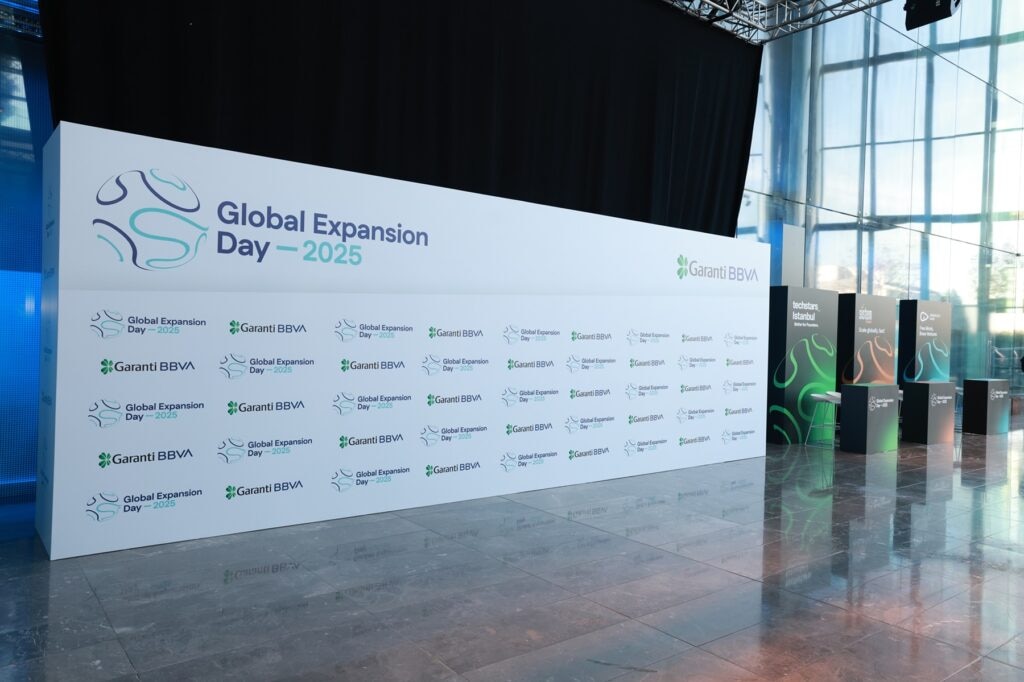
As one of the flagship events of Türkiye’s entrepreneurship ecosystem, Global Expansion Day took place earlier this month under Garanti BBVA’s sponsorship. This year’s edition stood out for its broader international footprint, with official delegations and innovation-focused business development organizations from 15 countries in attendance. The event gave entrepreneurs direct access to an expanded global network, helping them forge meaningful cross-border connections.
Delegations from Japan, the United Kingdom, Italy, Spain, Germany, Switzerland, and Singapore were joined by prominent organizations including Techstars, GITEXS, Sistem Global, IGNITERS Tech Law, Garanti BBVA Partners, GIRVAK, and La French Tech. With this lineup, Global Expansion Day further strengthened its position as one of the region’s most effective platforms for boosting the international growth of Türkiye-based scale-ups.
The agenda featured opening remarks by Garanti BBVA Executive Vice President Ceren Acer Kezik, followed by contributions from Techstars MEA & APAC Partnerships Director Steven Kinvi, Prof. Canan Dağdeviren of MIT Media Lab, and other prominent figures from the entrepreneurship ecosystem. Discussions focused on global scaling strategies, innovation-led growth, and the role of strong international networks in helping startups compete globally.
An entrepreneurship journey spanning 20 years
According to Acer Kezik, Garanti BBVA views entrepreneurship not only as a driver of economic growth but also as a force for cultural transformation. She pointed to the bank’s nearly 20-year track record of supporting entrepreneurs from the idea stage through to global expansion, and said Global Expansion Day is designed to bring founders together with the right investors and strategic partners to support their international growth: “Our goal is to build the right connections to take entrepreneurs from the local market to the global stage.”
The executive also noted that Garanti BBVA’s entrepreneurship strategy, which began with a focus on women entrepreneurs, has since expanded to include technology-driven scaleups. To date, the bank has supported close to 60 startups, with total investment volumes approaching $40 million, while its partnership with Techstars has helped connect Turkish entrepreneurs with global networks.
Now in its second year, Global Expansion Day further boosted the international visibility of Türkiye’s startup ecosystem. As part of the event, entrepreneurs took part in a structured B2B matchmaking program, with 24 selected scale-ups holding one-on-one meetings with investors and country representatives across sectors including artificial intelligence, generative AI, sustainability, fintech, marketing technologies, and cybersecurity.