Tieto Indtech has entered into a strategic three-year agreement with Bank Norwegian to deliver its Multichannel services for enhanced and tailored invoicing and payment integration.
The partnership strengthens Bank Norwegian’s position as a leading provider of secure digital services. Under this agreement Tieto is providing invoicing and payment integration services in Norway, Sweden, Denmark and Finland, as well as in Germany and Spain. This enables seamless customer communication and integration across diverse regulatory and customer landscapes.
The strategic cooperation with Bank Norwegian reinforces Tieto’s position as a trusted digital partner in the financial sector in the Nordics and beyond.
“This agreement represents an important step forward in our partnership with Bank Norwegian. As a trusted partner, we are proud to enforce their digital strategy with scalable, modern solutions that adapt to local market needs. Our Multichannel service ensures secure and efficient handling of customer communications and invoicing tailored to each region,” says Johan Enger Nygaard, Managing Director, Tieto Indtech.
Tieto Indtech’s Multichannel solution facilitates the distribution of documents and invoices through both digital and physical channels, while adapted to local payment methods and infrastructure. Integration with national payment solutions and digital mailboxes helps Bank Norwegian enhance flexibility and tailoring in customer invoicing, streamline operations and reduce costs.
“Tieto has been a trusted partner for many years. This new agreement enables us to deliver tailored secure and high-quality customer communication across all our markets in a cost-efficient way”, says Andreas S. Pedersen, Branch Head of Tech, Projects and Product Development, Bank Norwegian.
For further information, please contact:
Tieto Communications, tel. +358 40 570 4072, news@tietoevry.com
Tieto is a leading software and digital engineering services company with global market reach and capabilities. We provide customers across different industries with mission-critical solutions through our specialized software businesses Tieto Caretech, Tieto Banktech and Tieto Indtech as well as Tieto Tech Consulting business. Our around 15 000 talented vertical software, design, cloud and AI experts are dedicated to empowering our customers to succeed and innovate with latest technology.
Tieto’s annual revenue is approximately EUR 2 billion. The company’s shares are listed on the NASDAQ exchange in Helsinki and Stockholm, as well as on Oslo Børs. www.tieto.com
The European Commission has now confirmed that it does not intend to introduce EU-wide regulation of third-party litigation funding (TPLF). This arises following the European Commissioner for Justice, Michael McGrath, stating at the final meeting of the EU’s High-Level Forum on Justice for Growth that there was “no need” for legislative intervention at this stage. Instead, there will be a focus on ‘ensuring and monitoring’ the transposition of the Representative Actions Directive 2020/1828 by Member States.
This comes following the release of the Mapping Third Party Litigation Funding in the European Union report by the Commission in March 2025 (the Report), which set out the differences between all 27 Member States in their approach to TPLF, both in terms of legal framework and actual market practice. The Report included the results from a consultation with key stakeholders over the past few years including but not limited to: litigation funders, lawyers/law firms, businesses, consumer organisations and public authorities.
In practice, this decision preserves the existing differences in how funding is treated across the Member States. Some Member States maintain regulatory or judicial reticence towards TPLF. Ireland for instance is a jurisdiction which prohibits TPLF (under the rules of maintenance and champerty) with one exception – yet to be implemented – in the context of international commercial arbitration. Other jurisdictions however, like the Netherlands, permit TPLF, and this has made it fertile ground for mass tort claims.
The absence of a harmonised regime means forum shopping will continue to feature prominently in cross-border product liability and consumer claims across Europe, especially due to the often cited need for claimant funding in large group actions.
Position in the UK
The approach taken by the EU Commission is in contrast to the position in the UK, where the Civil Justice Council’s (CJC) Working Group made numerous recommendations in its Final Report on litigation funding which was published on 2 June 2025. The CJC recommended:
shifting to a “light-touch” statutory framework with a minimum base-line set of regulatory requirements for commercial parties;
enhanced regulation for consumer parties; and
for the Supreme Court decision in R (on the application of PACCAR Inc & Ors) (Appellants) v Competition Appeal Tribunal & Ors (Respondents) [2023] to be respectively and prospectively reversed to ensure litigation funding agreements (LFAs) are not treated as damages based agreements (DBAs), which classification would make many existing LFAs unenforceable unless they comply with strict DBA regulations.
The approach in the UK – i.e. towards possible regulation of TPLF – shows the emphasis placed by the CJC on the need for fair access to justice and the need for structured safeguards in place for all parties.
The recommendations set out in the CJC’s report are currently being considered by the Government.
Comment
The EU Commission’s decision to not harmonise the position between Member States means that each Member State will have to decide how to proceed and as we have seen in the UK, the debate about TPLF is likely to continue regardless of guidance given.
Those reluctant for the sector to be regulated in the EU will doubtless be buoyed by this development. Others however may see it as a potential missed opportunity, as a harmonised EU-wide regulatory framework could have assisted in reducing inevitable forum shopping and may have ensured a more consistent legal framework across EU Member States, thus strengthening legal certainty and fairness. This should also be considered by insurers and corporates in the wider context of recent legislative changes in the EU, including the revised Product Liability Directive and the Representative Actions Directive.
Going forward, it will be important to ensure the coordination of defence strategies where parallel claims arise in both the UK and the EU, given the differing funding dynamics.
Related item: A new approach to regulation of litigation funding in the UK
Airbus has cut its plane delivery target for this year after it identified a problem with the fuselage panels on its bestselling A320 family of aircraft that has forced it to inspect hundreds of jets.
The world’s largest plane manufacturer said it would now deliver “around 790” commercial aircraft this year, a drop of 30 from its previous target of 820 planes.
Airlines around the world cancelled and delayed flights over the weekend after the French firm ordered immediate fixes to software updates on 6,000 of its A320s, more than half of its global fleet.
While most of the glitches were fixed by Monday, the company then identified separate quality problems on metal panels at the front of some planes.
Reuters reported that a presentation to airlines showed that the total number of planes needing inspections was 628, including 168 already in service, 245 in assembly lines and 215 in an earlier stage of production known as major component assembly.
The affected parts are the wrong thickness, following work carried out by the Seville-based supplier, Sofitec Aero, the presentation showed.
The affected panels are metal skins which are located behind the cockpit, on each side of the two forward doors. There are not thought to be any safety concerns about the panels.
Despite the lower delivery number, Airbus said it was sticking to its previous financial forecast, as it targets a full-year adjusted operating profit of about €7bn (£6.1bn).
When Airbus issued its weekend recall to more than 350 operators, about 3,000 jets in the A320 family were in the air. The setback came just weeks after the A320 became the most-delivered plane model in history, when it overtook Boeing’s 737.
Airbus has struggled with ongoing disruptions to its supply chain in recent months, including delays in deliveries of engines from the US manufacturer Pratt & Whitney, while it has also had to take some planes out of service while they are maintained.
Airbus shares rose by more than 2% on Wednesday morning, but have not yet recouped all of the losses seen in the past week since the software glitch was first reported.
Airbus is due to report its November delivery figures on Friday.
BD Launches New Cell Analyzer Configurations to Bring Cutting-Edge Capabilities to Labs of All Sizes
Three- and Four-Laser BD FACSDiscover™ A8 Cell Analyzers Expand Accessibility of Spectral, Real-Time Imaging Cell Analysis
FRANKLIN LAKES, N.J., Dec. 3, 2025 /PRNewswire/ — BD (Becton, Dickinson and Company) (NYSE: BDX), a leading global medical technology company, today announced the global commercial release of new configurations of cell analyzers featuring breakthrough spectral and real-time cell imaging technologies, enabling more labs in academia, pharma and biotech – across scales, needs and budgets – to advance discoveries in immunology, cancer immunotherapy and cell biology.
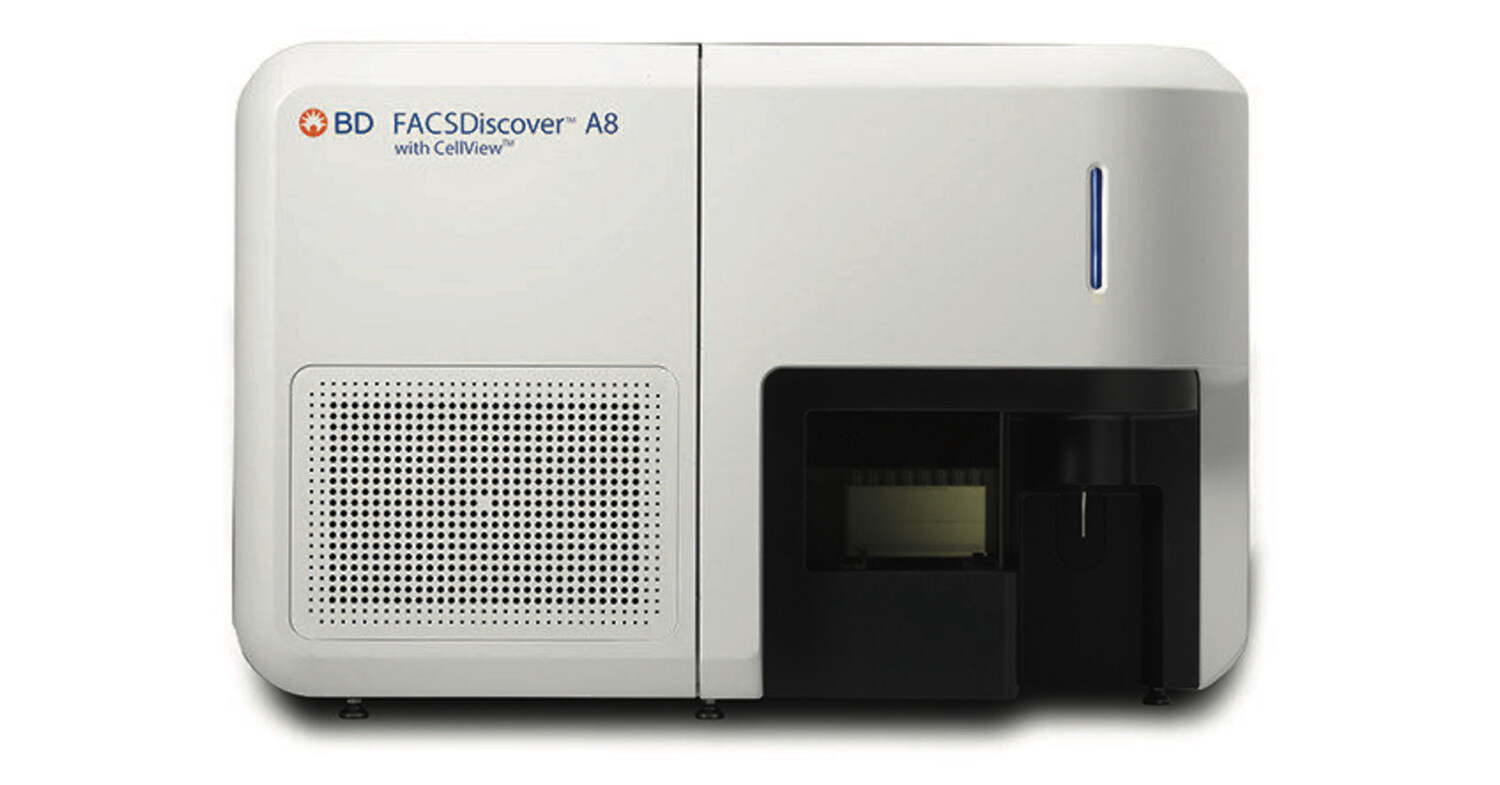
The new BD FACSDiscover™ A8 Cell Analyzers feature BD SpectralFX™ Technology, which allows scientists to analyze up to 50 or more characteristics of a single cell with optimal resolution and sensitivity, and BD CellView™ Image Technology, which enables high-speed imaging, revealing spatial and morphological insights – like the location of a protein within a single cell – that can be visually analyzed in real time. The three- and four-laser additions to the BD FACSDiscover™ A8 Cell Analyzer portfolio complement the five-laser instrument launched earlier this year, providing more scientists worldwide the opportunity to incorporate industry-leading capabilities in their labs. Both versions have the option to start with a free trial of CellView™ Image Technology and upgrade later via software – giving labs further flexibility.
“The BD FACSDiscover™ A8 Cell Analyzer has become our new standard, changing how our flow cytometry core operates,” said Gert Van Isterdael, head of VIB Flow Core Ghent. “Once you experience the integration of spectral and imaging data, you don’t want to go back. It opens a new dimension for our work, helping us see more, understand faster, and enable discoveries that simply weren’t possible before. The BD FACSDiscover™ A8 Cell Analyzer is a game changer, and having more configurations will only make this leading technology more accessible to a wider range of labs.”
All configurations of the BD FACSDiscover™ A8 Cell Analyzer feature high-throughput, walkaway automation that enables best-in-class cost-per-insight economics through real-time imaging. The intuitive software makes it easy to manage large datasets, and is designed for out-of-the-box standardization. The analyzers also pair seamlessly with the ecosystem of BD FACSDiscover™ Cell Sorters and BD Reagents. This includes the recently launched BD Horizon RealViolet™ 828 and RealBlue™ 824 fluorochromes, pioneering entries into the near-infrared spectrum that, when used with a cell analyzer, can unlock new discoveries through spectral flow cytometry.
“In today’s complex research landscape, access to leading-edge technologies through flexibility and modularity is crucial, from basic to translational science,” said Steve Conly, worldwide president of BD Biosciences. “Alongside the entire BD ecosystem of sorters, reagents, and informatics, the BD FACSDiscover™ A8 Cell Analyzer continues to be rapidly adopted by leading biopharmaceutical companies, and now with more entry points, organizations of all sizes can access the same technology.”
BD FACSDiscover™ A8 Cell Analyzers are now available to order through local sales representatives. For researchers facing capital expenditure constraints, flexible financing options are now available. More information is available at bdbiosciences.com.
About BD BD is one of the largest global medical technology companies in the world and is advancing the world of health by improving medical discovery, diagnostics and the delivery of care. The company supports the heroes on the frontlines of health care by developing innovative technology, services and solutions that help advance both clinical therapy for patients and clinical process for health care providers. BD and its more than 70,000 employees have a passion and commitment to help enhance the safety and efficiency of clinicians’ care delivery process, enable laboratory scientists to accurately detect disease and advance researchers’ capabilities to develop the next generation of diagnostics and therapeutics. BD has a presence in virtually every country and partners with organizations around the world to address some of the most challenging global health issues. By working in close collaboration with customers, BD can help enhance outcomes, lower costs, increase efficiencies, improve safety and expand access to health care. For more information on BD, please visit bd.com or connect with us on LinkedIn at www.linkedin.com/company/bd1/, X (formerly Twitter) @BDandCo or Instagram @becton_dickinson.
Construction teams on site at SSE’s Tarbert Next Generation Power Station in Co. Kerry, where full civil works are now underway on Ireland’s first power station to run on sustainable biofuels.
SSE’s Tarbert Next Generation Power Station in Co. Kerry has now entered full construction, with foundations and civil works underway following completion of early enabling works at the site.
This marks a major milestone in the delivery of the up to €300m project, which will be the first of its kind in Ireland to run on sustainable biofuels. The new ‘peaker’ power station will have a generation capacity of 300MW, providing flexible, reliable power to strengthen Ireland’s security of supply and support a renewables-led electricity system.
The construction of the new power station marks the next chapter in the iconic site’s energy generation history, following the decommissioning of the original oil-fired plant in 2023 after more than 50 years of operation.
At peak delivery, the project is expected to support 200 full-time construction jobs. When completed in 2027, the day-to-day running of the station will create enduring jobs in the area with the creation of 14 new full-time roles.
Tarbert Next Generation Power Station will operate on Hydrotreated Vegetable Oil (HVO), sourced entirely from waste feedstocks and supplied in line with EU RED II sustainability standards. This pioneering approach provides a lower-carbon alternative to traditional fossil fuels and supports Ireland’s long-term climate and energy goals.
By future-proofing the site for hydrogen conversion, SSE is working to ensure Tarbert will continue to play a vital role in Ireland’s energy sector for decades to come.
Visiting the site to celebrate this important milestone, Councillor Michael Foley, Cathaoirleach of Kerry County Council, said: “Tarbert Power Station has long been a cornerstone of our community and economy. I have a personal connection as my late father worked on its construction in the 1960s, and he always spoke fondly of that time. Today’s progress marks a new chapter for Tarbert, sustaining employment and inspiring confidence in North Kerry’s future. SSE’s continued investment here is a catalyst for growth and a signal that this region can thrive as part of Ireland’s energy transition.”
Steve Lynch, Project Manager at SSE Thermal, said: “We’re delighted to have started construction on Tarbert Next Generation Power Station. As Ireland’s first power station to run on sustainable biofuels, it’s a cutting-edge project and represents a fitting next chapter in the site’s proud history.
“We’re committed to delivering the energy infrastructure Ireland needs as we transition to a low-carbon power system. This project, combined with our Platin Power Station in Co. Meath, represents a total investment of up to €600m in the country’s flexible generation capacity.”
SSE selected Ansaldo Energia and Limerick-headquartered Atlantic Projects Company (APC) as its lead partners on the project. Ansaldo’s AE94.3A turbine will offer the required flexibility and reliability needed for the Open Cycle Gas Turbine plant, while APC will provide balance of plant services.
Charles E. Collins, Managing Director, Atlantic Project Company, said: “At Atlantic Projects Company, we are proud to be part of the transformative journey in Ireland’s energy sector through Engineering, Procurement and Construction of the Tarbert Next Generation Power Station. We look forward to collaborating with all stakeholders to deliver a state-of-the-art facility that will play a crucial role in the country’s growing need for energy demand.”
Global energy and technology leaders are gathering this week at IAEA headquarters in Vienna for the first ever International Symposium on Artificial Intelligence (AI) and Nuclear Energy. The two-day event is bringing together senior representatives from government ministries, international organizations, the nuclear industry and major tech firms — including OpenAI, Google and Oracle — to discuss how nuclear energy can help meet the surging electricity demand of AI data centres, and how AI can support nuclear technology development.
The two-day event kicked off today and the programme and livestream are available on the IAEA website.
IAEA Director General Rafael Mariano Grossi said at the opening ceremony:
“Two forces are reshaping humanity’s horizon at an unprecedented pace: the rise of artificial intelligence and the global transition towards clean, reliable energy. The world’s energy map is being redrawn before our eyes. “The essential point, our opportunity and our responsibility, is that these forces are not unfolding separately. They are converging and redefining the new global economy.”
He added that nuclear energy is the only source capable of low-carbon generation, round-the-clock reliability, high power density, grid stability and scalability. He described the link between nuclear and AI as structural alliance of “Atoms for Algorithms.”
According to the International Energy Agency, data centres accounted for 1.5% of worldwide electricity demand in 2024 – a figure that could double by 2030.
Nuclear power, with its ability to deliver reliable, low-carbon electricity, is increasingly seen as a solution to meet this demand. At the same time, AI offers powerful tools to optimize reactor performance, streamline construction and enhance operational efficiency — enabling nuclear energy to reach its full potential while maintaining the highest standards of safety, security and safeguards.
The symposium will provide a venue to build partnerships and develop recommendations for a framework of cooperation between the AI and nuclear sectors with IAEA support. It will delve into opportunities offered by AI and nuclear energy, supporting global efforts toward clean, reliable and sustainable energy by connecting diverse stakeholders.
2026 copper production range 380,000 to 420,000 tonnes and 2027 copper production range 500,000 to 540,000 tonnes
2026 copper sales expected to exceed production as surplus concentrate inventory at smelter is cleared; first feed is expected at the end of December
Medium-term annualized copper production target maintained at 550,000 tonnes
Kakula Mine Stage 2 dewatering progressing well at over 60% complete; high-capacity submersible pumps lowered to continue dewatering efforts
Johannesburg, South Africa–(Newsfile Corp. – December 3, 2025) – Ivanhoe Mines (TSX: IVN) (OTCQX: IVPAF) Executive Co-Chairman Robert Friedland and President and Chief Executive Officer Marna Cloete announce today Kamoa-Kakula’s copper production guidance for 2026 and 2027, as well as an update on the Kakula Mine’s dewatering activities.
Dewatering of the Kakula Mine is progressing well, with dewatering approximately 70% complete on the western side of the mine and 60% complete on the eastern side. To date, 13.4 kilometres of underground workings have been rehabilitated and made safe for resumption of operations, including 4.6 kilometres which were dewatered.
Positive progress to date on underground rehabilitation, along with ongoing mine planning, provides Kamoa-Kakula’s management team with sufficient confidence to issue copper production guidance of 380,000 to 420,000 tonnes for 2026 and 500,000 to 540,000 tonnes for 2027. Kamoa-Kakula is still targeting medium-term production of approximately 550,000 tonnes. An updated life-of-mine plan for Kamoa-Kakula is on target for completion in late Q1 2026.
Following the commencement of the Kamoa-Kakula Copper Smelter as announced on December 1, 2025, copper sales in 2026 are expected to be higher than copper production as the on-site inventory of unsold copper concentrate is destocked by approximately 20,000 tonnes of copper.
Ivanhoe Mines Founder and Executive Co-Chairman Robert Friedland commented:
“The turnaround at Kamoa-Kakula is advancing with confidence. Even during the recovery years of 2025 and 2026, this remarkable copper complex is set to produce approximately 400,000 tonnes of copper … an extraordinary testament to the quality of Kamoa-Kakula’s world-leading natural endowment. As we move through this transition and into the next phase of growth in the coming years, Kamoa-Kakula and the Western Forelands will become one of the largest, if not the largest, copper complexes in the world. Our stakeholders are blessed with a Tier-One mining complex that will operate for generations to come.
“We are also on the cusp of a transformational change for Kamoa-Kakula and the Democratic Republic of the Congo as we transition from producing copper in concentrate in huge volumes, to producing copper anodes for sale to consumers all over the world, at our own smelter complex, the largest in Africa.”
Ivanhoe Mines President and Chief Executive Officer Marna Cloete commented:
“We extend our deepest gratitude to the entire team at Kamoa-Kakula for their unwavering dedication throughout the dewatering and rehabilitation of the Kakula Mine. They have worked under pressure, and done so with discipline, resilience, and an unshakable commitment to doing things the right way. Most importantly, they have carried out this demanding work with an outstanding focus on safety. Their dedication and professionalism are the foundation of our progress, and we are extremely proud of their achievements.”
Kakula copper grades improving as dewatering activities re-open higher-grade mining areas
The revised Kakula mine design has been developed based on geotechnical expert guidance, including new pillar designs and extraction sequencing.
Mining rates on the western side of Kakula have increased to an average rate of 350,000 tonnes per month, equivalent to 4.2 million tonnes (Mt) annualized.
Mining activities have been focused on higher-elevation areas in the north and southwest, where copper grades are lower than those of the higher-grade centre section. As water levels on the western side recede, mining crews are advancing towards the high-grade centre section, where grades increase to between 3.5% and 4.0% from mid-December.
Mining rates at Kakula are expected to improve gradually through 2026. Selective mining within the existing workings on the eastern side of the Kakula Mine is expected to start in Q1 2026, augmenting rising production rates from higher-grade areas on Kakula’s western side. This is expected to increase production rates to 450,000 tonnes per month, or 5.5 Mtpa annualized, by the end of the quarter. In addition, underground development towards a new mining area further to the east is expected to begin mining ore from mid-year 2026.
Approximately 6 Mt of ore is expected to be mined at Kakula during 2026, which is expected to increase to between 7 and 8 Mt during 2027. Grades are expected to range from 3.5% to 4.5% during this period. Approximately 70% of the ore will be sourced from the western side of the Kakula Mine during 2026, which will reduce during 2027 as new mining areas on the eastern side are opened up. All ore mined from the Kakula Mine will be processed by the Phase 1 and 2 concentrators.
Mining rate of the Kamoa mines targeted to increase to 10 million tonnes per annum in 2027, filling the Phase 3 concentrator and supporting the Phase 1 and 2 concentrators
The combined annualized mining rate of Kamoa 1, Kamoa 2 and Kansoko underground mines (the Kamoa mines) is targeted to increase from approximately 6.5 Mt currently, to approximately 8.5 Mt in 2026 and to over 10 Mt in 2027. Grades from the Kamoa mines are expected to average approximately 2.5% during this period.
Increased mining rates will be supported by a newly commissioned belt at Kamoa 1, new mine accesses at Kansoko Sud to improve efficiency and new mine accesses at Kamoa 2 to increase the number of underground crews. Mining efficiency is also expected to improve through increased end availability and redundancy, as well as other productivity enhancements.
The Kamoa mines are operating in accordance with similar geotechnical expert guidance, incorporating learnings from Kakula.
The increased mining rate will enable the Kamoa mine to feed the Phase 3 concentrator and provide supplementary feed to the Phase 1 and 2 concentrators, as shown in Figure 1.
Total processing capacity of Phase 1, 2 and 3 concentrators to reach 17 million tonnes per annum from 2027
The Phase 1 and 2 concentrators will continue to process ore from the western side of the Kakula Mine and surface stockpiles until Q1 2026 when the stockpiles are depleted. In addition, from Q1 2026, Phase 1 and 2 will be supplemented with an increasing quantity of ore from the eastern side of Kakula, as well as ore trammed from Kamoa.
In 2026, approximately 2 Mt of ore from Kamoa is expected to be processed by the Phase 1 and 2 concentrators. In 2027, this is expected to increase to 2.5 Mt.
The Phase 1 and 2 concentrators have demonstrated combined operating capacity of 10.5 Mtpa, or 5.25 Mtpa per line, since various de-bottlenecking activities were completed.
The Phase 3 concentrator will continue to process at a rate of 6.5 Mt per annum, which has also been demonstrated over many months of operations, fed by the Kamoa mines.
The recoveries of the Phase 1 and 2 concentrators are expected to improve following the completion of Project 95 in Q2 2026, after which recoveries are expected to increase to approximately 95% over time. A similar capital project to increase copper recoveries from Phase 3 to approximately 92% is under consideration but not included in the 2026 or 2027 production profile.
Figure 1. Kamoa-Kakula Copper Complex processing strategy by mining area in 2026 and 2027 (Mt)
Updated life-of-mine integrated development plan on track for Q1 2026; targeting return of annualized copper production to approximately 550,000 tonnes
Work is advancing on track for the updated life-of-mine integrated development plan to be completed by end of Q1 2026. The plan includes a full review of both the Kakula and Kamoa life-of-mine plans, based on Phase 1, 2 and 3 at a processing rate of 17 million tonnes per annum, prior to the Phase 4 expansion. The study will also include an expansion scenario for Phase 4, intended to increasing processing capacity by 6.5 Mt per annum by constructing a duplicate of the Phase 3 concentrator.
Production rates are expected to steadily improve as the Kakula Mine recovery plan is completed, and annualized copper production expected to return to approximately 550,000 tonnes over the medium and long term.
Kakula Mine Stage 2 dewatering progressing well at over 60% complete; high-capacity submersible pumps lowered to continue dewatering efforts
As announced on September 18, 2025, Stage 2 dewatering activities have been underway since early September, when two pairs of high-capacity submersible pumps, with a combined capacity of 2,600 litres per second were installed and commissioned in under six weeks.
Dewatering activities successfully split the flooded areas into discrete western and eastern zones during the month of November. Dewatering from the western side of the mine is 70% complete (measured by total volume of water) as at the start of December and is expected to be fully completed by the end of January by Stage 3 (steady-state) dewatering.
Stage 3 dewatering consists of re-commissioning the existing, water-damaged underground horizontal pump stations which are used during steady-state operations. The rehabilitation work consists of fitting new pump motors, substations and electrical cabling. All the required equipment is on site, and the installation work will take place once access to the horizontal pump stations becomes available. To date, approximately 800 litres per second of Stage 3 pumping capacity has been re-established. Access to an additional 800 litres per second of pumping capacity is expected by year end, with access to a further 600 litres per second of pumping capacity expected in January 2026.
On the eastern side of the mine, Stage 2 dewatering is 60% complete. The first pair of pumps (Pumps 3 and 4) ran dry during the last week of November, as planned, with the water level declining by a total of 38 metres, or approximately 84% from the initial water level measurement. Following an underground survey, Pumps 3 and 4 were repositioned lower by up to 19 metres to enable pumping to continue for a further 3 weeks.
The second pair of pumps (Pumps 1 and 2), which were installed in a deeper section of the mine, as shown in Figure 2, have reduced the water level by 45 metres, or approximately 48% from the initial measurement. Pumps 1 and 2 are expected to continue operating into Q1 2026, as Stage 3 dewatering is ramped up.
Over 2,200 megalitres of water lie below the level of the Stage 2 dewatering pumps, which will be pumped out gradually using the Stage 3 dewatering infrastructure. This existing flooded mine area is not on the critical path for ramping up mining rates on the eastern side of the Kakula Mine, which will be focused on a new mining area on the east beyond a barrier pillar. Future mining will be de-risked by dewatering in advance of the working face, using similar technology to the Stage 2 dewatering system.
Figure 2. A schematic of the underground water levels at the Kakula Mine as at December 1, 2025, overlaid with the underground pumping infrastructure.
Looking south over the two surface-mounted pump stations that provide the Stage 2 dewatering. Combined, both pumps operate at 2,600 litres per second.
2026 & 2027 COPPER PRODUCTION GUIDANCE
Kamoa-Kakula Production Guidance
2026 contained copper (tonnes)
380,000 – 420,000
2027 contained copper (tonnes)
500,000 – 540,000
Guidance figures are on a 100% project basis.
Kamoa-Kakula’s 2026 and 2027 production guidance is based on several assumptions and estimates. It involves estimates of known and unknown risks, uncertainties, and other factors that may cause the actual results to differ materially.
The 2025 production guidance was revised on June 11, 2025 following the seismic activity as reported on May 20, 2025, and associated interruptions in mining operations at the Kakula Mine. The Kamoa-Kakula Copper Complex produced 316,395 tonnes of copper in concentrate for the nine months ended September 30, 2025 and is on track to meet revised full-year guidance of 370,000 to 420,000 tonnes of copper.
Although mining on the western side of the Kakula Mine has restarted, risk factors remain, including the integrity of underground infrastructure once dewatering is complete, the ability to ramp up underground operations, the ability to complete dewatering activities, and the time required to access the new mining areas. The updated 2026 and 2027 production guidance ranges for Kamoa-Kakula are based on an assessment of these factors that management believes are reasonable at this time, given all available information.
Kamoa-Kakula’s adjusted 2025 and 2026 capital expenditure guidance, as announced on October 29, 2025 remains unchanged. Cash cost (C1) guidance for 2026 will be provided with the 2025 full-year financial results in February 2026.
Qualified Persons
Disclosures of a scientific or technical nature at the Kamoa-Kakula Copper Complex in this news release have been reviewed and approved by Steve Amos, who is considered, by virtue of his education, experience, and professional association, a Qualified Person under the terms of NI 43-101. Mr. Amos is not considered independent under NI 43-101 as he is Ivanhoe Mines’ Executive Vice President, Projects. Mr. Amos has verified the technical data disclosed in this news release.
Ivanhoe has prepared an independent, NI 43-101-compliant technical report for the Kamoa-Kakula Copper Complex, which is available on the company’s website and under the company’s SEDAR+ profile at www.sedarplus.ca:
Kamoa-Kakula Integrated Development Plan 2023 Technical Report dated March 6, 2023, prepared by OreWin Pty Ltd.; China Nerin Engineering Co. Ltd.; DRA Global; Epoch Resources; Golder Associates Africa; Metso Outotec Oyj; Paterson and Cooke; SRK Consulting Ltd.; and The MSA Group.
The technical report includes relevant information regarding the assumptions, parameters, and methods of the mineral resource estimates on the Kamoa-Kakula Copper Complex cited in this news release, as well as information regarding data verification, exploration procedures and other matters relevant to the scientific and technical disclosure contained in this news release.
About Ivanhoe Mines
Ivanhoe Mines is a Canadian mining company focused on advancing its three principal operations in Southern Africa; the Kamoa-Kakula Copper Complex in the DRC, the ultra-high-grade Kipushi zinc-copper-germanium-silver mine, also in the DRC; and the tier-one Platreef platinum-palladium-nickel-rhodium-gold-copper mine in South Africa.
Ivanhoe Mines is exploring for copper in its highly prospective, 54-100% owned exploration licences in the Western Forelands, covering an area over six times larger than the adjacent Kamoa-Kakula Copper Complex, including the high- grade discoveries in the Makoko District. Ivanhoe is also exploring for new sedimentary copper discoveries in new horizons including Angola, Kazakhstan, and Zambia.
Website: www.ivanhoemines.com
Forward-looking statements
Certain statements in this release constitute “forward-looking statements” or “forward-looking information” within the meaning of applicable securities laws. Such statements and information involve known and unknown risks, uncertainties, and other factors that may cause the actual results, performance, or achievements of the company, its projects, or industry results, to be materially different from any future results, performance, or achievements expressed or implied by such forward-looking statements or information. Such statements can be identified using words such as “may”, “would”, “could”, “will”, “intend”, “expect”, “believe”, “plan”, “anticipate”, “estimate”, “scheduled”, “forecast”, “predict” and other similar terminology, or state that certain actions, events, or results “may”, “could”, “would”, “might” or “will” be taken, occur or be achieved. These statements reflect the company’s current expectations regarding future events, performance, and results and speak only as of the date of this release.
Such statements include, without limitation: (i) statements regarding production guidance of 380,000 to 420,000 tonnes for 2026 and 500,000 to 540,000 tonnes for 2027; (ii) statements that Kamoa-Kakula is continuing to target medium-term production of approximately 550,000, as the Kakula Mine recovery plan is completed; (iii) statements that updated life-of-mine plan for Kamoa-Kakula is on target for completion in late Q1 2026; (iv) statements that copper sales in 2026 are expected to be higher than copper production as the on-site inventory of unsold copper concentrate is destocked by approximately 20,000 tonnes of copper; (v) statements that mining rates at the Kakula Mine are expected to improve gradually through 2026; (vi) statements that selective mining within the existing workings on the eastern side of the Kakula Mine is expected to start in Q1 2026, augmenting rising production rates from higher-grade areas on Kakula’s western side, which is expected to increase production rates to 450,000 tonnes per month, or 5.5 Mtpa annualized, by the end of the quarter; (vii) statements that underground development towards a new mining area further to the east is expected to begin mining ore from mid-year 2026; (viii) statements that approximately 6 Mt of ore will be mined at Kakula during 2026, which is expected to increase to between 7 and 8 Mt during 2027, and that grades are expected to range from 3.5% to 4.5% during this period; (ix) statements that approximately 70% of the ore will be sourced from the western side of the Kakula Mine during 2026, which will reduce during 2027 as new mining areas on the eastern side are opened up; (x) statements that all ore mined from the Kakula Mine will be processed by the Phase 1 and 2 concentrators; (xi) statements that the combined annualized mining rate of Kamoa 1, Kamoa 2 and Kansoko underground mines (the Kamoa mines) is targeted to increase from approximately 6.5 Mt currently, to approximately 8.5 Mt in 2026 and to over 10.0 Mt in 2027, with grades from the Kamoa mines expected to average approximately 2.5% during this period; (xii) statements that increased mining rates will be supported by a newly commissioned belt at Kamoa 1, new mine accesses at Kansoko Sud to improve efficiency and new mine accesses at Kamoa 2 to increase the number of underground crews, and that mining efficiency is also expected to improve through increased end availability and redundancy, as well as other productivity enhancements; (xiii) statements that the increased mining rate will enable the Kamoa mine to feed the Phase 3 concentrator and provide supplementary feed to the Phase 1 and 2 concentrators; (xiv) statements that in 2026, approximately 2 Mt of ore from Kamoa is expected to be processed by the Phase 1 and 2 concentrators, and that in 2027, this is expected to increase to 2.5 Mt; (xv) statements that the recoveries of the Phase 1 and 2 concentrators are expected to improve following the completion of Project 95 in Q2 2026, after which recoveries are expected to increase to approximately 95% over time; statements that a capital project to increase copper recoveries from Phase 3 to approximately 92% is under consideration but not included in the 2026 or 2027 production profile; (xvii) statements that dewatering from the western side of the Kakula mine is expected to be fully completed by the end of January by Stage 3 (steady-state) dewatering; and (xviii) statements that access to an additional 800 litres per second of pumping capacity is expected by year end, with access to a further 600 litres per second of pumping capacity expected in January 2026.
Forward-looking statements and information involve significant risks and uncertainties, should not be read as guarantees of future performance or results, and will not necessarily be accurate indicators of whether such results will be achieved. Many factors could cause actual results to differ materially from the results discussed in the forward-looking statements or information, including, but not limited to: (i) uncertainty around the rate of water ingress into underground workings; (ii) the ability, and speed with which, additional equipment can be secured, if an as required; (iii) the continuation of seismic activity; (iv) the full state of underground infrastructure; (v) uncertainty around when future underground access can be fully secured; (vi) the fact that future mine stability cannot be guaranteed; (vii) the fact that future mining methods may differ and impact on Kakula operations; and (viii) the ultimate conclusion of the assessment of the cause of the seismic activity at Kakula and the impact of same on the final mining plan at the Kamoa Kakula Copper Complex. Additional factors also include those discussed above and under the “Risk Factors” section in the company’s MD&A for the three and nine months ended September 30, 2025, and its current annual information form, and elsewhere in this news release, as well as unexpected changes in laws, rules or regulations, or their enforcement by applicable authorities; changes in the rate of water ingress into underground workings; recurrence of seismic activity; the state of underground infrastructure; delays in securing full underground access; changes to the mining methods required in the future; the failure of parties to contracts with the company to perform as agreed; social or labour unrest; changes in commodity prices; and the failure of exploration programs or studies to deliver anticipated results or results that would justify and support continued exploration, studies, development or operations.
Although the forward-looking statements contained in this news release are based upon what management of the company believes are reasonable assumptions, the company cannot assure investors that actual results will be consistent with these forward-looking statements. These forward-looking statements are made as of the date of this news release and are expressly qualified in their entirety by this cautionary statement. Subject to applicable securities laws, the company does not assume any obligation to update or revise the forward-looking statements contained herein to reflect events or circumstances occurring after the date of this news release.
The company’s actual results could differ materially from those anticipated in these forward-looking statements as a result of the factors outlined in the “Risk Factors” section in the company’s MD&A for the three and nine months ended September 30, 2025, and its current annual information form.
To view the source version of this press release, please visit https://www.newsfilecorp.com/release/276774
On a cloudy winter day, a state government inspector named Ryan Coffield walked into a Family Dollar store in Windsor, North Carolina, carrying a scanner gun and a laptop.
Inside the store, which sits along a three-lane road in a county of peanut growers and poultry workers, Coffield scanned 300 items and recorded their shelf prices. He carried the scanned bar codes to the cashier and watched as item after item rang up at a higher price.
Red Baron frozen pizzas, listed on the shelf at $5, rang up at $7.65. Bounty paper towels, shelf price $10.99, rang up at $15.50. Kellogg’s Frosted Flakes, Stouffer’s frozen meatloaf, Sprite and Pepsi, ibuprofen, Klondike Minis – shoppers were overpaying for all of them. Pedigree puppy food, listed at $12.25, rang up at $14.75.
All told, 69 of the 300 items came up higher at the register: a 23% error rate that exceeded the state’s limit by more than tenfold. Some of the price tags were months out of date.
Chris Outlaw shops at Family Dollar’s King Street location in Windsor, North Carolina, on 24 November. Photograph: Cornell Watson/The Guardian
The January 2023 inspection produced the store’s fourth consecutive failure, and Coffield’s agency, the state department of agriculture & consumer services, had fined Family Dollar after two previous visits. But North Carolina law caps penalties at $5,000 per inspection, offering retailers little incentive to fix the problem. “Sometimes it is cheaper to pay the fines,” said Chad Parker, who runs the agency’s weights-and-measures program.
The dollar-store industry, including Family Dollar and its larger rival, Dollar General, promises everyday low prices for household essentials. But an investigation by the Guardian found that the prices listed on the shelves at these two chains often don’t materialize at checkout – in North Carolina and around the country. As the cost of living soars across America, the customers bearing the burden are those who can least afford it – customers who often don’t even notice they’re overpaying.
These overcharges are widespread.
Dollar General stores have failed more than 4,300 government price-accuracy inspections in 23 states since January 2022, a Guardian review found. Family Dollar stores have failed more than 2,100 price inspections in 20 states over the same time span, the review found.
Among these thousands of failed inspections, some of the biggest flops include a 76% error rate in October 2022 at a Dollar General in Hamilton, Ohio; a 68% error rate in February 2023 at a Family Dollar in Bound Brook, New Jersey; and a 58% error rate three months ago at a Family Dollar in Lorain, Ohio.
Many of the stores that failed state or local government checks were repeat violators. A Family Dollar in Provo, Utah, flunked 28 inspections in a row – failures that included a 48% overcharge rate in May 2024 and a 12% overcharge rate in October 2025.
The chains’ pricing disparities are drawing increasing attention. In May, Arizona’s attorney general announced a $600,000 settlement to resolve a consumer-fraud investigation against Family Dollar. In October, Colorado’s attorney general settled with Dollar General for $400,000 after its stores failed 15 out of 23 state inspections. Dollar General has also settled with New Jersey, Vermont and Wisconsin, and both companies have settled with Ohio.
Linda Davis, a 64-year-old Family Dollar shopper in Dayton, Ohio, called the state attorney general’s office in February after walking home from the dollar store and discovering that 12 of her 23 purchases had rung up incorrectly. “I’m adding it up in my head as I’m shopping,” she told the Guardian. “But I was way off and I didn’t know why … I thought: Where did I miscalculate? I’ve [only] got so much cash on me.”
Davis, who lives on Social Security, said she could shop elsewhere, but that would involve paying for a bus ride. “I don’t have money like that,” she said.
A price tag at Family Dollar on King Street in Windsor, North Carolina, on 24 November. Photograph: Cornell Watson/The Guardian
Both Family Dollar and Dollar General declined interview requests and did not answer detailed lists of questions from the Guardian. Instead, both sent the Guardian brief statements.
“At Family Dollar, we take customer trust seriously and are committed to ensuring pricing accuracy across our stores,” the company said. “We are currently reviewing the concerns raised and working to better understand any potential discrepancies. We continue to be focused on providing a consistent and transparent shopping experience.”
Dollar General said it was “committed to providing customers with accurate prices on items purchased in our stores, and we are disappointed any time we fail to deliver on this commitment”. In one court case in Ohio, Dollar General’s lawyers argued that “it is virtually impossible for a retailer to match shelf pricing and scanned pricing 100% of the time for all items. Perfection in this regard is neither plausible nor expected under the law.”
The Guardian’s examination of inspection failures by the two chains was based on record requests to 45 states and more than 140 counties and cities in New York, Ohio and California, along with court documents and public databases.
In nearly half of US states, information about whether customers are being overcharged was limited or unavailable. Many states do little or nothing to monitor retail stores’ pricing practices. Some, like Maryland, Idaho and Washington, do no random inspections, responding only to consumer complaints. Illinois, South Carolina and others don’t inspect at all. In 2020, auditors in Kansas revealed that these inspections were a low priority in many states. “Consumers can check price accuracy themselves,” they wrote.
Even in states with tougher enforcement, financial penalties don’t always solve the problem: In the 23 months after Dollar General agreed in November 2023 to pay Wisconsin $850,000, its stores failed 31% of their price inspections. During the same period, Wisconsin’s Family Dollar stores failed 30% of their state inspections.
According to industry watchers, employees and lawsuits, overcharges often stem from labor practices within the dollar-store sector. When a company changes prices, the registers are updated automatically. But the shelf prices are not: someone needs to remove the old labels manually and replace them with new ones. In an industry known for minimal staffing, workers don’t always have time to put up the new shelf tags.
Chris Outlaw walks to his car after leaving Family Dollar’s King Street location in Windsor, North Carolina. Photograph: Cornell Watson/The Guardian
In many instances, customers may not notice that they are being charged more than what’s listed on the shelf. If they notice at the register, they may decide to put those items back – or ask a store employee to honor the shelf price.
Dollar General, in its statement, said its store teams “are empowered to correct the matter on the spot”. But customers and current and former employees said that while some dollar stores will correct the price, others refuse to make fixes at the register – and turn away customers who return later and request a refund.
“Overcharging even by a small amount per item can strain a really tight budget,” said Elizabeth M Harris, acting director of the New Jersey division of consumer affairs. “If you’ve ever gone into any store … with a child like I have, there’s chaos at the checkout counter and you’re not really paying attention.” With items being rung up quickly, she added, “consumers are trusting that the retailer is actually charging them the price that’s displayed.”
Her state settled in 2023 with Dollar General for $1.2m after finding more than 2,000 items rung up as overcharges across 58 stores.
Even if the overcharges paid by dollar-store customers are accidental, they still reflect the industry’s decision not to correct a problem it has known about for years, according to Kennedy Smith, a researcher at the non-profit Institute for Local Self-Reliance, which works to protect communities from negative impacts of big corporations.
“If they’re called on it, they’ll say, ‘Oh yeah, our mistake,’” Kennedy said. “Until they’re called on it, they’re happy to let those scanner errors bring in the millions.”
‘The cheap stuff’
When consumers feel economic pain, as they do now thanks to rising costs exacerbated by tariffs, price gouging and other inflationary pressures, one place they turn to are dollar stores. These one-stop centers for inexpensive food, clothing and housewares tend to sell in small quantities, one $1 chicken-noodle-soup can at a time. And they are relatively easy to get to: 75% of Americans live within five miles of a Dollar General, according to the company.
The industry’s largest player is flourishing. Todd Vasos, the CEO of Dollar General, told investors in August that his company’s quarterly sales had increased 5% over the same period last year. Some of that growth, he said, came from middle- and higher-income shoppers tightening their belts. But the company’s low-income “core customers” were spending more at the chain too.
Those customers have been the industry’s niche from the beginning. When a 48-year-old former tobacco farmer and traveling salesman named James Luther Turner opened JL Turner and Son Wholesale Dry Goods, Shoes, Notions and Hosiery in Scottsville, Kentucky, in 1939, his mission was “to sell the cheap stuff to the poor folks”. (Someone else had cornered the market on “selling the good stuff” to Scottsville’s rich folks.)
By 1955, Turner and his eldest son, Hurley Calister “Cal” Turner Sr, were overseeing 36 stores in small southern towns. Cal Sr decided that year to co-opt the “Dollar Days” sales at big department stores and to open outlets featuring a single low price of $1. Adopting a name that nodded to the general store, he designed a bold black-and-yellow sign and that June christened the first Dollar General in Springfield, Kentucky.
Dollar General now operates over 20,000 stores in 48 states – more than any other retailer of any kind in the US. (It has long since abandoned its $1 price limit.) Though it has more than 195,000 employees and net sales of $40.6bn, the company still calls itself “America’s neighborhood general store”.
Family Dollar began in 1959 in Charlotte, North Carolina, and now operates 8,000 stores nationwide. For most of the past decade, it was owned by yet another chain, Dollar Tree, but the two brands divorced last summer.
What Dollar General and Family Dollar have in common is a conspicuous presence in places that don’t offer a lot of other retail: low-income urban neighborhoods and rural towns like Windsor.
A predominantly Black county seat of 3,400 on North Carolina’s coastal plain, Windsor used to be a retail hub. “All the streets were full on a weekend,” recalled Russell Parker, a 66-year-old retired pilot. “There were people everywhere, people playing music.” And people spending money: at the fish market, the cobbler, the independent groceries, the automotive-supply store. But today Windsor’s downtown – like many rural main streets – is pocked with empty storefronts. The town never fully recovered from Hurricane Floyd, in 1999. “Every young person that graduates from high school gets on the first thing smokin’ to somewhere else,” Parker said.
The King Street area of downtown Windsor, North Carolina. Photograph: Cornell Watson/The Guardian
One supermarket remains on the edge of town. Shopping for clothes often means driving to the next county, at least for those who drive. But Windsor does have three stores that help fill the gap: a Dollar General and two Family Dollars.
At the Family Dollar that failed multiple inspections, some regulars remain vigilant. Chris Outlaw, a 54-year-old hemodialysis technician, shops there because it’s near his house and workplace. Experience has taught him to buy only a few items at once and to examine his receipts. Not all his neighbors do the same. “I’ve seen people in there with baskets full,” he said. “You can just imagine how much of that stuff didn’t ring out right, and they had so much they couldn’t catch it.”
‘Big old savings’
Customers walking into Dollar General stores are often greeted by a bright yellow sign blaring “Hello, Low Prices”– and by as many as 10,000 items cramming shelves and, often, cluttering the aisles.
“They will send you more than what you need of any product,” said Stephanie, a former lead sales associate in Louisiana. “Your shelf can only hold 10 Glade air fresheners, right? But they will send you 50.”
Rarely is there enough staffing, current and former employees say, to complete all of the tasks expected of them, including stocking shelves, ringing up sales, looking out for shoplifters, mopping floors – and updating price changes and sales stickers.
Chris Outlaw squeezes through an aisle packed with merchandise inside Family Dollar’s King Street location in Windsor, North Carolina. Photograph: Cornell Watson/The Guardian
More than two dozen current and former employees of the chain in 15 states interviewed by the Guardian agreed that price discrepancies are the byproduct of the company’s employment policies. (Most, including Stephanie, spoke on the condition of anonymity because of fear of retaliation.)
Often there are only one or two people on duty. “You’re lucky if you get to work two to four hours of your eight- to 13-hour shift with another human being,” a former assistant manager in Illinois said.
Every Tuesday, employees are supposed to print and post hundreds of shelf stickers representing price changes already updated in the computer system. On Saturdays, stacks of sales stickers arrive; often, workers are expected to remove all the previous week’s stickers by 5pm and put up new stickers – as many as 1,000 of them – before closing up that night. Stickers fail to get put up, they fall off easily, and they are confusing, with some sales instant and others linked to coupons. “I threw away tags sometimes, to keep me or a coworker out of trouble,” Stephanie admitted.
Items on shelves at the Mineville, New York, Dollar General that is five miles from the Port Henry location. Photograph: Kelly Burgess/The Guardian
A former store manager at a Dollar General in Connecticut noted that many of his customers were poor or disabled enough that they got by on public assistance. “I didn’t want people to get screwed over, but I knew that it was happening,” he said. “If I’m in the store, I’m gonna try to do the best I can for them. But at the end of the day, they’re still probably gonna get overcharged for a few things.”
Dollar General, in its statement, said it schedules time each week for “price change execution”, among other measures to ensure accuracy.
Ten current and former employees in eight states claimed that – along with allowing pricing errors caused by understaffing and overstocking – some Dollar General stores engage in a tactic designed to fool customers: special sales that don’t actually lower the price of an item. A manager from Florida, for example, sent the Guardian two photos of price stickers for Café Bustelo ground coffee. In the first photo, a sticker said “SALE” in white block letters against a red background. It advertised a markdown from $7.95 to $6.50. In the second photo, the top sticker had been peeled away to show the original price: $6.50.
A sales associate from Illinois sent photos showing cutlery with what he said was a fake original price of $8.50. “It’s trying to say that you’re making this big old savings by buying this item here,” explained the employee, “when it’s actually always been $6.95.”
Dollar General declined to comment on these workers’ claims.
‘We have little choice’
When the Ohio attorney general, Dave Yost, sued Dollar General in 2022, he submitted 114 pages of customer complaints as part of the case.
One of them came from Melanie Hutzler, who lives in Canton without a car and whose mobility is limited by arthritis and multiple sclerosis. Hutzler, 51, relies on government food assistance and said she was cautious about spending money. At the time of her complaint, she could reach two food stores on foot. Getting to the Save A Lot grocery required crossing a busy road, but getting to a Dollar General did not.
“Every single time we went into that store, something would ring up wrong,” she told the Guardian. “They never had a manager there that would fix the prices.” Hutzler said she would walk the cashier over to the shelf and point out the listed price, only to be told, “There’s nothing we can do about it.”
The exterior of Family Dollar on King Street in Windsor, North Carolina. Photograph: Cornell Watson/The Guardian
Other Ohioans expressed similar frustrations. “My 87-year-old mother and I have frequented Dollar General for years, and there have been innumerable times we have made purchases that were well higher than advertised,” wrote Robert Hevlin of Dayton. “My mother and I have literally lost thousands over the years with this company, but both of us being on Social Security, we have little choice in where we shop.”
In September 2023, Yost reached a $1m settlement with Dollar General, which he said had error rates at some stores that ran as high as 88%. In February 2024, he announced a $400,000 settlement with Family Dollar to resolve similar allegations. Most of that money went to charitable organizations that distribute food and personal-care items.
Both chains agreed in the settlements to tighten their pricing practices. Yost’s office continues to receive complaints. A Dollar General customer in Garfield Heights said in February that he was charged $6.35 for a carton of eggs with a shelf sticker of $5.10, but the “cashier was too busy having a personal call on her cell phone to address the price discrepancy”. The same month, a Family Dollar shopper in Genoa reported being charged $2.65 for cough medicine listed on the shelf at $1.50. “I was told by the cashier that there was nothing that could be done about it,” the complaint said.
Over in Missouri, state officials are pursuing a lawsuit that accuses Dollar General of “deceptive” pricing practices. The suit, filed in 2023, says 92 of the 147 stores the state checked failed their inspections, with discrepancies as high as $6.50 an item.
The companies declined to comment on these state lawsuits.
Dollar General has also been hit with private lawsuits, including several filed by its shareholders. In a document filed in August in federal court in Nashville, lawyers for Dollar General investors argued that understaffing, poor inventory control and overcharging were all interrelated.
The investors allege that the company deceived them by portraying itself as financially sound. In truth, the court filing says, “Dollar General’s inventory management processes were broken, which caused a massive bloat of excess product to clog the company at both its distribution centers and stores, and its workforce had been slashed.” These problems gave rise to price discrepancies and other “dire consequences”, the court filing asserts.
The filing includes the stories of 36 former employees who claimed direct knowledge that Dollar General managers and executives knew about the problems. Several reported notifying the top leadership directly. “All the prices were off in the stores,” said one of those ex-employees, a manager who monitored inventory levels in Ohio and Pennsylvania. She claimed to know firsthand, based on calls she participated in, that company vice-presidents and regional directors were aware of the “huge” price mismatches.
Price stickers and merchandise inside Family Dollar’s King Street location in Windsor, North Carolina. Photograph: Cornell Watson/The Guardian
Dollar General, in response, said that the testimony of a handful of ex-workers does not prove that it misled investors. In their “years-long search for fraud”, the company’s lawyers claimed, the shareholders “came up empty”.
Earlier this year, a federal judge in New Jersey halted a class-action lawsuit against Dollar General filed by a shopper who said he was overcharged for groceries. Dollar General argued that when customers create accounts – for example, by downloading the company’s mobile app – they agree to use arbitration to resolve disputes and forfeit the right to file class-action suits. The judge agreed.
This victory for Dollar General threw up an obstacle for customers seeking justice. “Who’s going to bring a consumer arbitration with a $225 filing fee over a 50-cent overcharge?” asked Marc Dann, a former Ohio attorney general whose law firm filed the New Jersey case. “They’ve essentially closed the door to the courthouse to people.”
Dann’s firm did reach a settlement with Dollar General in another case this fall, though the details have not been made public.
‘This endless cycle’
The dollar-store chains describe themselves as mission-driven companies. “Our stores are conveniently located in neighborhoods, and often in ‘food deserts’ where other stores choose not to locate,” Family Dollar says on its website. Dollar General takes pride in offering value to families who, according to CEO Vasos, “have had to sacrifice even on the necessities”.
The industry’s critics say the cause and effect are reversed. “Dollar stores are often seen as a symptom of economic distress,” said the Institute for Local Self-Reliance’s co-executive director, Stacy Mitchell. “What we found is that they’re, in fact, a cause of it.” Sometimes, she said, a chain dollar store will open near an independent grocer and skim off enough of its business that it is forced to close. That limits the availability of fresh produce and forces shoppers to buy more packaged and processed foods.
In a statement, Dollar General said its stores often “operate along with local grocers and business owners to collectively meet customers’ needs”. It added that 7,000 of its 20,000 stores sell fresh produce and that the company also partners with local food banks “to further help nourish our neighbors in need”.
The people enduring the effects of hollowed-out local economies – and getting hit with overcharges at dollar-store chains – include residents of Essex county, New York. The county, tucked among the stately pines of the Adirondack Mountains, has a population of 37,000. It has five Dollar Generals and two Family Dollars. All seven regularly fail pricing-accuracy tests. The Dollar General in Port Henry, which sits on the shores of Lake Champlain, was fined $103,550 for failed inspections between November 2022 and June 2025.
Kaitlyn Miller at her home in Port Henry, New York, on 24 November. Photograph: Kelly Burgess/The Guardian
Over the course of seven inspections, 279 out of 700 tested items were overcharges – a combined error rate of just under 40%. One inspection yielded a 78% error rate, including overcharges on Flintstones vitamins, Peter Pan peanut butter and Prego pasta sauce.
The Port Henry store is five miles from the Mineville Dollar General, which occupies a lonely stretch of country road across from an auto-repair shop with spare parts littering its lawn. Down the block, an abandoned church presides over a stretch of grass that looks like it hasn’t been mown for years.
Aside from a whiskey warehousing operation and a health center, opportunities for employment are limited. The high-security prison built atop the iron mine for which Mineville is named closed in 2022, taking 100 jobs with it.
The local playground is littered with trash, cigarette butts and the occasional syringe. The town “is nice from the outside”, said Kaitlyn Miller, a 26-year-old Port Henry resident who lives with her mother, six-year-old daughter and two-year-old son. But “you hear about a lot of crack-den places, like blowing up or getting busted.’” Drug use is rampant in the county, which is 92% white. “Everybody around here seems to be on pain meds or buying someone else’s, because they’re also working themselves to death.”
When it comes to grocery shopping near Miller’s home, the choice is between the two Dollar Generals and a gas station/convenience store. “We live in a food desert,” she said, “even though you would think living in all this farmland, we would have more access.”
An abandoned church sits next door to the Mineville, New York, Dollar General store. Photograph: Kelly Burgess/The Guardian
There is a Walmart 30 minutes away, in Fort Ticonderoga. Miller said she recently bought salmon there only to arrive home and discover that the $20 piece of fish had gone bad. “So I had to go to Dollar General and get the Stouffer’s,” she said, adding that she feels “caught in this endless cycle of never having food that will nourish me and my family, and instead having to get 2,000 grams of sodium because at least it has meat”.
The region’s economic straits put regulators in a bind when it comes to overcharges. Daniel Woods, the county’s director of weights and measures, said in 2023 that he didn’t always assess the full penalty on violators. “We’re not trying to put people out of business,” he told a local newspaper. “In some towns that’s their [only] store. I don’t want to pull that away from people, but at the same time, I’m trying to fix the problem.”
On the way out
When Coffield, the North Carolina inspector, visited the Windsor Family Dollar in April 2023, the pricing issues seemed to have abated. Of the 300 items he scanned, he only found five overcharges: incontinence pads, laundry sanitizer, two coffee products and, again, Red Baron pizza. With an error rate below the state’s 2% threshold, the store passed its inspection, and it did so again in November 2024.
But customers still reported problems. Chris Outlaw, the hemodialysis technician, stopped by the Family Dollar earlier this year and noticed a sale: a $1.25 savings on five bags of Cheez Doodles. He bought them but discovered on the way out that he had been charged the regular price. The manager refused to refund the difference, Outlaw said, because he had already walked through the exit door.
Another time, he saw some discounted socks near the counter that he thought would make good Christmas gifts. “I was like, ‘Oh, I like these socks, so I’ll probably give them to somebody,’” he recalled. “Nice, plushy socks.” But they rang up at a higher price, so he left the store without them.
Chris Outlaw looks at his receipt after leaving Family Dollar’s King Street location in Windsor, North Carolina. Photograph: Cornell Watson/The Guardian
During a visit in August, a Guardian reporter found the Windsor Family Dollar closed for much of the afternoon. “Be Back Soon!” read a handwritten sign taped to the door. Two waiting customers said that they frequently paid prices higher than the shelf listing, including a cook whose nearby restaurant buys some of its ingredients there. “It is aggravating,” she said. “Very aggravating.”
Workers reopened the doors after a few hours. Inside, carts of unshelved dog food and other merchandise blocked the aisles. The Guardian compared the prices of 15 items. Two of them rang up higher than advertised, including a frying pan set that was $10 on the shelf and $12 at the register. Though the cashier offered to honor the lower prices, that was still an error rate of 13% – more than six times the state’s standard.
Ensuring global security at an international level, responding proactively to today’s increasingly complex and rapidly evolving cyber threats. With this aim, the new Regional Cyber Center was inaugurated in Kuala Lumpur (Malaysia), strengthening Leonardo‘s position as a technological leader in global security.
Leveraging the integration of Leonardo’s proprietary technologies in cyber security, physical security and mission-critical communications, and its experience in strategic sectors in Italy and abroad, the new Center will contribute to global protection against new hybrid threats, strengthening digital autonomy and supporting the sustainable development of Malaysia and the entire region.
The new regional hub will be part of Leonardo’s Global CyberSec Center (GCC), which includes the headquarter in Chieti (Italy) and the federated Regional Cyber Centers in Brussels (European Union), Bristol (United Kingdom) and Riyadh (Saudi Arabia). The GCC’s global network is designed to ensure cyber mission assurance for strategic customers – including defence organisations and critical national infrastructures – by pooling processes, information on threats, and cutting-edge technologies. This federated model ensures both the ability to operate on a global scale in preventing, countering and responding to new threats, and the control of strategic data, fully respecting individual national sovereignty.
The court rejected a claim by CEK Investment that a default rate of interest of 4% per month (compounded), under a loan it obtained from London Credit, amounted to a penalty clause.
Deputy High Court Judge Richard Farnhill said 4% was above market rates but not, itself, unreasonable and represented the lender protecting itself in offering high-risk, short-term lending, which was legitimate.
Eilidh Smith, a financial services disputes expert with Pinsent Masons, said the decision provided clarity in respect of the application of the test for penalty clauses, as pronounced by the UK Supreme Court in its judgment in Cavendish Square Holdings v Makdessi in 2015, to default interest rates.
The Makdessi judgment established that a clause will be an unenforceable penalty if it is a secondary obligation – such as an obligation to pay default interest if a primary obligation under a loan agreement, such as a repayment obligation, is breached – and imposes a detriment on the party in breach which “is out of all proportion to any legitimate interest of the innocent party in the enforcement of the primary obligation.”
“This judgment provides guidance as to how courts will approach the application of the Makdessi test to default interest rates in lending, which lenders will need to be aware of,” Smith added.
“It is an indicator that even above market rates can be enforceable, so long as they are commercially justifiable and such justification can be evidenced. This will be welcome news particularly to lenders offering high risk lending, such as bridging loans.”
The long-running case revolved around a £1.88m bridging loan CEK had obtained from London Credit, secured against various properties including the family home of CEK’s directors Mr and Mrs Houssein, which carried interest of 1% per month, plus the 4% per month default interest. London Credit had alleged that CEK was in breach of the terms of the agreement and took enforcement action, including seeking default interest.
The particular event of default on which CEK relied was that the Housseins resided at the family home contrary to a non-residence requirement in the loan agreement. After London Credit appointed fixed charge receivers to sell the properties the loan had been secured against, CEK and the Houssein family raised the action, arguing that the default interest rate was a penalty clause.
In June 2023 the High Court had ruled that the default ratewas in fact an unenforceable penalty, but this was overturned by the Court of Appeal the following year on the basis that the High Court judge had applied the wrong test, and the issue was sent back down for the High Court judge to reconsider.
“While the decision will be welcomed by lenders, it does demonstrate the need for careful consideration of any proposal to apply a single or ‘static’ default rate of interest in the event of breaches of any of a number of different primary obligations – for example, non-payment by the contractual repayment date and breach of a non-residence requirement,” explained Emilie Jones, a commercial litigation expert with Pinsent Masons.
“The court in this case found that, where this is the approach taken, it is necessary to consider the legitimate interests underlying each of the primary obligations and whether the default interest is extortionate by reference to any of them. As the judge explained: “If, by reference to any one interest, the provision is extortionate, it fails in relation to all of them.”
“In this case, the judge identified a number of categories of legitimate interests for the lender which were protected by the default interest rate and concluded that the rate was not extortionate in relation to any of them. For example, the lender had a ‘very strong interest’ in repayment of the loan, but also had a ‘strong interest’ in the non-residence requirement given the potentially ‘catastrophic consequences’ of providing loans to individuals secured against their primary residence given London Credit’s status as an unregulated lender.
“The default interest rate was not extortionate by reference to either of these interests, nor by reference to further interests which the judge labelled the security interest, the credit risk interest and the representations interest.
“It will, however, be important for lenders who are considering applying a single default interest rate in the event of breaches of diverse primary obligations to consider whether the rate can be justified by reference to legitimate interests underlying each and every one of those primary obligations, and to record their rationale.”